
Jellyfish Stings and Rip Currents in Thailand: What to Do
After a jellyfish sting, get out of the sea and call 1669, then pour household vinegar over the sting for at least 30 seconds. Never use fresh water, alcohol or rubbing. Two red flags mean no swimming. The monsoon period runs June to October.
On this page
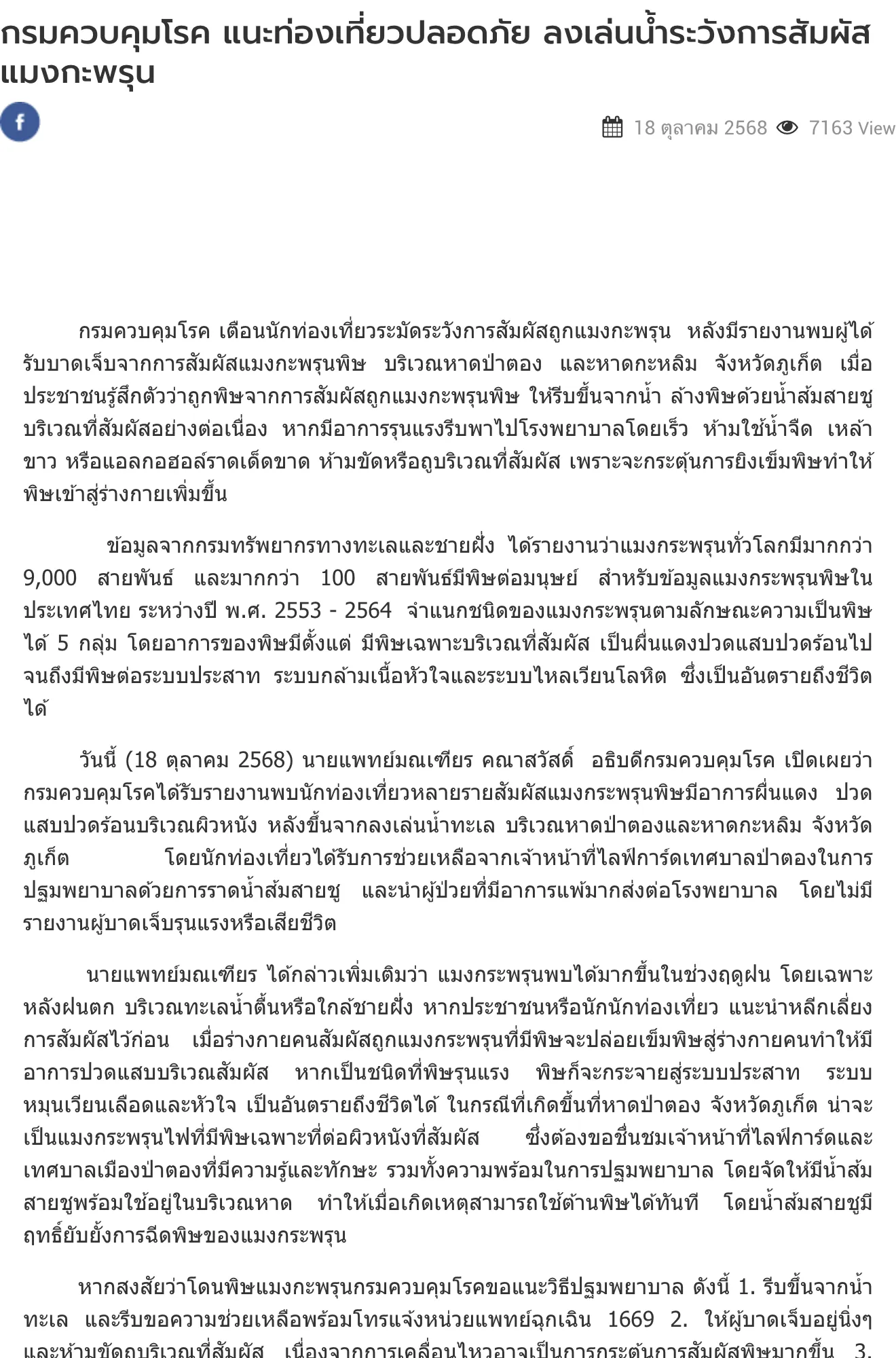
If a jellyfish stings you, get out of the sea and phone 1669, then pour household vinegar over the sting for at least 30 seconds. Never use fresh water, alcohol or rubbing.
First aid for a jellyfish sting
Follow these steps in order.
- Get out of the sea at once, ask for help and call the emergency medical service 1669.
- Keep the injured person still and do not scrub the contact area.
- Pour household vinegar of 4 to 6% strength over the contact area for at least 30 seconds.
- If the person does not improve, take them to hospital quickly.
Vinegar stops the stinging cells working but does not relieve pain. Pour it for the full time before trying any other pain relief. Remaining tentacles come off with a stick or tongs, after the vinegar. If the person stops breathing or the heart stops, start CPR at once while waiting for transfer to hospital.
What not to do
Never pour fresh water, white spirit or alcohol, and do not scrub or rub the contact area, because it triggers the stinging cells to fire and more venom enters the body. Avoid a tight stretch bandage over the stung area. Do not touch a dead or stranded jellyfish, since it can still sting. Questions about stings can go to the 1422 hotline, and other numbers are on the Thailand emergency numbers page.
Where and when jellyfish are a risk
Jellyfish turn up more in the rainy season, especially after rain, in shallow sea near the shore. Box jellyfish are more common in the monsoon months, when winds and currents bring them closer in. They are reported occasionally at Ko Lanta, the Phi Phi marine park, Nam Bo Bay, Hua Hin, Cha-am, Ko Tao, Ko Samui, Ko Pha-ngan, Ko Mak and Ko Kut. On the Gulf coast, bluebottles show up from January to March.
Vinegar points and how to avoid stings
Look for vinegar points and follow the warning signs. Wear covering clothing in the water and skip swimming after rain; rash guards, lycra suits or long sleeves reduce the risk of stings. If box jellyfish remains lie on the beach, do not swim. If toxic jellyfish are found or officials warn of them, stop water activities and do not touch one directly.
Avoid swimming at night, after heavy rain, or outside the buoyed safety zones. The Marine Warning website warning.dmcr.go.th and app carry current warnings.
Beach flags in Thailand
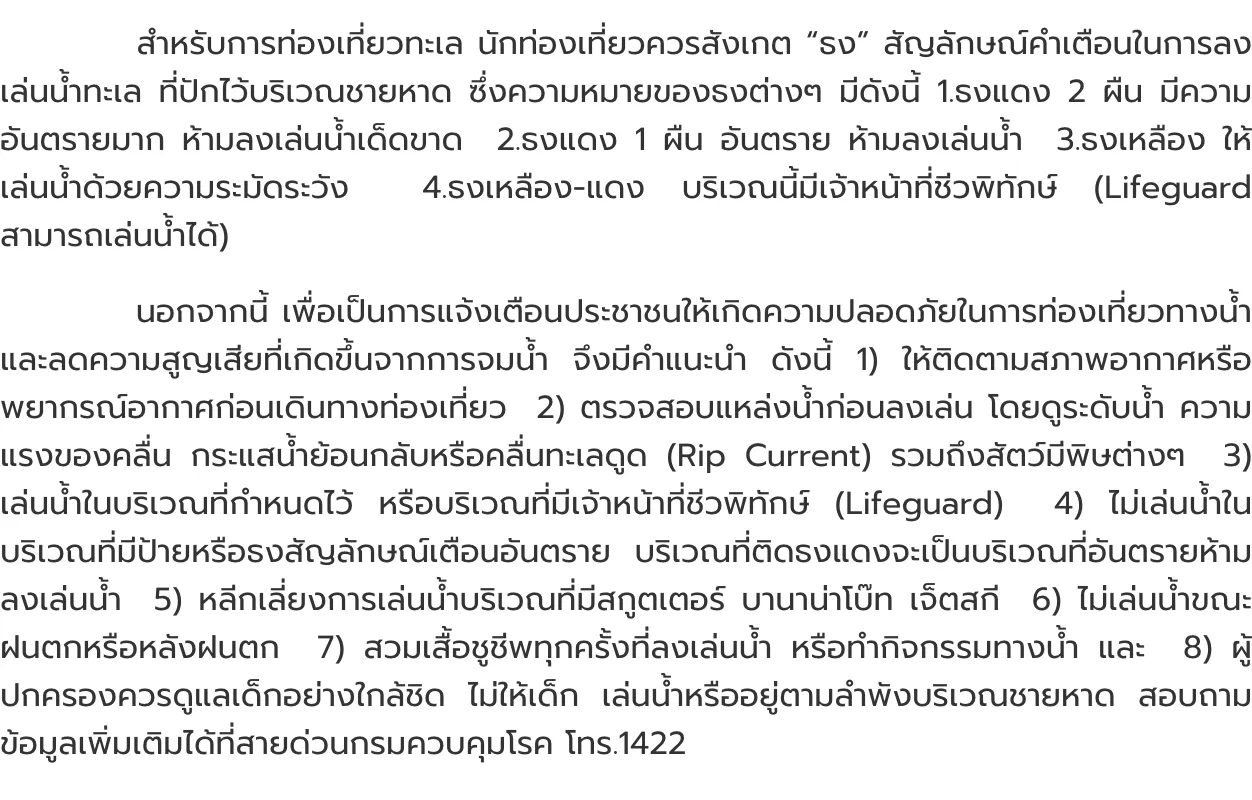
| Flag | Meaning |
|---|---|
| 2 red flags | Very dangerous, no swimming at all |
| 1 red flag | Danger, no swimming |
| Yellow | Swim with caution |
| Yellow and red | Lifeguard area, swimming allowed |
Swim in a designated area or where lifeguards are present. Wear a life jacket every time you enter the water, and avoid swimming where scooters, banana boats and jet skis operate.
Rip currents: spot them and get out
Rip currents can occur at almost every beach. Look for water that is whiter and murkier than the water around it, or broken, grooved waves with a gap in the wave line.
If you are caught in one, stay calm and do not swim against it, because you will tire and drown. Swim parallel to the shore, and swim back in once you are out of the current.
Monsoon months on the Andaman coast
The monsoon period runs from June to October, with strong waves. For month-by-month beach planning, see best Thai islands by month. Region guides: Phuket, Koh Samui, Krabi and Ao Nang and Hua Hin.
Step by step
- Get out of the seaGet out of the sea at once and phone the emergency medical service 1669.
- Keep the person stillKeep the injured person still and do not scrub the contact area.
- Pour vinegarPour household vinegar of 4 to 6% strength over the contact area for at least 30 seconds.
- Go to hospital if no betterIf the person does not improve, take them to hospital quickly.
Not confirmed: The meaning of a purple marine-hazard flag is not confirmed by an official page. Exact box jellyfish season dates by coast are not published on the pages read.
Common questions
What do I pour on a jellyfish sting in Thailand?
Household vinegar of 4 to 6% strength, poured continuously over the contact area for at least 30 seconds. Do not use fresh water, plain water or alcohol.
Why not rinse a sting with fresh water?
Fresh water, white spirit or alcohol, and scrubbing, trigger the stinging cells to fire and more venom enters the body.
Does vinegar stop the pain?
Vinegar stops the stinging cells working but does not relieve pain. It inhibits the venom injection.
Which number do I call after a sting?
Call the emergency medical service on 1669. The Department of Disease Control hotline 1422 answers questions.
Can I swim when beach flags are yellow?
A yellow flag means swim with caution. A yellow-and-red flag marks a lifeguard area where swimming is allowed.
Should I swim after rain?
Do not swim during or after rain. Jellyfish are found more after rain, in shallow sea near the shore.
How do I escape a rip current?
Stay calm, do not swim against the current, and swim parallel to the shore until out of it.
Where are box jellyfish reported?
Occasional sightings are reported at Ko Lanta, the Phi Phi marine park, Nam Bo Bay, Hua Hin, Cha-am, Ko Tao, Ko Samui, Ko Pha-ngan, Ko Mak and Ko Kut.
When is the bluebottle season on the Gulf coast?
The outbreak period on the Gulf of Thailand coast is January to March each year.
Read next
Sources and reader comments
Official sources:
- Department of Disease Control (ddc.moph.go.th): news "Safe travel: beware jellyfish contact", 18 Oct 2025 (B.E. 2568) (opens in a new tab)
- Department of Disease Control: monsoon-season swimming warning and beach flag meanings, 3 Aug 2023 (B.E. 2566) (opens in a new tab)
- Department of Disease Control: rip current warning and how to survive one, 20 Jul 2022 (B.E. 2565) (opens in a new tab)
- TAT Newsroom (Tourism Authority of Thailand): Jellyfish Safety Advice in Thailand, 25 Aug 2025 (opens in a new tab)
- Department of Disease Control, Regional Office 12 Songkhla: bluebottle warning for the Gulf of Thailand coast, 4 Feb 2025 (B.E. 2568) (opens in a new tab)
Show 2 more sources
Company and press pages (not official sources):
General health information checked against the sources listed above, not medical advice. Rules, vaccine schedules and prices change; see a doctor or the hospital before you act. See how guides are checked.
Spotted an error? Report it.