
Thailand Drug Laws: Up to 15 Years for Category 1
Using a category 1, 2 or 5 drug carries up to 1 year in prison, a fine of up to THB 20,000, or both. Possessing one for use carries up to 2 years. Possession or sale of a category 1 drug carries up to 15 years and a fine of up to THB 1,500,000.
On this page
The safe answer: nothing here is worth the risk. Even using a category 1, 2 or 5 drug carries up to 1 year in prison, and category 1 possession or sale carries up to 15 years. All of it comes from one text, the Narcotics Code, which repealed the Narcotics Act B.E. 2522 (1979).
Three maximums matter most to a visitor:
- Using a category 1, 2 or 5 drug: up to 1 year in prison, a fine of up to THB 20,000, or both.
- Possessing one for use: up to 2 years in prison, a fine of up to THB 40,000, or both.
- Producing, importing, exporting, selling or possessing a category 1 drug: up to 15 years in prison and a fine of up to THB 1,500,000.
How the five categories work
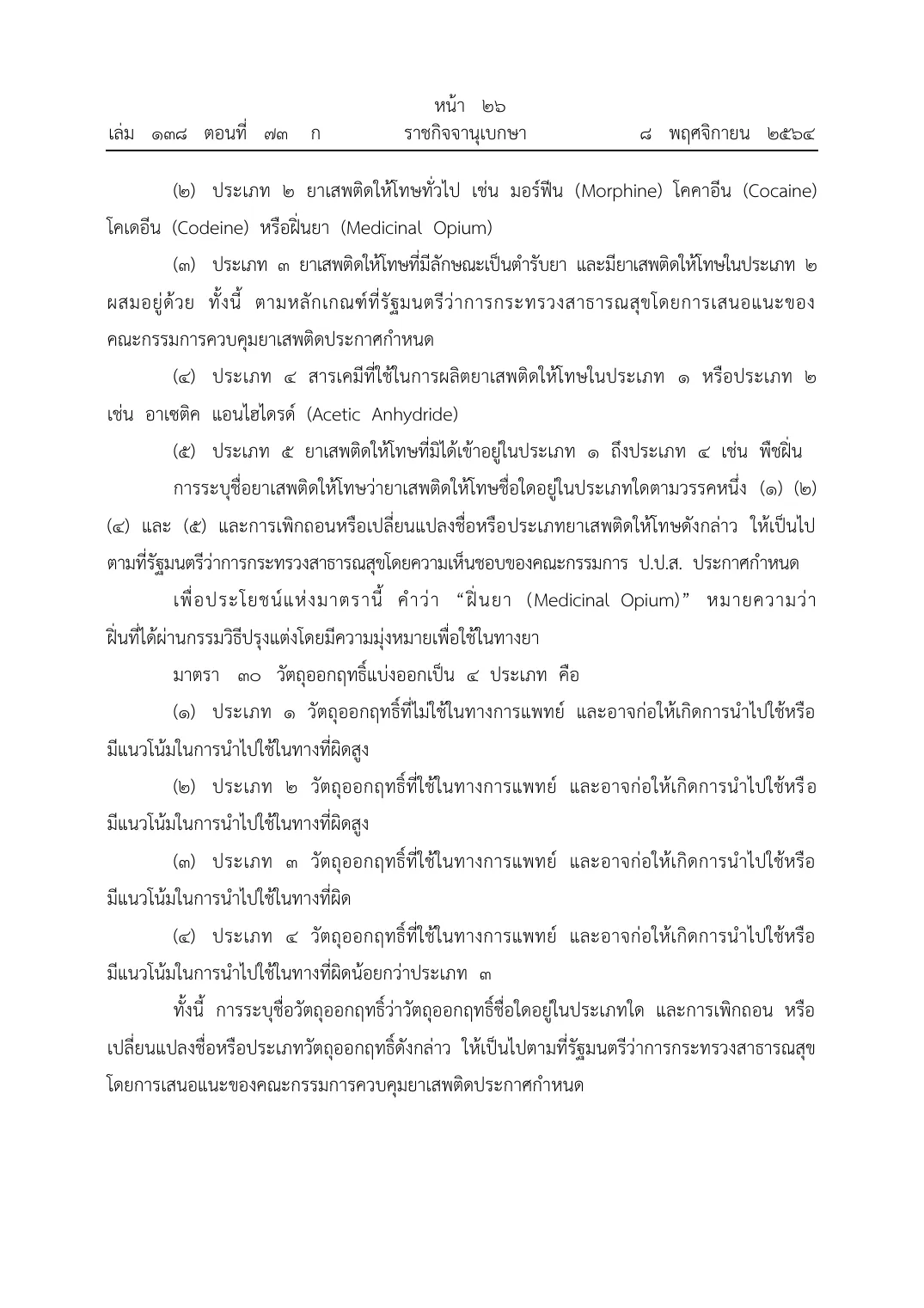
The Code divides narcotics into five categories in section 29. Category 1 is serious narcotics such as heroin, and category 2 is general narcotics such as morphine, cocaine and codeine. Category 5 covers narcotics outside categories 1 to 4, such as the opium plant, and cannabis extracts sit there too.
What each offence costs
Sections 145 to 148 set the penalties for producing, importing, exporting, selling and possessing, and sections 162 and 164 cover use and possession for use.
| Offence | Category | Maximum penalty |
|---|---|---|
| Use | 1, 2 or 5 | Up to 1 year in prison, a fine of up to THB 20,000, or both |
| Possession for use | 1, 2 or 5 | Up to 2 years in prison, a fine of up to THB 40,000, or both |
| Production, import, export, sale or possession | 1 | Up to 15 years in prison and a fine of up to THB 1,500,000 |
| Production, import, export, sale or possession | 2 or 4 | Up to 10 years in prison and a fine of up to THB 1,000,000 |
| Production, import, export or sale | 3 | Up to 3 years in prison and a fine of up to THB 300,000 |
| Production, import, export, sale or possession | 5 | Up to 5 years in prison and a fine of up to THB 500,000 |
มาตรา ๑๔๕ ผู้ใดผลิต นาเข้า ส่งออก จาหน่าย หรือมีไว้ในครอบครองซึ่งยาเสพติดให้โทษ ในประเภท ๑ อันเป็นการฝ่าฝืนมาตรา ๙๐ ต้องระวางโทษจาคุกไม่เกินสิบห้าปี และปรับไม่เกิน หนึ่งล้านห้าแสนบาท
Whoever produces, imports, exports, sells or possesses a category 1 narcotic, breaking section 90, faces imprisonment of up to fifteen years and a fine of up to one million five hundred thousand baht.
Narcotics Code B.E. 2564, section 145 paragraph 1, Royal Gazette 8 November 2021 (editor’s translation)
When category 1 gets worse
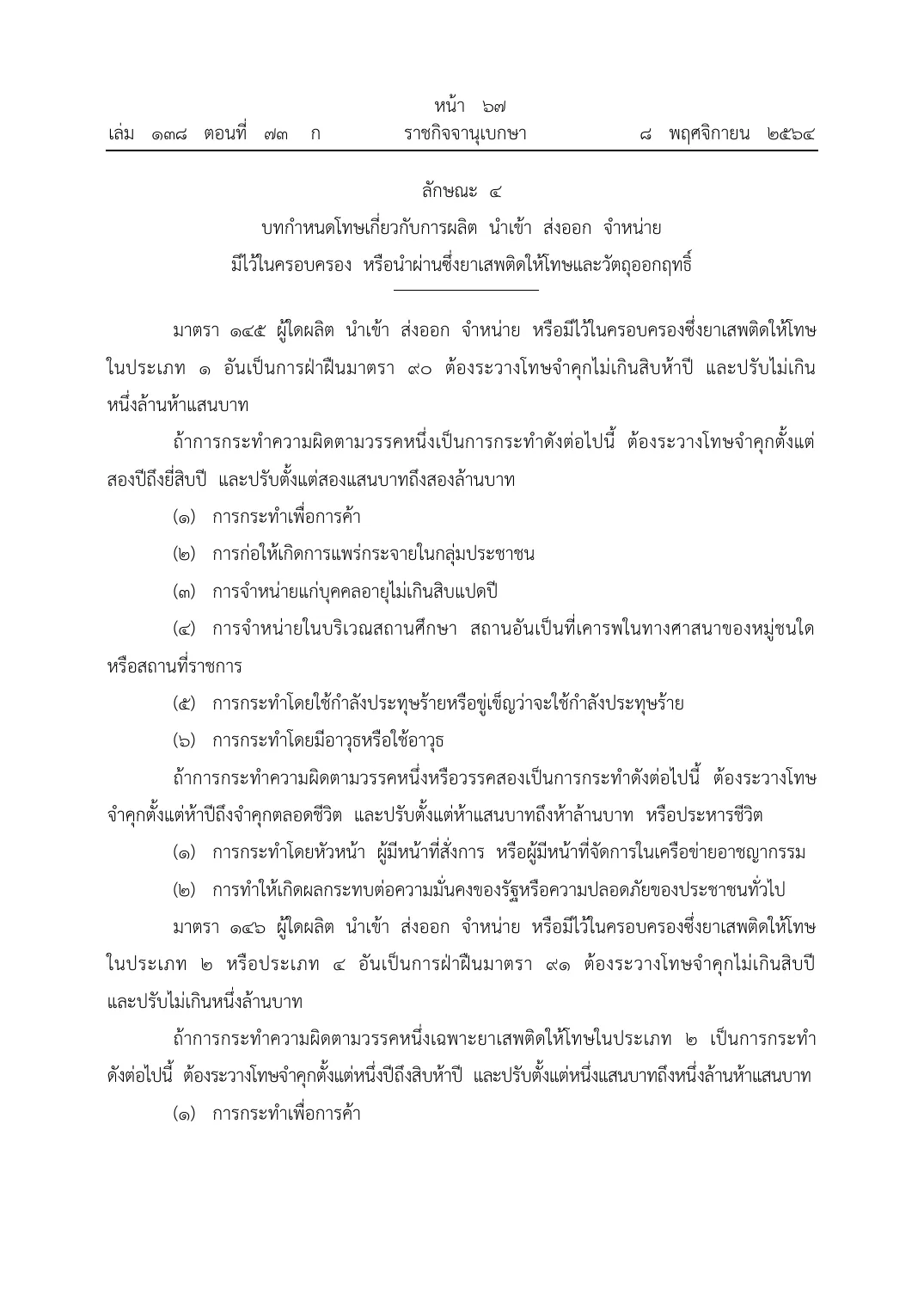
Higher tiers sit on top of that basic maximum. The range becomes 2 to 20 years in prison and a fine of THB 200,000 to 2,000,000 when the act is for trade or spreads among the public. The same range applies when the drug is sold to someone aged 18 or under, or at a school, a place of worship or a government office, or when force or a weapon is used.
The top tier is 5 years to life in prison and a fine of THB 500,000 to 5,000,000, or death. It covers a head, commander or manager in a criminal network, and acts that affect state security or public safety.
Using a drug or holding a small amount
Section 104 bans use of category 1, 2 and 5 drugs, and section 107 bans possession for use. A small quantity up to the amount the Health Minister sets in a ministerial regulation is presumed to be held for use. That is why this page gives no gram count.
มาตรา ๑๖๔ ผู้ใดมีไว้ในครอบครองซึ่งยาเสพติดให้โทษในประเภท ๑ ประเภท ๒ หรือ ประเภท ๕ หรือวัตถุออกฤทธิ์ในประเภท ๑ หรือประเภท ๒ เพื่อเสพ อันเป็นการฝ่าฝืนมาตรา ๑๐๗ ต้องระวางโทษจาคุกไม่เกินสองปี หรือปรับไม่เกินสี่หมื่นบาท หรือทั้งจาทั้งปรับ
Whoever possesses a category 1, 2 or 5 narcotic, or a category 1 or 2 psychotropic substance, for use, breaking section 107, faces imprisonment of up to two years or a fine of up to forty thousand baht, or both.
Narcotics Code B.E. 2564, section 164, Royal Gazette 8 November 2021 (editor’s translation)
Treatment can end the case
If you volunteer before officers find you, section 113 applies, and completing the programme with the written certificate leaves you not guilty. If officers find you first, section 114 applies when you are not a suspect in another offence with a prison penalty and you volunteer for treatment. Completing the programme and getting the certificate leaves you not guilty here too. The court may also weigh helping the defendant stop using through treatment above punishment.
Cannabis flower and extracts
Under the Health Ministry notice that took effect on 26 June 2025, only the flower of the cannabis plant is a controlled herb. A licensed shop may sell it to a person holding a prescription from a listed practitioner, for use of not more than 30 days.
Extracts from all parts of the plant are category 5 narcotics, except a licensed extract with THC of not more than 0.2 percent from cannabis or hemp grown in the country. Exporting controlled herb needs a licence, and breaking that rule carries up to 1 year in prison, a fine of up to THB 20,000, or both. The Thailand cannabis law for tourists page has the rest.
Prescription medicines that contain narcotics
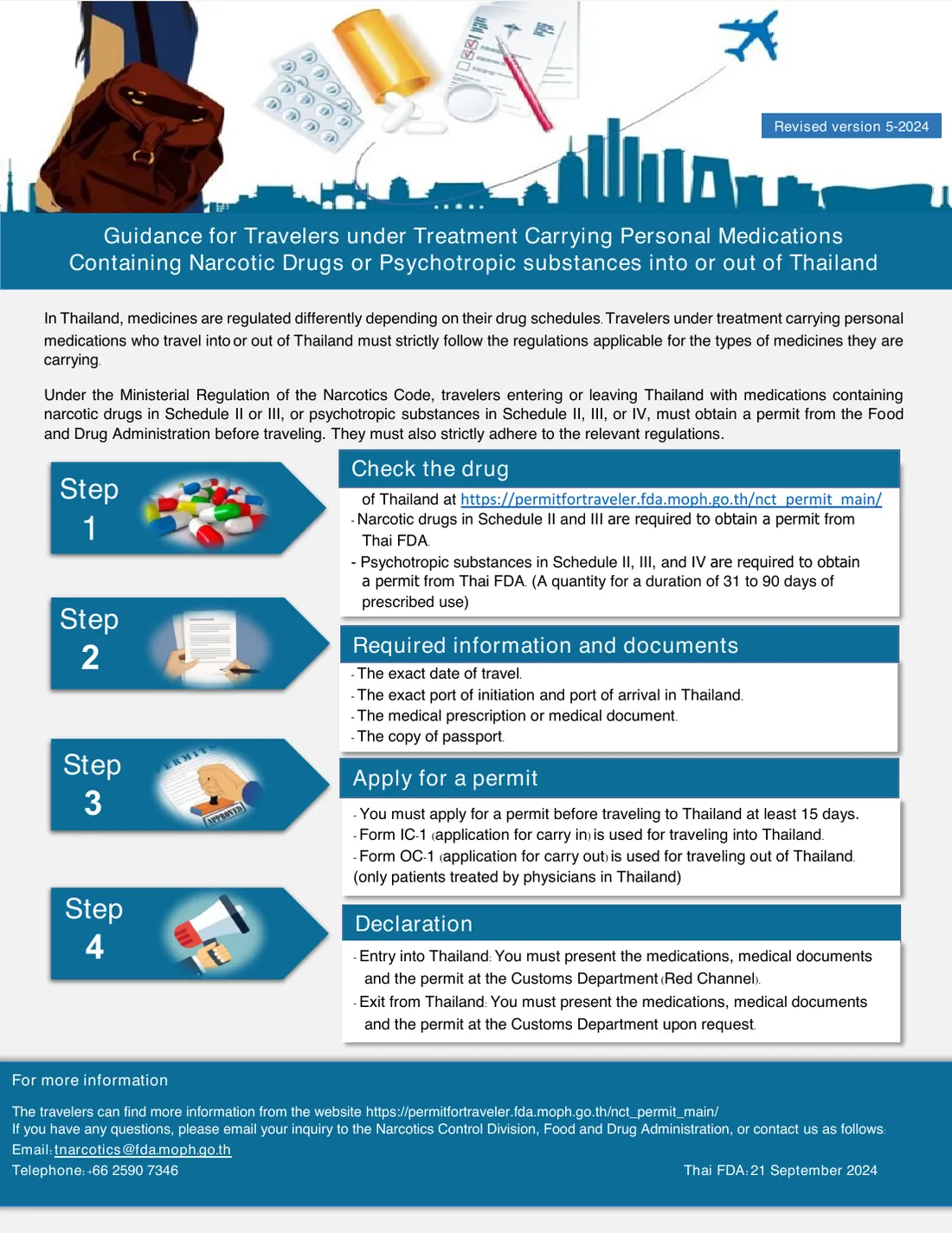
If your medicine contains a Schedule II or III narcotic, apply for a Thai FDA permit at least 15 days before you travel. The permitted amount is up to a 90-day supply as prescribed. Codeine is the common surprise, because it is a category 2 narcotic.
For psychotropic medicines in Schedules II, III and IV, a 30-day supply as prescribed may be carried with a certificate or prescription from your physician. A 31 to 90-day supply needs a Thai FDA permit. Category 1 psychotropic substances may not be brought in. Apply with Form IC-1, expect the permit in about 3 working days after a complete application, and show the medicines, documents and permit to Customs at the Red Channel on arrival. See bringing medication into Thailand for the full rules.
Deportation and entry bans
Officials may deport a foreigner who stays without permission or whose permission has ended or been revoked, and the Director General or the Immigration Commission may revoke a temporary stay permission. Section 12 of the Immigration Act also bars entry to someone who has served a prison sentence under a Thai or foreign court. The same section bars someone there is reason to believe is entering for the drug trade.
Who to call
The Tourist Police hotline 1155 takes calls about crimes involving tourists. The UK Foreign, Commonwealth and Development Office can help you find an English-speaking lawyer or an interpreter, but it cannot give you legal advice.
Not confirmed: Small amounts: the quantity is left to a ministerial regulation, so no gram or pill count is given here. Entry-ban length: the Immigration Act sections quoted give none; ask the Thai embassy. Later Code amendments: not checked beyond the original text.
Common questions
Can a tourist go to prison for using drugs in Thailand?
Using a category 1, 2 or 5 drug carries up to 1 year in prison, a fine of up to THB 20,000, or both. Section 113 or 114 treatment cases are excluded from that section.
What is the penalty for holding a small amount for use?
Possessing a category 1, 2 or 5 drug for use carries up to 2 years in prison, a fine of up to THB 40,000, or both. The Code presumes a small quantity up to the amount a ministerial regulation sets is held for use.
What is the maximum penalty for selling or possessing a category 1 drug?
Section 145 gives up to 15 years in prison and a fine of up to THB 1,500,000 for production, import, export, sale or possession of a category 1 drug. Trade or spread among the public raises the range to 2 to 20 years.
Does Thai law allow the death penalty for drugs?
The Code's top tier for category 1 is 5 years to life in prison and a fine of THB 500,000 to 5,000,000, or death. That tier names network heads, commanders and managers, and acts that affect state security or public safety.
Can treatment replace prison for a user?
A person who completes treatment and gets the written certificate of satisfactory completion is not guilty under the use and possession-for-use sections. The court may also weigh treatment above punishment.
Can I bring prescription codeine or similar medicine into Thailand?
Medicines with Schedule II or III narcotics need a Thai FDA permit, applied for at least 15 days before travel. The Code lists codeine as a category 2 narcotic.
Are cannabis oils and extracts legal?
Extracts from all parts of the cannabis plant are category 5 narcotics. The listing excepts a licensed extract with THC of not more than 0.2 percent from cannabis or hemp grown in the country.
Can a drug offence get a foreigner deported?
Officials may deport a foreigner whose permission to stay has ended or been revoked. The Director General or the Immigration Commission may revoke a temporary stay permission.
Is the 1979 Narcotics Act still the law?
The Narcotics Code repealed the Narcotics Act B.E. 2522 (1979). Penalties quoted from the old Act do not describe the current Code.
Who do I call after a drug arrest?
The Tourist Police hotline 1155 takes calls about crimes involving tourists. The UK Foreign Office can help find an English-speaking lawyer or an interpreter.
Read next
Sources and reader comments
Official legal texts (Gazette, government portals):
- Royal Gazette vol. 138 part 73 Kor, 8 Nov 2021, pp. 1-80: Act promulgating the Narcotics Code B.E. 2564 with the Narcotics Code (read via Web Archive copy, quotes copied as extracted) (opens in a new tab)
- Thai FDA: Guidance for travelers under treatment carrying personal medications containing narcotic drugs and psychotropic substances into/out of Thailand (opens in a new tab)
- Royal Gazette vol. 139 special part 35 Ng, 9 Feb 2022, p. 8: Notification of the Ministry of Public Health naming narcotics in category 5 B.E. 2565 (read via Web Archive copy) (opens in a new tab)
- Immigration Act B.E. 2522 (1979) as amended, Thai and English text (Phuket Immigration Office copy; the English is an unofficial translation, the Thai text is quoted) (opens in a new tab)
- Public Relations Department (prd.go.th): emergency numbers list, posted 25 Dec 2023 (Wayback copy) (opens in a new tab)
Show 5 more sources
- GOV.UK (FCDO): Reporting a crime abroad and getting help (opens in a new tab)
- Thai FDA: Guideline of importation for personal use, passenger belongings related to health products (into the Kingdom of Thailand) (opens in a new tab)
- Royal Gazette vol. 142 special part 229 Ng, 25 Jun 2025, pp. 8-9: Notification of the Ministry of Public Health on controlled herbs (cannabis) B.E. 2568 (copy hosted by the Department of Thai Traditional and Alternative Medicine (opens in a new tab)
- Royal Gazette: Protection and Promotion of Thai Traditional Medicinal Intelligence Act B.E. 2542 (1999), sections 45, 46 and 78 (Council of State copy hosted by DTAM; read as page images) (opens in a new tab)
- Ministry of Foreign Affairs, hosting the Thai FDA flyer 'Guidance for Travelers under Treatment Carrying Personal Medications Containing Narcotic Drugs or Psychotropic substances into or out of Thailand', revised 5-2024 (Thai FDA 21 Sep 2024) (opens in a new tab)
General information checked against the sources listed above. Prices, opening hours and other details change; confirm them with the provider before you act. See how guides are checked.
Spotted an error? Report it.