
What Not to Bring Into Thailand: Banned Items and Limits
Thai Customs bans narcotics, pornographic material, counterfeit goods, fake money and protected wildlife, and e-cigarettes are prohibited imports. Duty-free allowance is 200 cigarettes and 1 litre of alcohol. Meat needs a livestock licence, fresh fruit is a prohibited plant, and cash above THB 450,000 must be declared.
On this page
Thai Customs sorts incoming goods two ways: goods that are banned outright, and goods that need a permit from a named agency. Arriving passengers then pick the green lane or the red lane, depending on what they carry. The rules below come from Customs, the Thai FDA, the livestock and plant quarantine laws, and the Bank of Thailand notifications on cash.
Quick answer by item
| Item | Status | Basis |
|---|---|---|
| Narcotics | Banned | Narcotics Code section 145 |
| E-cigarettes and vapes | Banned | Customs Act section 242 |
| Counterfeit goods and fake money | Banned | Customs list of prohibited goods |
| Guns and bullets | Permit needed | Department of Provincial Administration |
| Meat and animal products | Licence needed | Animal Epidemics Act section 31 |
| Fresh fruit | Prohibited plant | Plant Quarantine Act section 8 |
| Cigarettes | Up to 200 | The excess goes in the Customs box |
| Alcohol | Up to 1 litre | The excess goes in the Customs box |
| Cash | Declare above THB 450,000 | Ministry of Finance notification |
| Medicine | Up to 30 days | Thai FDA guideline |
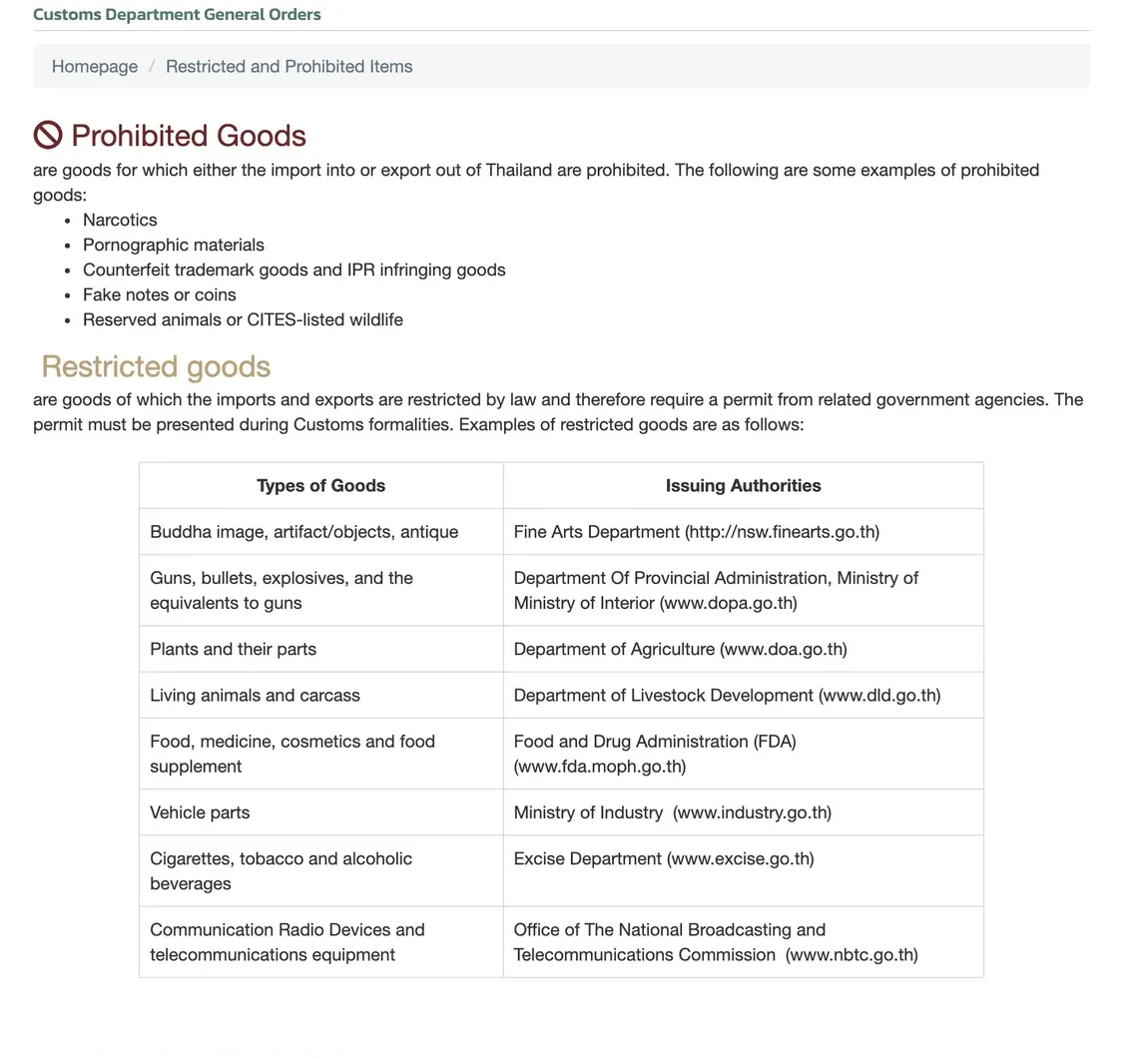
Prohibited goods
Prohibited goods are goods for which either importing into or exporting out of Thailand is banned. Examples of prohibited goods.
- Narcotics.
- Pornographic materials.
- Counterfeit trademark goods and goods that infringe intellectual property rights.
- Forged banknotes and coins.
- Reserved animals or CITES-listed wildlife.
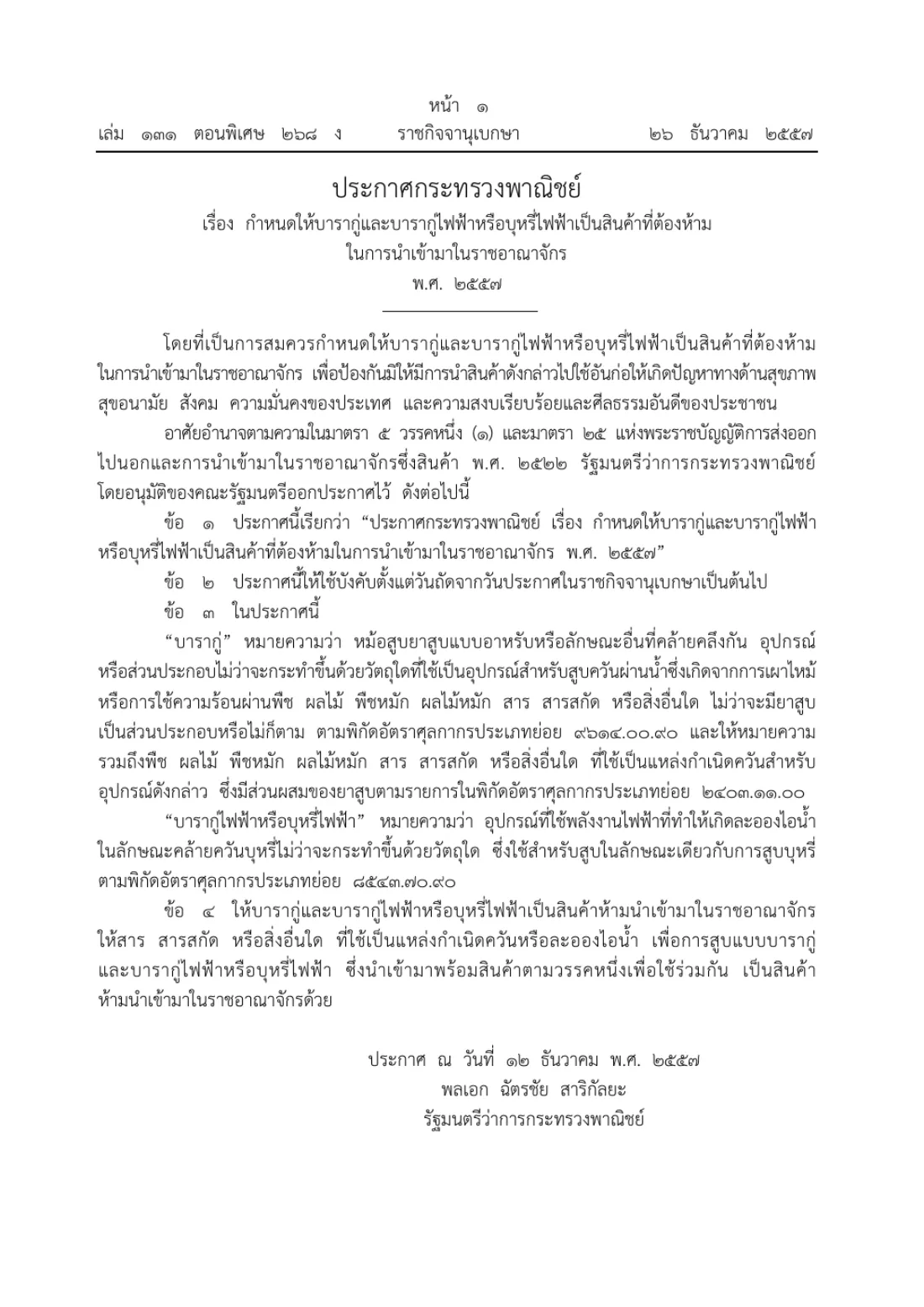
Vapes and e-cigarettes
A Commerce Ministry notice makes hookahs, electric hookahs and e-cigarettes goods prohibited from import. The notice dates from 26 December 2014 and applies from the day after its announcement. The ban also covers the liquid or extract imported with the device.
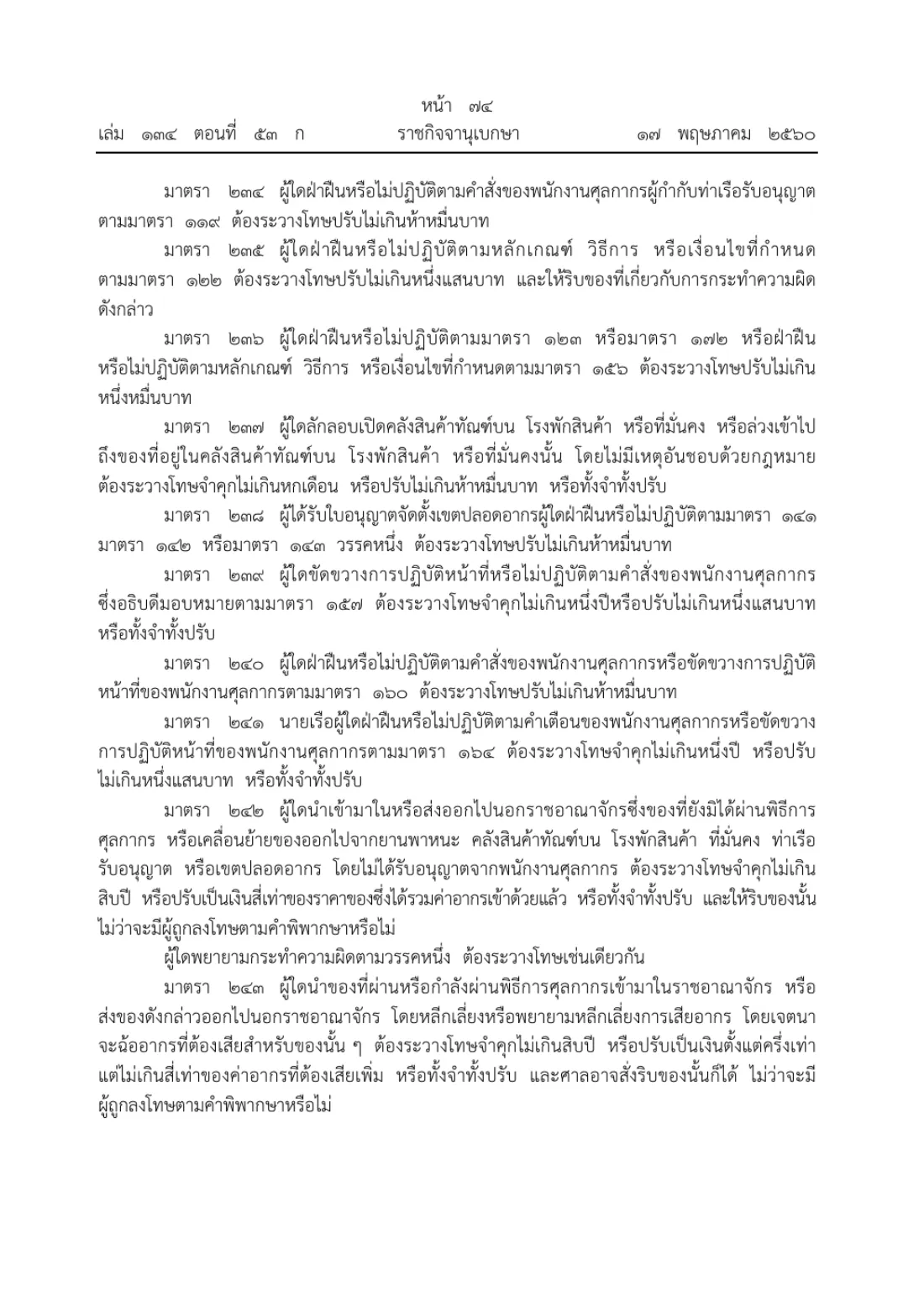
Customs Act section 242 carries up to 10 years in prison or a fine of four times the value including duty, or both, and the goods are forfeited. Section 244 carries up to 10 years or a fine of up to THB 500,000, or both.
Anyone who helps hide, buys, receives or holds a banned e-cigarette while knowing it is a banned import is also guilty. The full rules are on the vape law page.
Narcotics
Section 145 of the Narcotics Code sets up to 15 years in prison and a fine of up to THB 1,500,000 for importing a category 1 narcotic. Category 2 or 4 narcotics carry up to 10 years and a fine of up to THB 1,000,000. Category 5 carries up to 5 years and a fine of up to THB 500,000. Cannabis products have their own page: cannabis law for tourists.
Restricted goods that need a permit
Restricted goods are goods whose import and export are restricted by law, so the permit from the related agency must be shown during Customs formalities. Each group has its own issuing agency.
| Goods | Issuing agency |
|---|---|
| Guns, bullets, explosives and equivalents | Department of Provincial Administration |
| Plants and their parts | Department of Agriculture |
| Living animals and carcasses | Department of Livestock Development |
| Food, medicine, cosmetics and food supplements | Food and Drug Administration |
| Cigarettes, tobacco and alcoholic beverages | Excise Department |
| Buddha images, artifacts and antiques | Fine Arts Department |
| Radio and telecommunications equipment | National Broadcasting and Telecommunications Commission |
Duty-free allowance and the two lanes
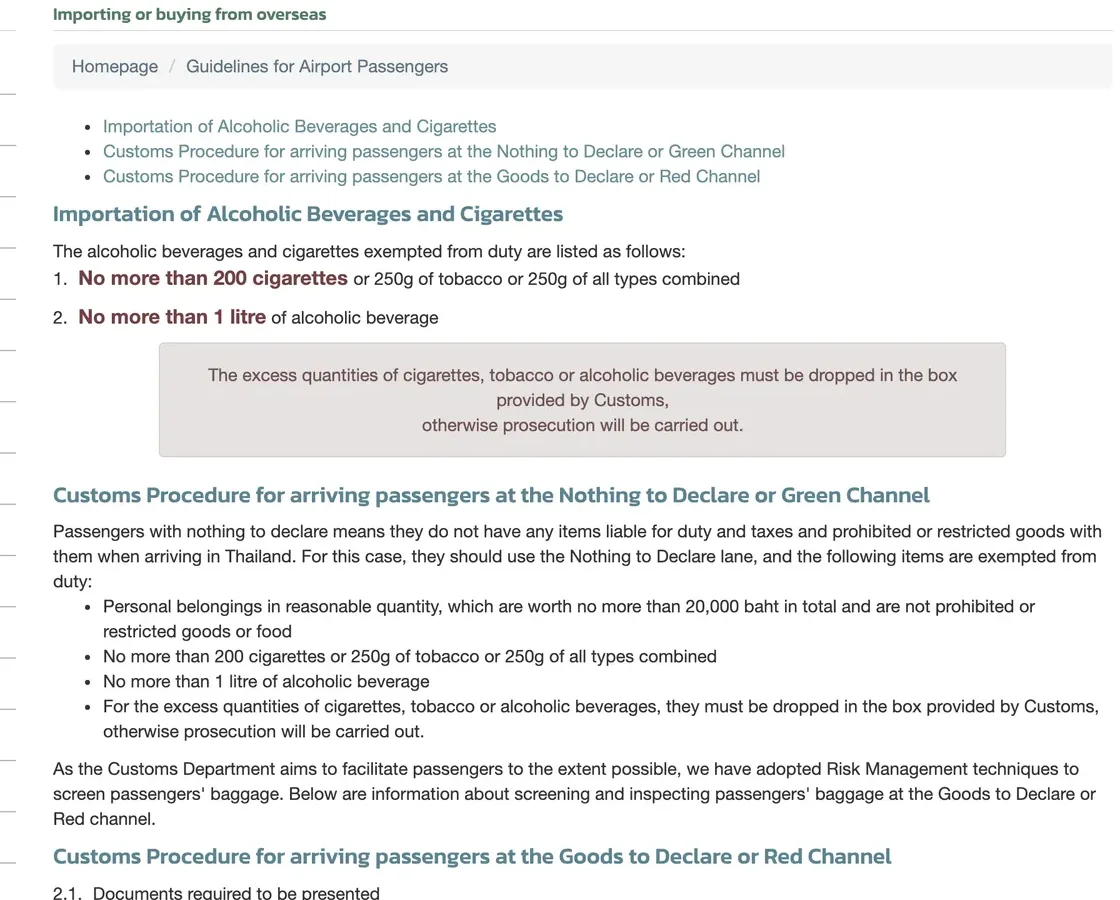
Duty-free tobacco is limited to 200 cigarettes or 250 g of tobacco. Duty-free alcohol is limited to 1 litre. The excess goes in the box provided by Customs, otherwise prosecution follows.
Green lane
The green lane is for passengers with nothing to declare. That means no items liable for duty and tax, and no prohibited or restricted goods. Personal belongings in the green lane must be worth no more than THB 20,000 in total and must not be prohibited goods, restricted goods or food.
Red lane
The red lane covers accompanying belongings that are not for commercial purpose and do not exceed THB 200,000 in value. The airport procedure for prohibited or restricted goods is prosecution of the passenger. A restricted item travels with its permit, shown to Customs.
Food, meat and plants
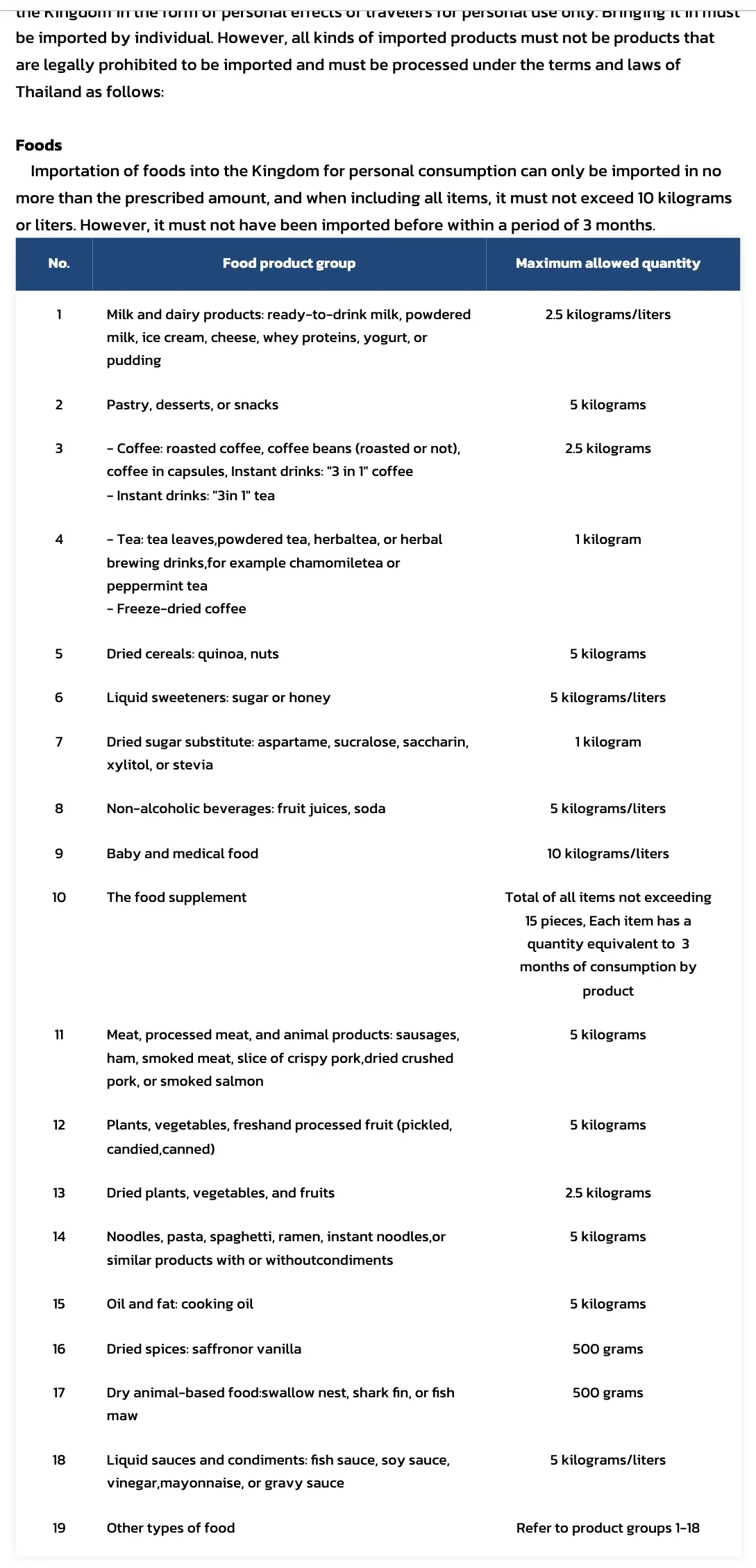
Food for personal use is capped at 10 kilograms or litres across all items. Each food group also has its own limit. The same food must not have been imported before within a period of 3 months.
| Food group | Maximum |
|---|---|
| Milk and dairy products | 2.5 kilograms or litres |
| Pastry, desserts and snacks | 5 kilograms |
| Noodles and pasta | 5 kilograms |
| Cooking oil | 5 kilograms |
| Meat, processed meat and animal products | 5 kilograms |
| Dried spices such as saffron or vanilla | 500 grams |
| Dry animal-based food such as swallow nest | 500 grams |
| Baby and medical food | 10 kilograms or litres |
Cannabis-based or hemp-based foods are not allowed.
Meat and animal products
The Food and Drug table caps processed meat at 5 kilograms. A licence is a separate requirement for anything that counts as a carcass. A carcass includes cooked food made from the parts of an animal.
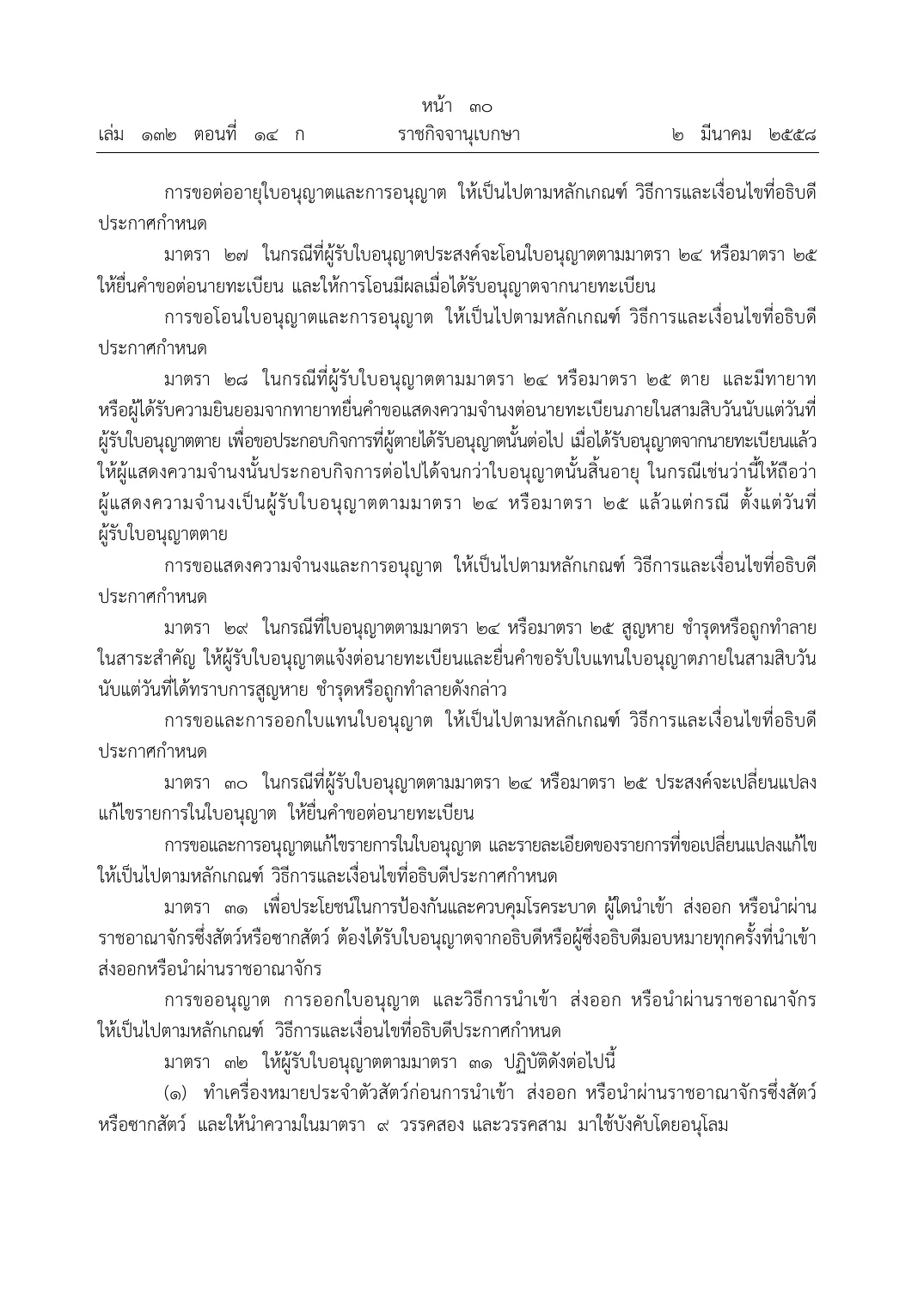
Importing animals or carcasses needs a licence from the Director General or his delegate every time. Without it, section 68 carries up to 2 years in prison or a fine of up to THB 200,000, or both.
Fruit and plants
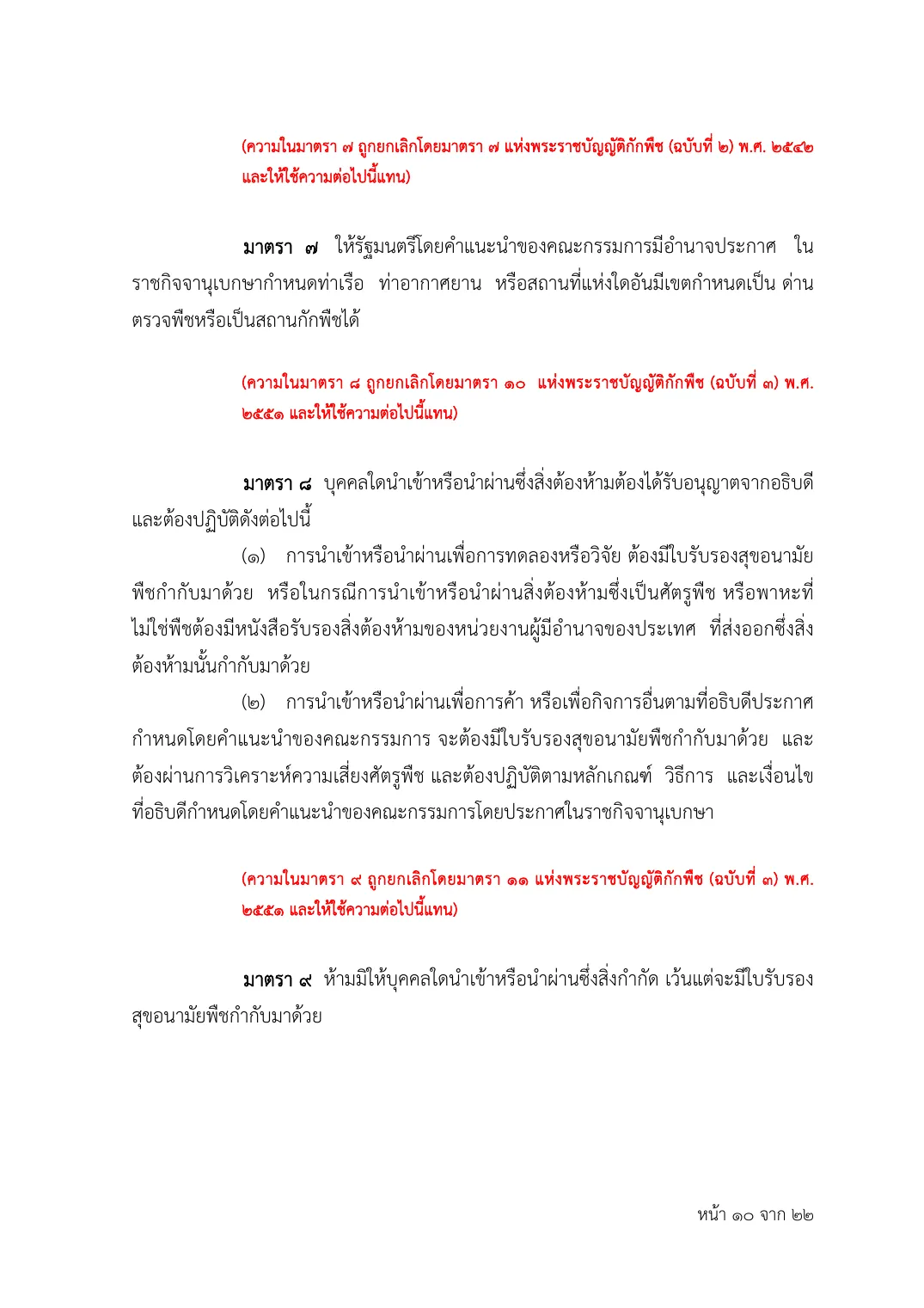
A prohibited plant item is whatever the Minister announces in the Royal Gazette as prohibited. Importing one needs permission from the Director General. Fresh fruit of every kind is on the airport list of prohibited plants.
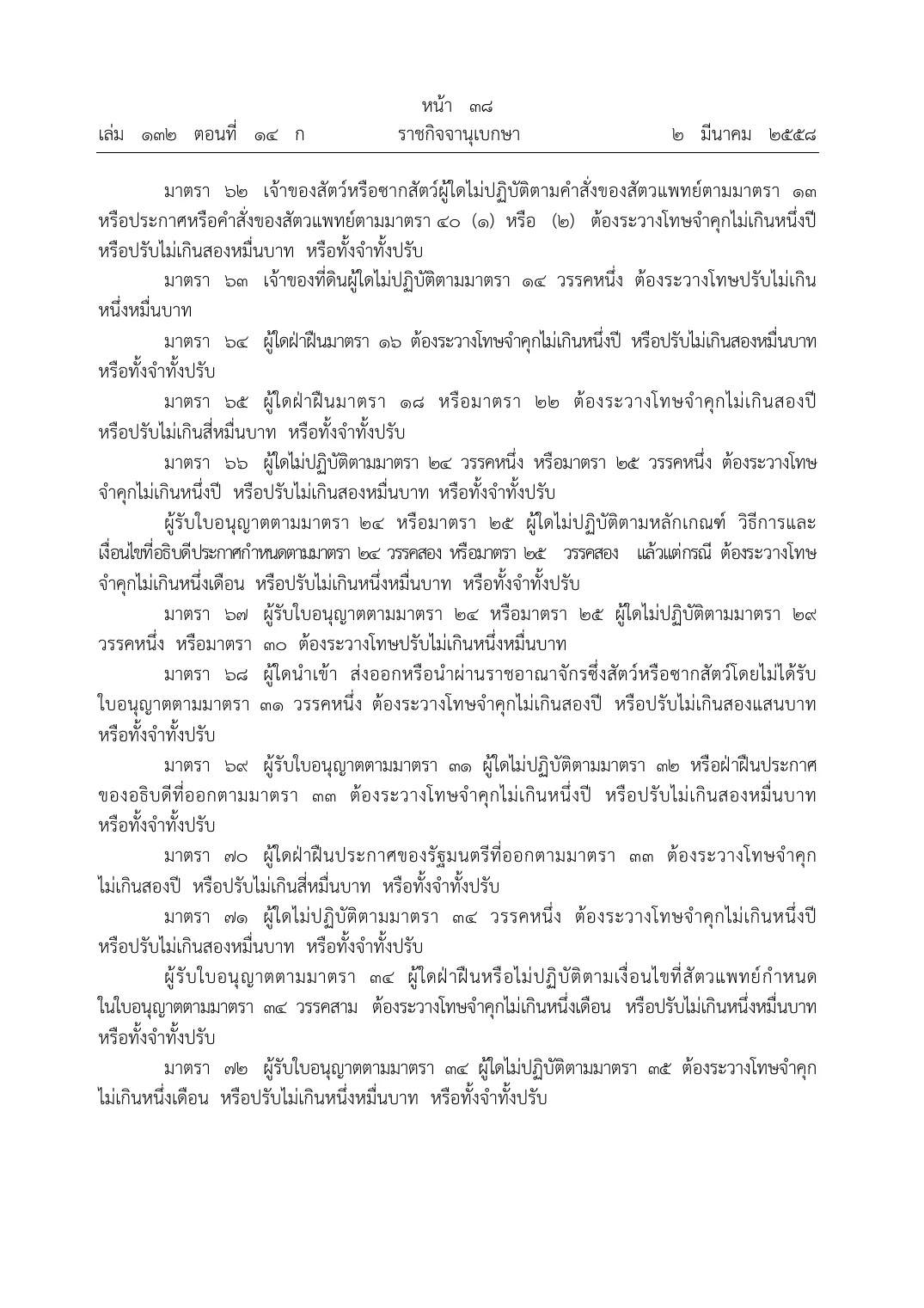
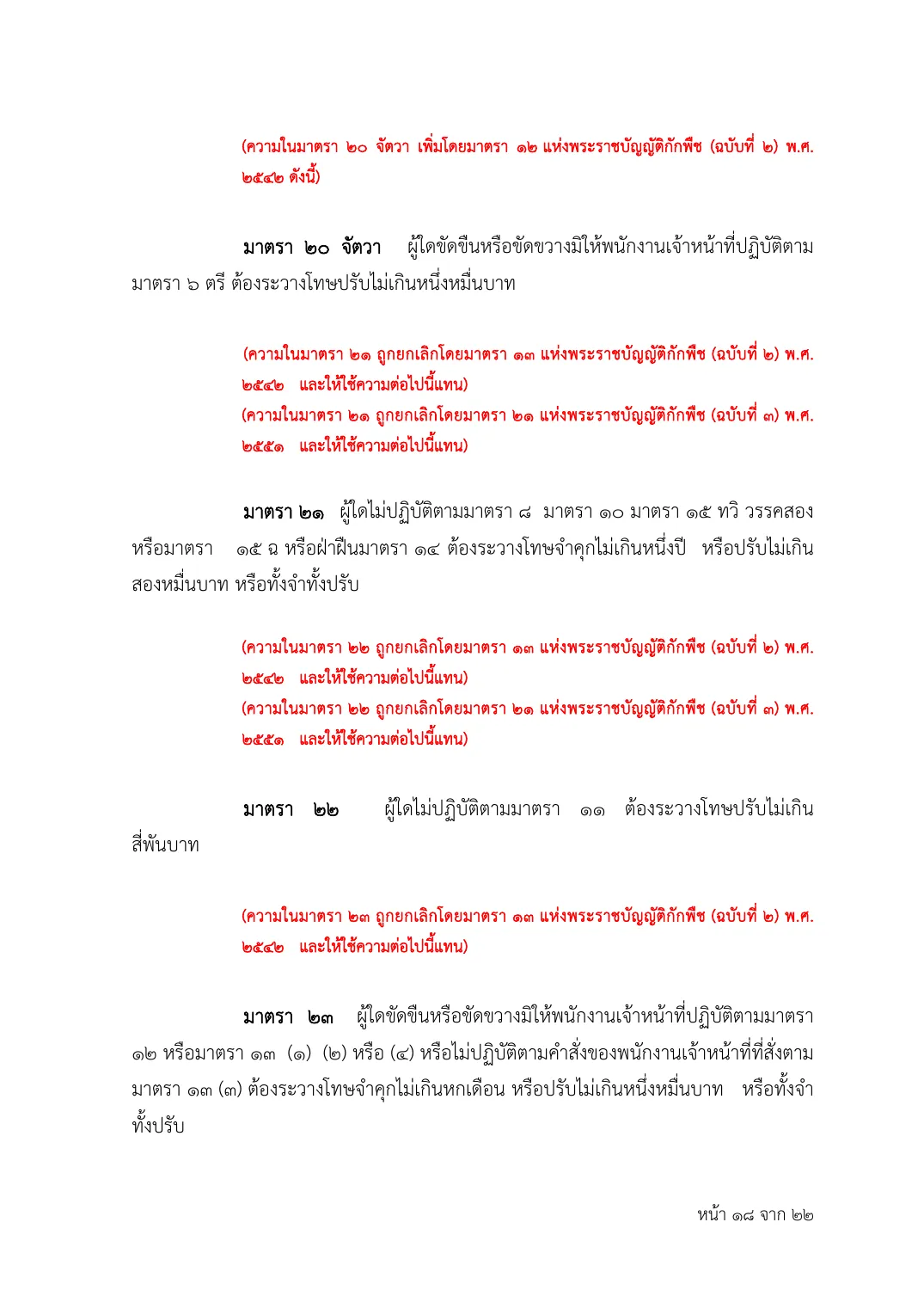
Other plants and plant products must carry a phytosanitary certificate and be declared to the plant quarantine officials. Plants brought in against the rules are confiscated and destroyed, with no compensation. Section 21 carries up to 1 year in prison or a fine of up to THB 20,000, or both.
Medicine, cosmetics and herbal products
Medicines may be carried in the amount needed for personal use, up to 30 days. Herbal products may be carried in the amount needed for personal use, up to 90 days. Cosmetics are limited to 3 pieces of each type and 15 pieces in total.
Cosmetics with cannabis or hemp extract are not allowed. Herbal products with cannabis or hemp are not allowed either.
Medicine that contains a narcotic
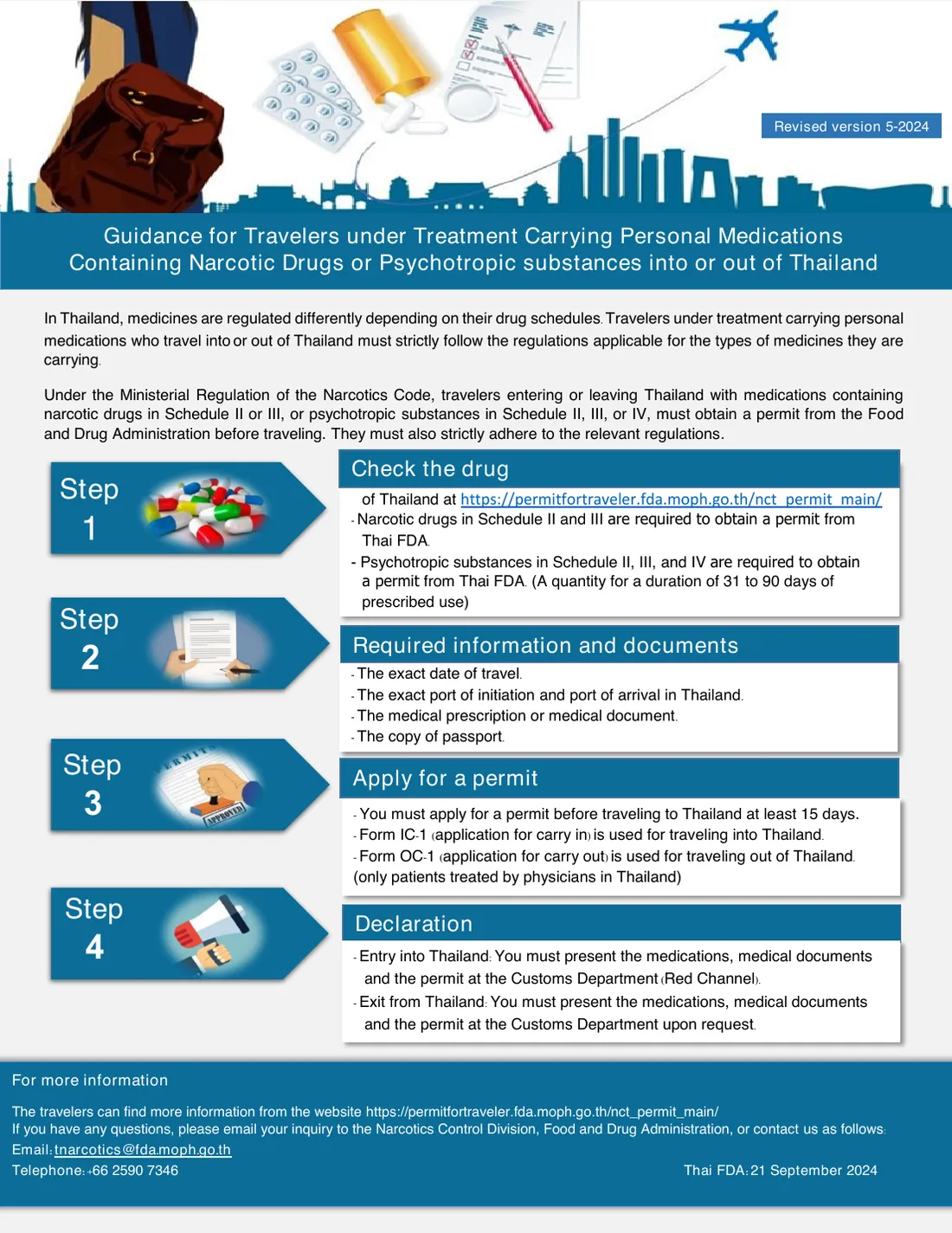
Travellers under medical treatment may carry medicine containing a Schedule II or III narcotic for personal use, up to a 90-day supply as prescribed. They must get a permit from the Food and Drug Administration first.
For psychotropic medicine, a 30-day supply as prescribed needs a certificate or prescription from the physician. A 31 to 90-day supply needs the permit. Category 1 psychotropic substances are not allowed.
The permit follows these steps.
- Apply online with Form IC-1, the application for carrying medicine into Thailand.
- Attach the medical prescription or medical document.
- Wait about 3 working days for the permit after a complete application.
- On arrival, show the medicines, the documents and the permit at the Customs Department Red Channel.
Cash and currency
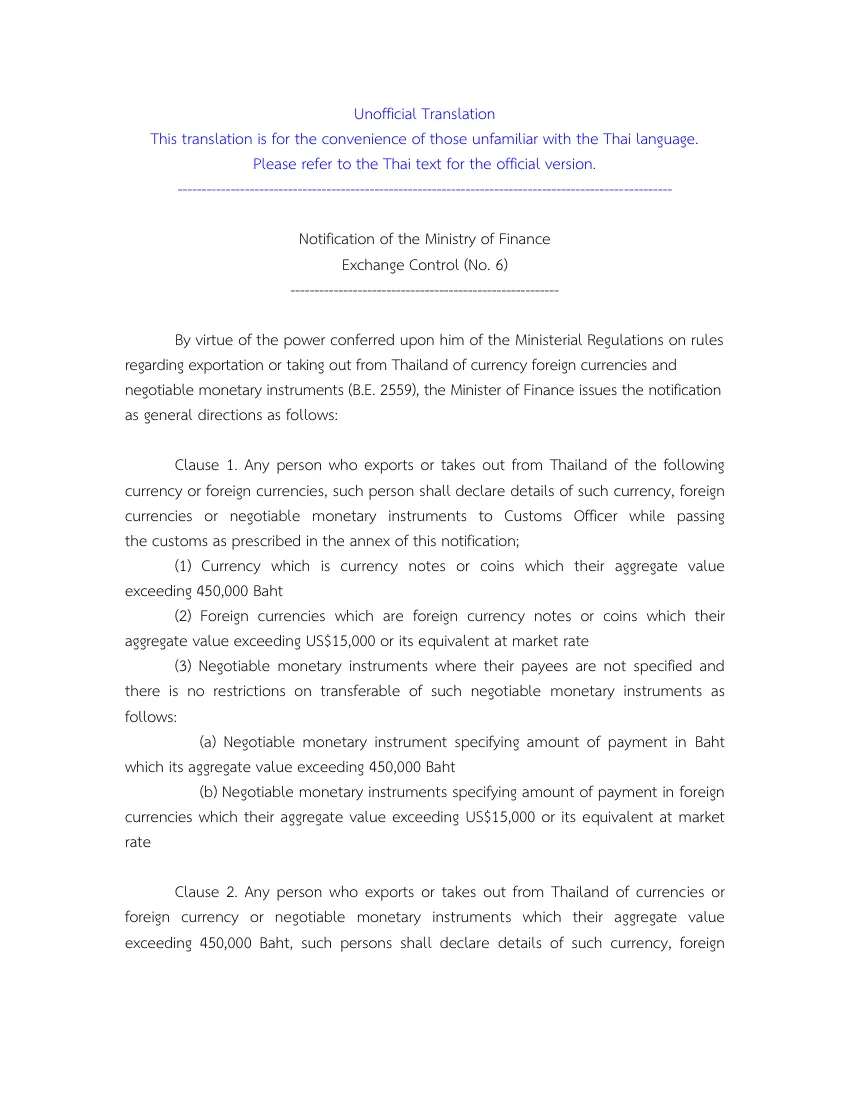
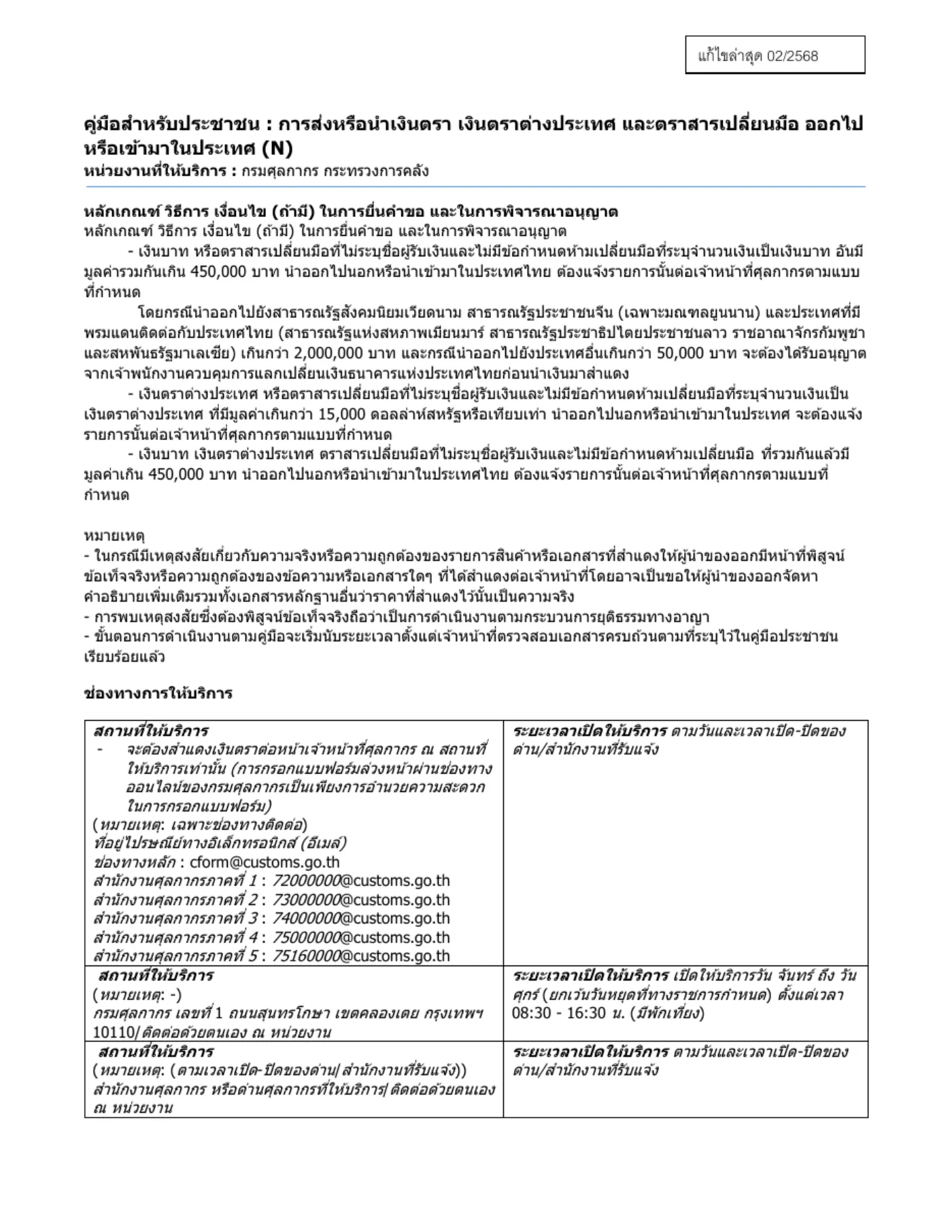
Foreign currency notes and coins worth more than US$15,000 must be declared. Baht cash worth more than 450,000 baht must be declared. The threshold also counts negotiable instruments with no named payee and no transfer restriction.
The declaration is made in front of a Customs officer at the service point only. Breaking an exchange-control regulation or notification carries a fine of up to THB 20,000, up to 3 years in prison, or both. Section 8 bis also treats such a breach as importing or exporting restricted articles under the Customs laws. The cash declaration page covers the steps.
Not confirmed: Drones: Customs names radio equipment under the telecoms regulator, but no drone import rule was read, so check with the regulator before packing one. Playing cards and small items: no official limit read. Narcotics Code small-quantity rules: not checked here.
Common questions
Can I bring an e-cigarette or vape into Thailand?
A Commerce Ministry notice makes hookahs, electric hookahs and e-cigarettes goods prohibited from import. Customs Act section 242 carries up to 10 years in prison or a fine of four times the value, or both.
How many cigarettes and how much alcohol can I bring?
Duty-free tobacco is limited to 200 cigarettes or 250 g of tobacco. Duty-free alcohol is limited to 1 litre. The excess goes in the Customs box, otherwise prosecution follows.
Can I bring meat or sausages into Thailand?
Importing animals or carcasses needs a licence from the Director General or his delegate every time. The Thai FDA food table caps processed meat at 5 kilograms. Importing without the licence carries up to 2 years in prison or a fine of up to THB 200,000, or both.
Can I bring fruit or plants into Thailand?
Fresh fruit of every kind is on the airport list of prohibited plants. Other plants and plant products must carry a phytosanitary certificate and be declared to the plant quarantine officials. Plants brought in against the rules are confiscated with no compensation.
How much cash do I have to declare?
Baht cash worth more than 450,000 baht must be declared. Foreign currency worth more than US$15,000 must be declared. The declaration is made in front of a Customs officer.
Can I bring my prescription medicine?
Medicines may be carried in the amount needed for personal use, up to 30 days. Medicine containing a Schedule II or III narcotic may be carried up to a 90-day supply as prescribed, with a permit from the Food and Drug Administration.
Can I bring cannabis foods, cosmetics or herbal products?
Cannabis-based or hemp-based foods are not allowed. Cosmetics with cannabis or hemp extract are not allowed. Herbal products with cannabis or hemp are not allowed either.
What is the difference between the green and red lane?
The green lane is for passengers with nothing to declare, meaning no items liable for duty and tax and no prohibited or restricted goods. The red lane covers belongings not for commercial purpose worth up to THB 200,000.
Do I need a permit for a gun or a Buddha image?
Guns, bullets and explosives need a permit from the Department of Provincial Administration. Buddha images, artifacts and antiques need a permit from the Fine Arts Department.
Read next
General information checked against the sources listed above, not legal advice for your situation. Rules and office practice change; confirm with the immigration office or a licensed adviser before you act. See how guides are checked.
Spotted an error? Report it.