
Bringing a Dog or Cat to Thailand
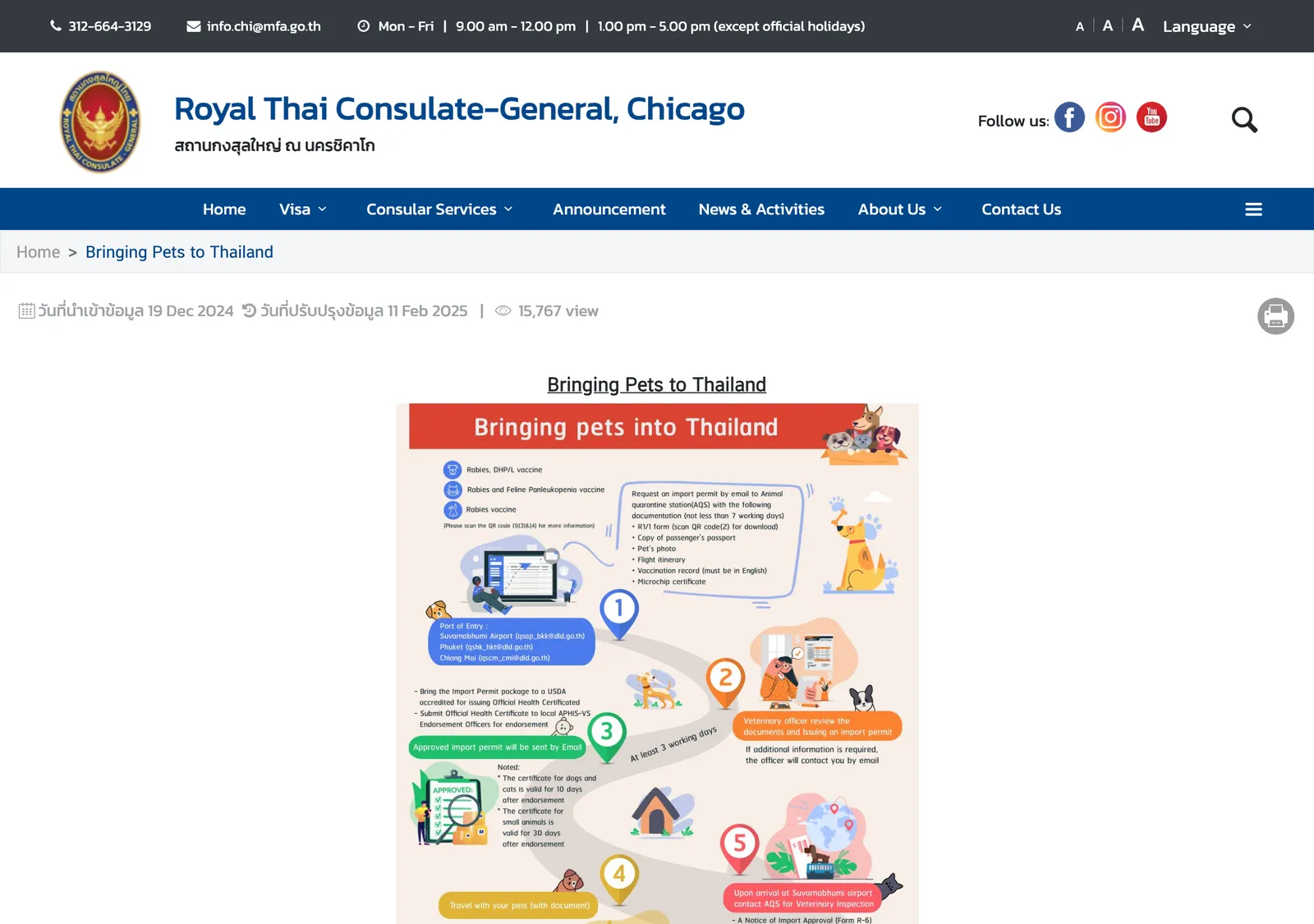
Your pet needs an import permit from the Department of Livestock Development before you fly. Email the quarantine station at your arrival airport at least 7 business days ahead, and give the vaccines 21 days before departure. The entry fee is THB 500 per animal.
On this page
Your dog or cat can come with you, but the permit has to be sorted before the flight, not after. Get that order wrong and the animal can be sent back or destroyed without compensation. Plan backwards from your departure day and it is a short chain of steps.
The permit comes first
Thai Customs sets the rule.
“สัตว์มีชีวิต” เป็นของต้องกำกัด ดังนั้น สัตว์เลี้ยงที่ผู้โดยสารนำติดตัวเข้ามาด้วย ไม่ได้รับยกเว้นอากร และต้องได้รับอนุญาตนำเข้าจากกรมปศุสัตว์จึงจะนำเข้าได้
“Live animals” are controlled goods, so a pet a passenger brings along is not exempt from duty and may be imported only with an import permit from the Department of Livestock Development.
Thai Customs Department, passenger pet import page
You ask for the permit by email from the quarantine station at the airport where you will land. Suvarnabhumi, Phuket and Chiang Mai all list an address. Send the request at least 7 business days before you fly.
Attach Form R1/1, plus these:
- Your passport copy and your flight itinerary.
- A clear colour photo of the pet.
- The vaccination record, in English.
- The microchip certificate.
The station usually answers in about 3 to 7 business days. The permit then stays valid for 60 days, so time the request to your flight.
Vaccines and the health certificate
Count back 21 days from your departure date: that is the cutoff for vaccines. Dogs need rabies, distemper, hepatitis, parvo and leptospirosis, and cats need rabies and feline panleukopenia. Your pet must be at least 4 months old, and dogs of any breed are fine.
Your vet also issues an official health certificate, which the exporting country’s authority endorses. I would book that endorsement as close to your flight as you can, because it is valid for only 10 days. The station takes only the original with real ink stamps, not a digitally signed copy.
What happens at the airport
Go to the quarantine station first, where the vet inspects the pet. At Suvarnabhumi it sits next to carousel No. 8 and is open 24 hours. Phuket and Chiang Mai are open 8:30 am to 4:30 PM.
If the vet finds no disease, you get the import licence (form R.7). The entry fee is THB 500 per animal, in cash. Then show the pet and the R.7 licence at the Goods to declare lane.
Quarantine: ask before you book
A pet with no sign of illness is not quarantined, though an officer can still detain any animal. The livestock department’s own requirements, however, list at least 30 days at the owner’s cost. I would put that question in your permit email and keep your dates loose until the station answers.
Timeline at a glance
| Step | Timing |
|---|---|
| Permit request by email | At least 7 business days before departure |
| Station review | About 3 to 7 business days |
| Vaccines | At least 21 days before departure |
| Health certificate | Valid 10 days after endorsement |
| Permit validity | 60 days after issuance |
| Entry fee | THB 500 per animal, cash |
For the rest of your move, see our moving to Thailand guide. If your pet bites someone or you are scratched, read about rabies after a dog bite. Other items have their own rules in what not to bring into Thailand, and travel insurance covers you, not your pet.
Step by step
- Email the quarantine station for an import permitSend Form R1/1 with your passport copy, pet photo, itinerary, English vaccination record and microchip certificate. Do it at least 7 business days before departure.
- Wait for the permitThe station reviews the documents in about 3 to 7 business days, and the permit is valid for 60 days.
- Vaccinate the petGive the required vaccines at least 21 days before departure.
- Get the health certificate endorsedThe exporting country's authority must endorse it, and it is valid for 10 days for dogs and cats.
- Contact the quarantine station on arrivalAsk for the veterinary inspection and bring the originals and a printout of the permit.
- Pay the fee and clear CustomsPay THB 500 per animal in cash, then show the pet and the R.7 licence at the Goods to declare lane.
Not confirmed: Quarantine: the livestock department's written requirements say at least 30 days at the owner's cost, but a Thai consulate says a healthy pet is not quarantined. Email the station before you book and ask which applies.
Common questions
Do I need a permit to bring my dog or cat into Thailand?
Yes. A pet arriving with you is a controlled import, so you need a permit from the Department of Livestock Development. You request it by email from the quarantine station at your arrival airport.
Is there a breed ban for dogs?
No, there is no breed restriction for dogs.
How old must my pet be?
At least 4 months old.
How long is the health certificate valid?
For dogs and cats it is valid for 10 days after endorsement. Only the original paper with real ink stamps is accepted, not a digitally signed copy.
Does my pet go into quarantine?
A pet showing no sign of illness is not quarantined, though an officer can detain any animal. Ask the station before you book, because the livestock department's written requirements list at least 30 days.
How much is the entry fee?
THB 500 per animal, paid in cash.
What happens if I skip the procedure?
The animal may be returned to its country of origin or destroyed without compensation.
Read next
Sources and reader comments
Official legal texts (Gazette, government portals):
- Royal Thai Consulate-General Chicago: Bringing Pets to Thailand (Animal Quarantine Station steps) (opens in a new tab)
- Thai Customs Department: import and export of pets, passenger page (Thai) (opens in a new tab)
- Department of Livestock Development: Requirements for the importation of dogs and cats (PDF linked from the DLD pet page; Wayback copy of en.dld.go.th) (opens in a new tab)
- Department of Livestock Development: Requirements for the importation of dogs and cats into Thailand (PDF hosted by MFA) (opens in a new tab)
General information checked against the sources listed above. Prices, opening hours and other details change; confirm them with the provider before you act. See how guides are checked.
Spotted an error? Report it.