
Thailand Tourist Entry Fee: Not in Force, THB 450 Proposed
No. Thailand's tourist entry fee is a proposal still at hearing and approval stage. The proposed rate is a flat THB 450 per person, replacing the earlier THB 300 by air and THB 150 by land or water. Collection would start 180 days after a Royal Gazette announcement.
On this page
Thailand does not collect a tourist entry fee yet. The live proposal is a flat THB 450 per person. The ministry still has to take the draft to the National Tourism Policy Committee and then the Cabinet.
Where the fee stands today
The tourist entry fee is a proposal of THB 450 per person that has not passed the Cabinet. Several earlier reports gave THB 300 or a start on 1 June 2023. Those describe the first draft, which the 2026 release calls the earlier proposal.
| Date | Step |
|---|---|
| January 2023 | The National Tourism Policy Committee approves a first draft |
| February 2023 | The Cabinet approves a draft of THB 300 by air and THB 150 by land or water |
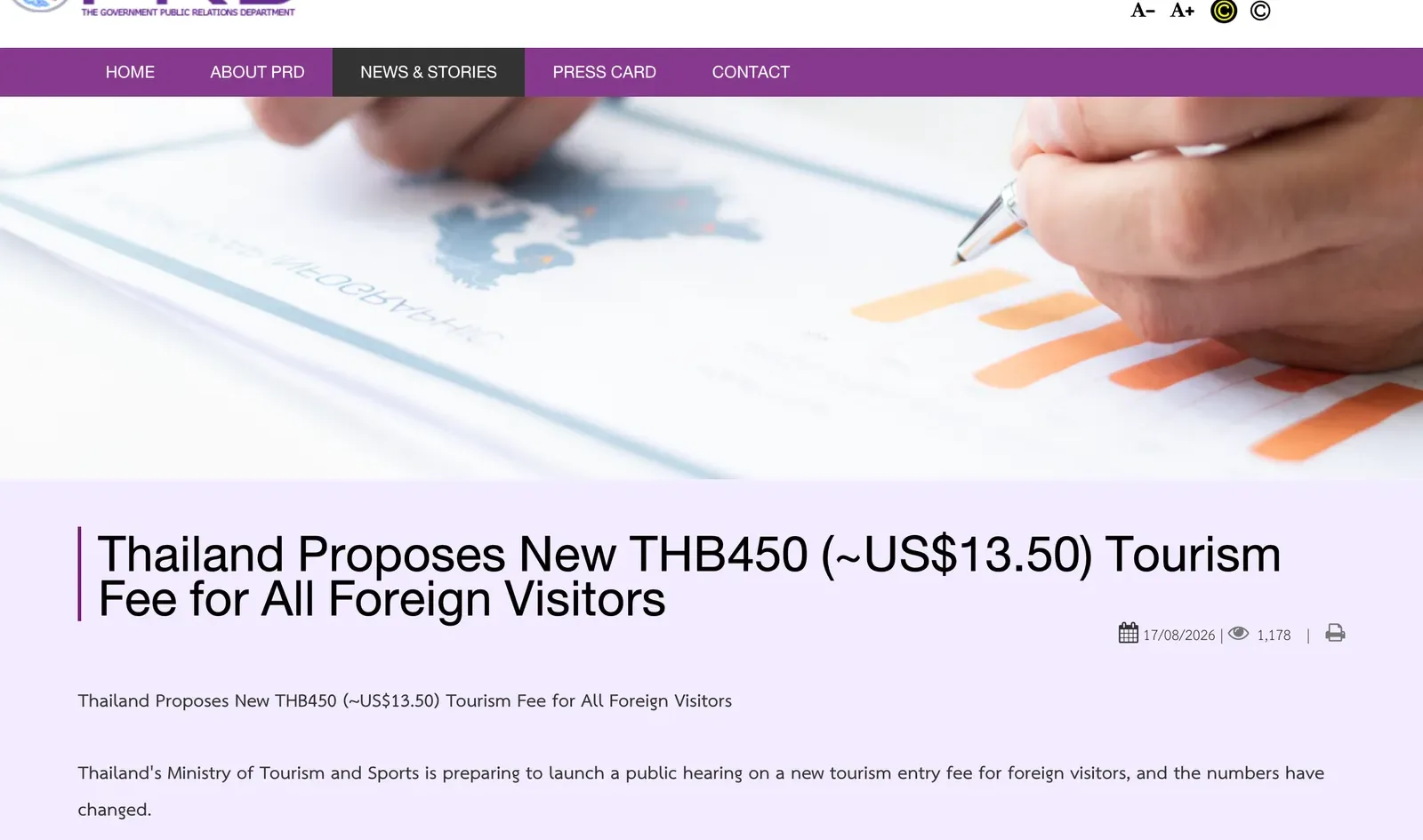
| 17 August 2026 | A government release proposes a flat THB 450 and a public hearing |
| 24 August to 28 September 2026 | Online hearing, 5,954 respondents |
| 6 October 2026 | The Minister of Tourism and Sports chairs a discussion on collection |

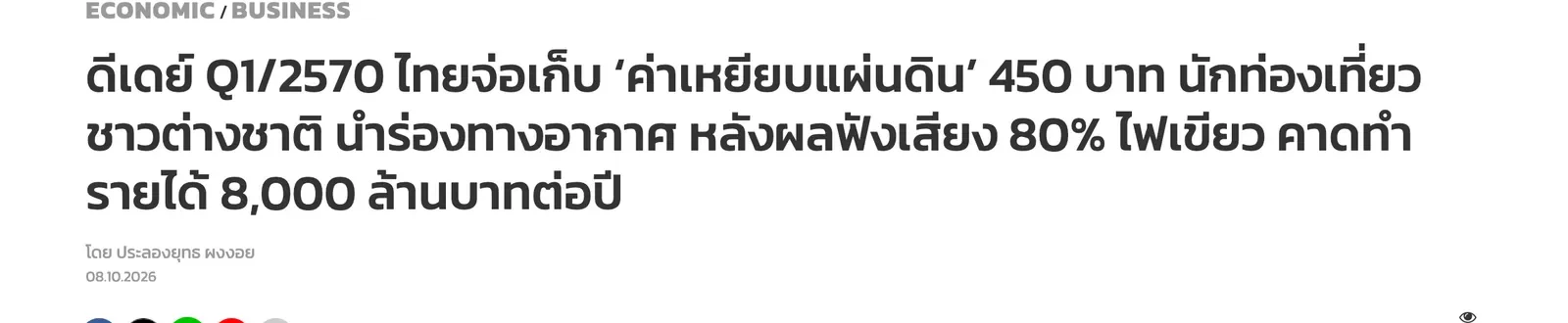
Of the 5,954 respondents, 80.50% backed the draft and 78.30% backed the THB 450 rate. The ministry’s permanent secretary aims to start real collection in the first quarter of 2027. That is a target, not a legal date.
What the 2026 proposal says
The 2026 proposal is a flat THB 450 per person, regardless of how you arrive. It replaces the earlier proposal of THB 300 for air and THB 150 for land and sea.
- Phase 1 covers air travel and starts 180 days after the announcement is published in the Royal Gazette.
- Phase 2 covers land and sea travel and follows about 360 days after phase 1.
- The two phases are meant to ease congestion at busy crossings, particularly along the Malaysian border.
- The draft collects THB 450 from eligible foreign tourists who arrive by air once the announcement takes effect, and holds land and water arrivals back for 1 year.
- The ministry will start collection through the air channel first, then extend to land and water.
The minister says the funds would go toward upgrading Thailand’s tourism infrastructure and safety standards, so the sector does not lean only on the state budget. Part of the revenue would buy insurance for fee-paying tourists covering death and medical costs under the policy terms.
Who pays and who is exempt
The fee would fall on eligible foreign tourists. The 2026 sources do not publish the eligibility test or an exemption list. The 2023 draft is the only published list.
| Group | 2023 draft |
|---|---|
| Diplomatic, consular or official passport holders | Exempt |
| Persons permitted to work in Thailand | Exempt |
| Transit passengers | Exempt |
| Infants and children up to 2 years | Exempt |
| Other persons set by the policy committee | Exempt |
Frequent land travellers may get a multiple-entry option bundled with insurance cover, for example one payment for a month of cover. Private-sector representatives asked the ministry to consider exemptions for border traders and regular cross-border travellers. Neither point is final.

How the fee would be collected
The 2026 proposal lists five payment channels. The 2023 draft used different routes for air and for land and water.
| Channel | Status |
|---|---|
| Built into the airline ticket price | Proposed in 2026 |
| Online via an official website | Proposed in 2026 |
| Through a mobile app | Proposed in 2026 |
| Self-service kiosks at entry points | Proposed in 2026 |
| Other methods approved by the Tourism Fund Committee | Proposed in 2026 |
In the 2026 consultation most respondents (36.26%) favoured collecting through the air ticket, to cut steps and delay at immigration. The 2023 draft would have collected through the airfare for air arrivals, and through a website, mobile app and kiosk for land and water arrivals.
The 2023 draft also tied the fee to entry permission. Proof of payment would be a supporting document for entry permission, and the Immigration Bureau would check it. The 2026 sources do not say whether the same link remains.
What is still disputed
The hearing left one point open: charging the same rate for air, land and water arrivals. The private sector raised four more points:
- a rate that does not affect the decision to travel;
- collection that adds no delay at immigration;
- exemptions for border traders and regular cross-border travellers;
- disclosure of revenue, spending, insurance costs and the results at tourism sites.
The same discussion estimated that over 80% of tourists, especially from Europe and the Americas, already hold travel insurance. For the ministry, the comparison is that over 80 countries collect a tourism tax or fee in some form. The ministry takes these points back to the committee before the Cabinet.
Timeline: when could you pay
Air arrivals would be charged first, 180 days after a Royal Gazette announcement. No such announcement is confirmed. The ministry’s own target for real collection is the first quarter of 2027.
The 2023 draft would have taken effect 90 days after publication. The 2023 Cabinet report said over 40 countries charge foreign tourists a similar fee.
What to do before you fly
Plan on no fee for a trip now. If you book a flight for a date after the target start, keep the proposed THB 450 per person in mind. Check the Ministry of Tourism and Sports for the final announcement before you travel.
If the ticket route wins, the fee would appear in your fare rather than at the immigration counter. Keep proof of payment: the 2023 draft made it a supporting document for entry permission.
Land travellers sit outside the first phase, which holds land and water arrivals back for 1 year, and a multiple-entry option bundled with insurance is under discussion. Watch for the Royal Gazette announcement, because the 180-day air clock starts only on publication.
Entry rules that apply today are in the visa exemption guide and the TDAC arrival card guide.
Not confirmed: Royal Gazette announcement: none confirmed. Collection starts 180 days after one is published. Exemptions for the THB 450 draft are not confirmed; the earlier draft's list is in the body. Check the Ministry of Tourism and Sports before you book a flight after the target start.
Common questions
Do I pay a tourist fee to enter Thailand now?
Not yet. The fee is a draft that still goes to the National Tourism Policy Committee and then the Cabinet.
How much would the Thailand entry fee be?
A flat THB 450 per person, whether you arrive by air, land or sea.
Would air or land travellers pay first?
Air arrivals first. The draft holds land and water arrivals back for 1 year. The government release puts the land and sea phase about 360 days after the air phase.
Why do older articles say THB 300?
THB 300 by air and THB 150 by land or water was the Cabinet-approved draft of 2023. The 2026 proposal replaces it with THB 450.
Who would be exempt from the Thailand tourism fee?
The 2023 draft exempted holders of diplomatic or official passports, work-permit holders, transit passengers and children up to 2 years. The THB 450 draft covers eligible foreign tourists.
How would I pay the Thailand tourism fee?
One proposed channel is a charge built into your airline ticket price. A website, a mobile app and kiosks at entry points are also proposed.
What would the fee pay for?
The funds would go toward upgrading Thailand's tourism infrastructure and safety standards. Part would buy insurance for fee-paying tourists.
When will Thailand start charging the entry fee?
The ministry aims to start real collection in the first quarter of 2027. By law the air phase starts 180 days after the Royal Gazette announcement.
Do other countries charge a tourism fee?
More than 80 countries collect a tourism tax or fee in some form, including Europe, Japan, Australia, New Zealand and Bali.
Read next
General information checked against the sources listed above, not legal advice for your situation. Rules and office practice change; confirm with the immigration office or a licensed adviser before you act. See how guides are checked.
Spotted an error? Report it.