
Thailand ED Visa: School Licence, 90 Days, Extensions
The Non-Immigrant ED visa needs a school or institute that Thai authorities recognise: a state school, or a private school permitted to operate. The first stay is up to 90 days from entry. The school then asks the Immigration Bureau to extend, for up to 1 year at a time at a state school.
On this page
The ED visa depends on the school. Pick the school first, because its licence decides the documents, the extension length and who files the extension.
Which schools qualify for an ED visa
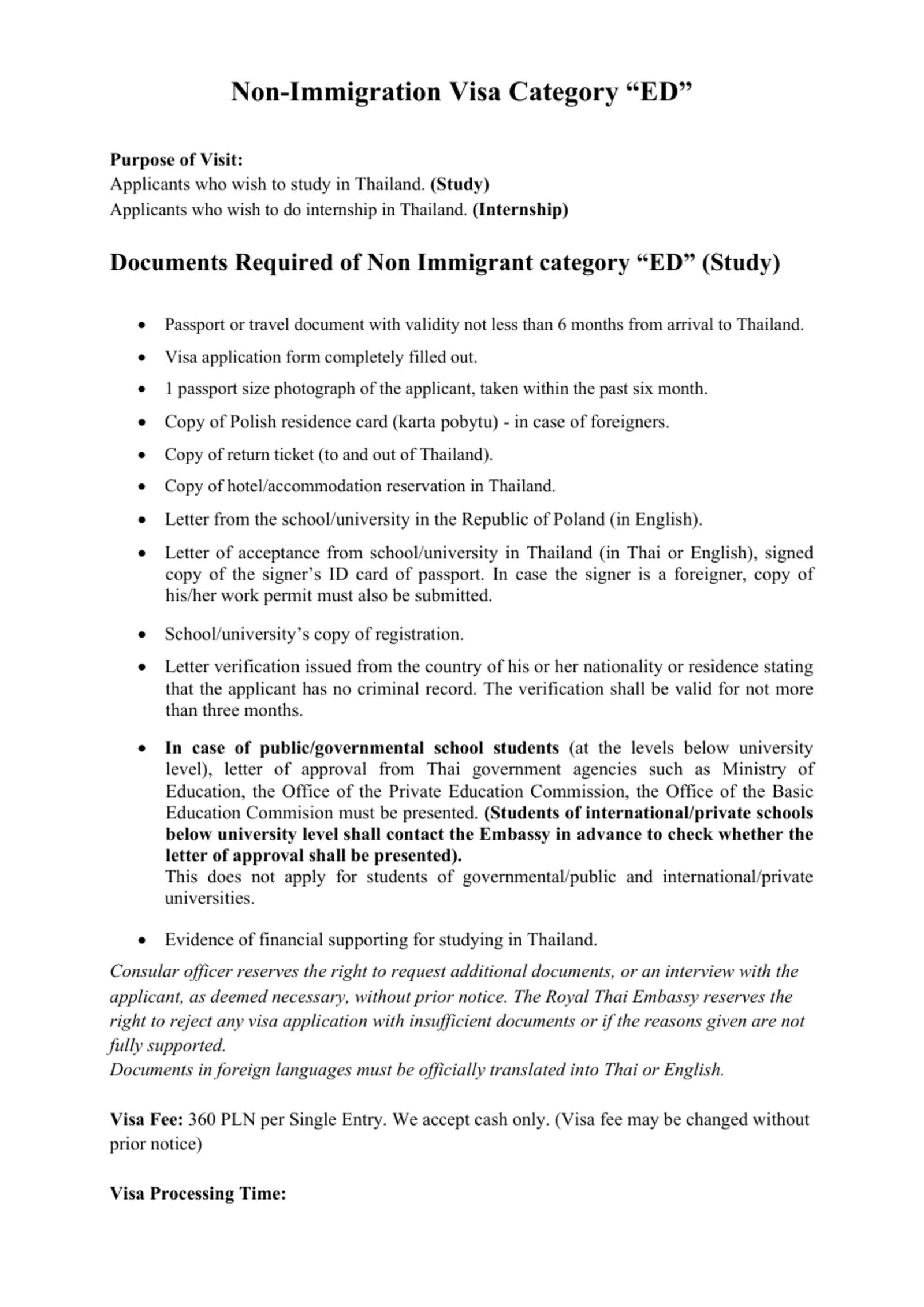
The ED visa covers study, work-study or observation tours, seminars, internships, conferences and training courses. The plain ED visa is for full-time education below bachelor level, short courses or exchange programmes, and internships.
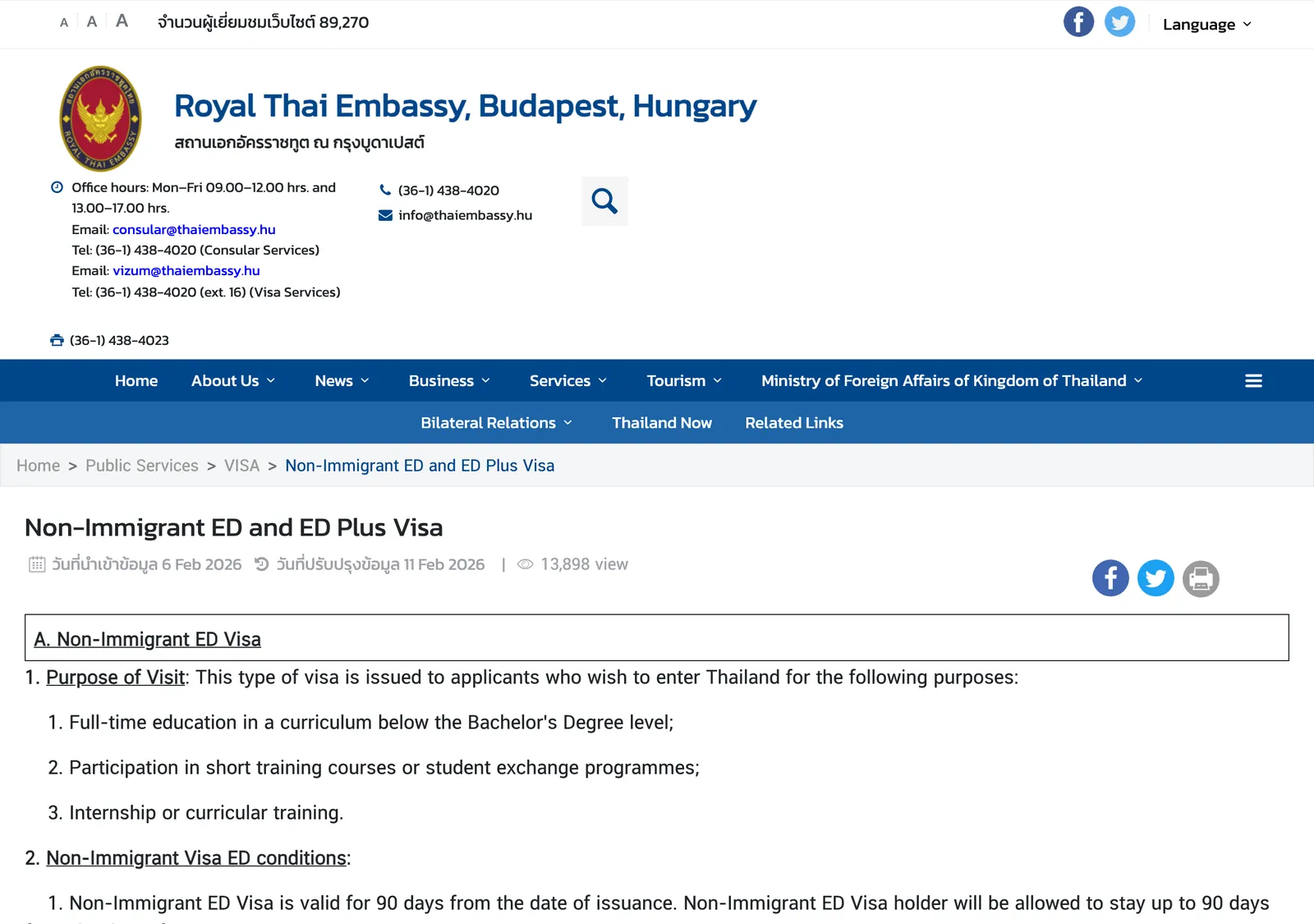
The study purposes are elementary to secondary study, higher education, a short Thai or English language course, Muay Thai training, and vocational or diploma study below bachelor level. The ministry also names ED Plus for a bachelor degree or higher.
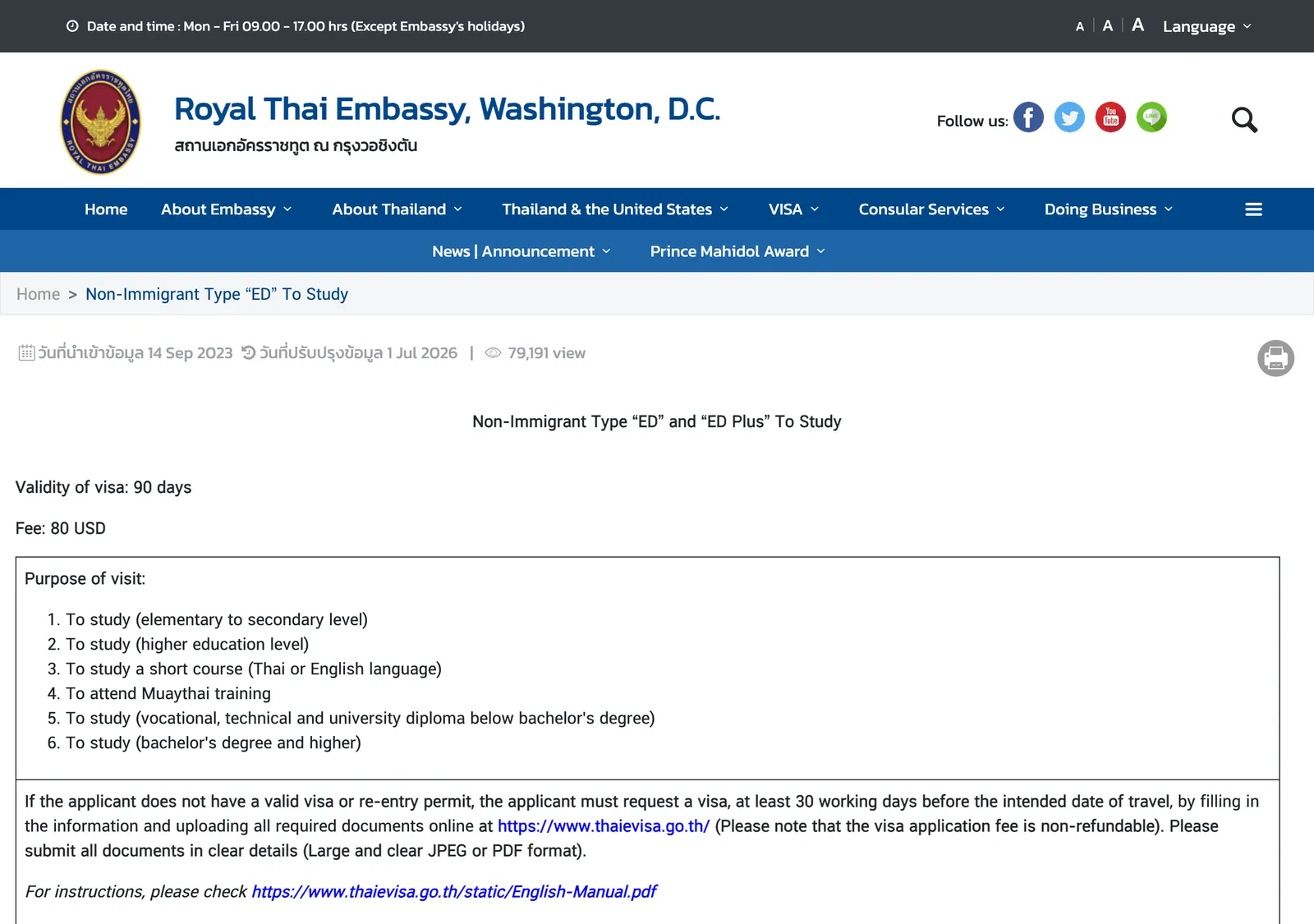
The school type decides the paperwork. These are the school letters embassies ask for:
- Government school or university: an acceptance letter, plus a recommendation letter addressed to the embassy.
- Private institution: a letter from the Ministry of Education, or another designated authority, approving enrolment of the foreign student, and a copy of the institute’s registration certificate.
- Government school below university level: a letter of approval from a Thai government agency such as the Ministry of Education.
- Language short course: a letter from the relevant authority under the Ministry of Education.
- Muay Thai training: a letter from that authority, or from a relevant organisation such as the Sports Authority of Thailand.
- Religious institute: an acceptance letter from the institute.
Every category also needs an enrolment letter signed by an authorised person, with a copy of that person’s Thai ID card or passport.
ED and ED Plus compared
ED Plus is the route for a bachelor degree or higher at a Thai university. The two visas differ on re-entry and on what happens after graduation.
| Feature | ED | ED Plus |
|---|---|---|
| Re-entry permit when leaving | Needed | Not needed during the course |
| Who files the extension | The school asks the Bureau | The host university files |
| After graduation | Stay generally ends with student status | Up to 1 year to seek work or travel |
An ED Plus holder may change visa type in Thailand if employed.
Fees, funds and documents by embassy
Each embassy sets its own ED fee. The Thai Bureau fee schedule lists THB 2,000 for a single-entry Non-Immigrant visa.
| Embassy | ED visa fee |
|---|---|
| Washington D.C. | USD 80 |
| Budapest | EUR 70 |
| Oslo | NOK 800 |
| Poland (ministry-hosted sheet) | PLN 360 |
Fees are not refunded. Funds proof also varies by post. Washington D.C. asks for three months of bank statements with an ending balance of no less than USD 4,000 each month for elementary to secondary study.
Language courses and Muay Thai
For a short language course and for Muay Thai training, Washington D.C. asks for no less than USD 1,000 at the end of each of the last three months. Budapest asks for a statement from the past 6 months showing at least THB 20,000 per person.
Oslo asks for health insurance covering at least USD 50,000. The Polish sheet asks for a criminal record verification valid for no more than three months.
Applying and entering
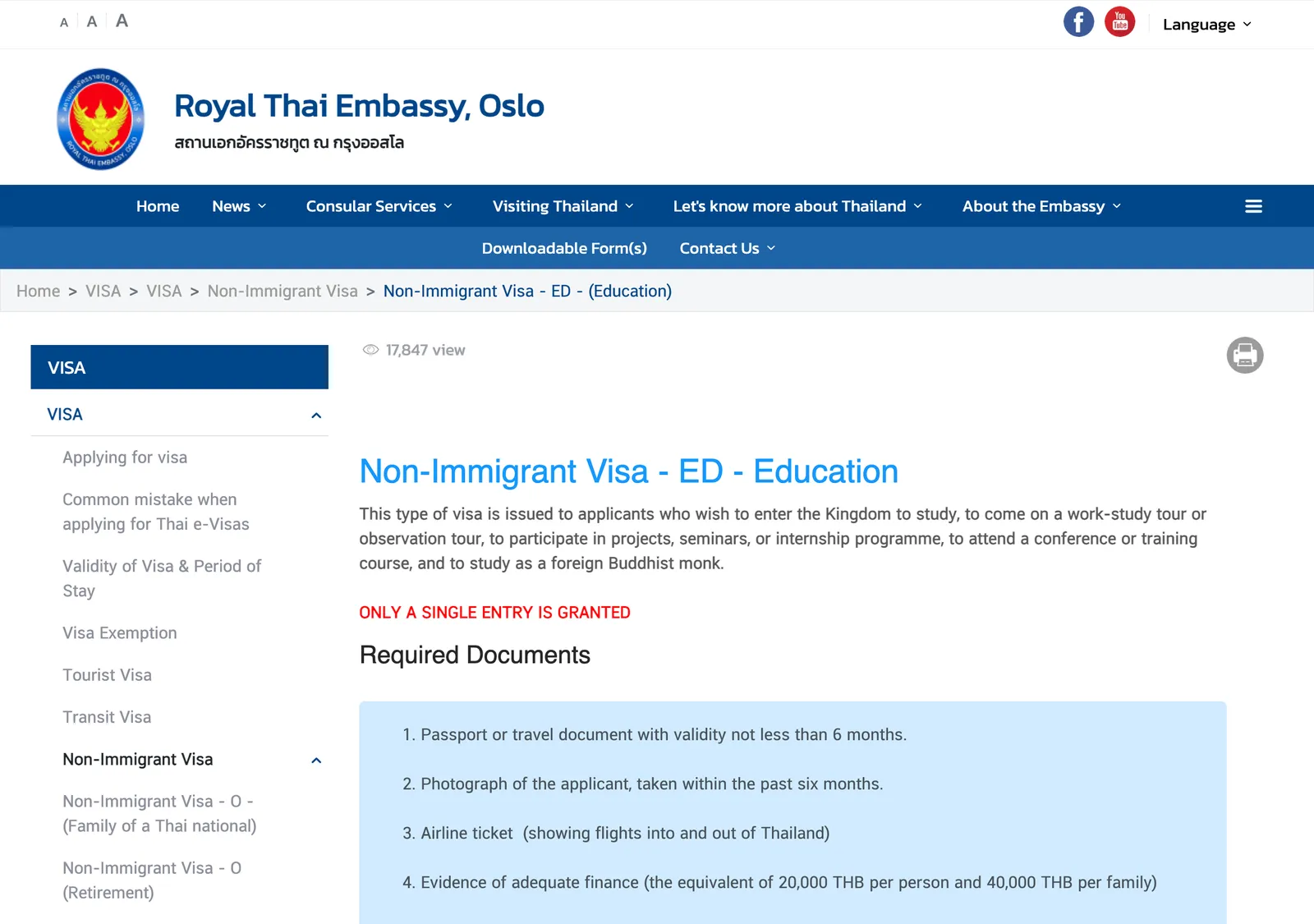
A traveller with no valid visa or re-entry permit applies on thaievisa.go.th at least 30 working days before travel. Upload clear files of every document.
Oslo grants a single entry only. On arrival the holder may stay up to 90 days from the date of entry.
Extending an ED stay at immigration
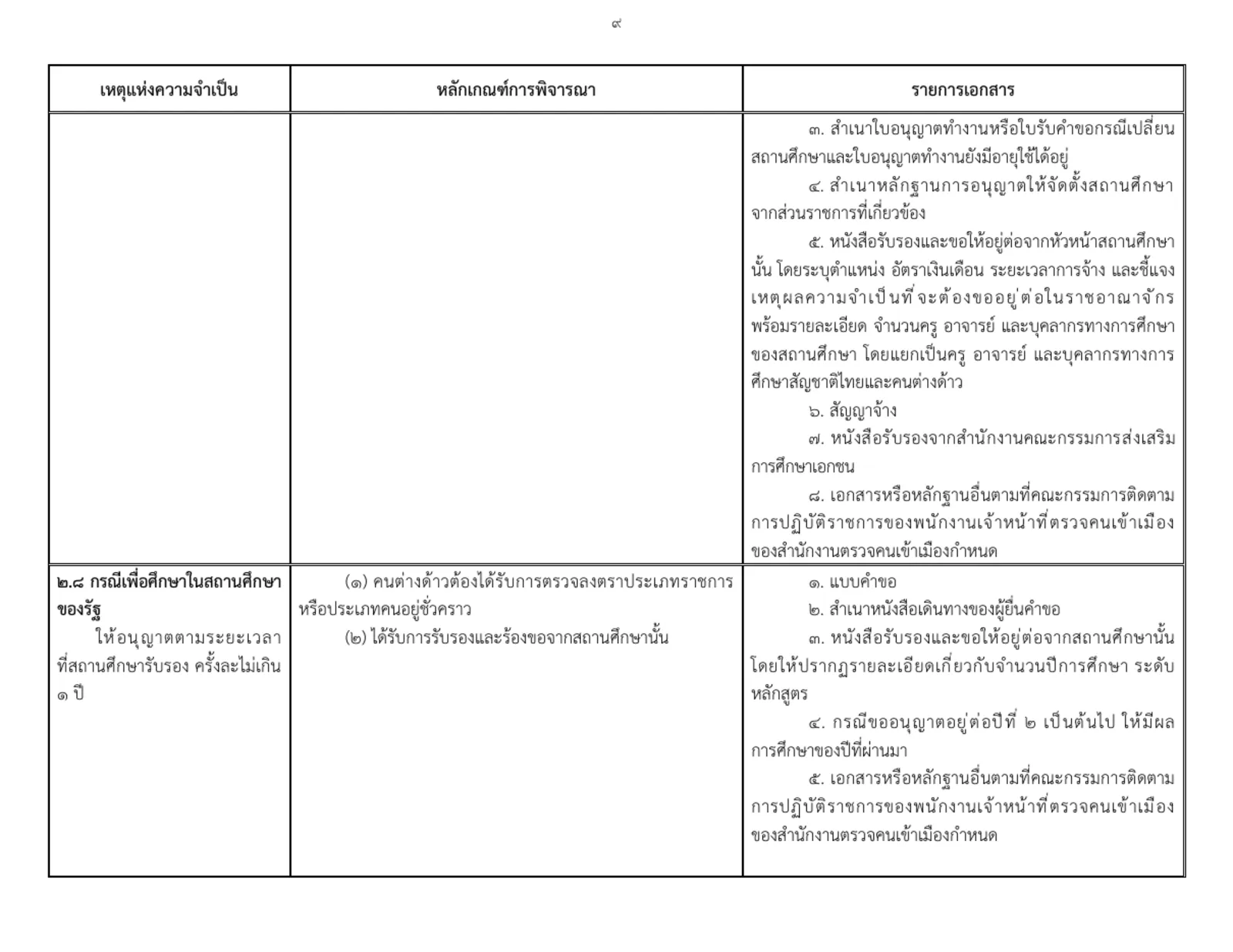
The school drives the extension. Immigration Bureau Order 12/2568 asks for a school letter that certifies and requests the stay, and the letter shows the years of study and the level of the course.
State school
At a state school the Bureau grants up to 1 year at a time.
ครั้งละไม่เกิน ๑ ปี
Each time not more than 1 year.
Immigration Bureau Order 12/2568, clause 2.8
Private school
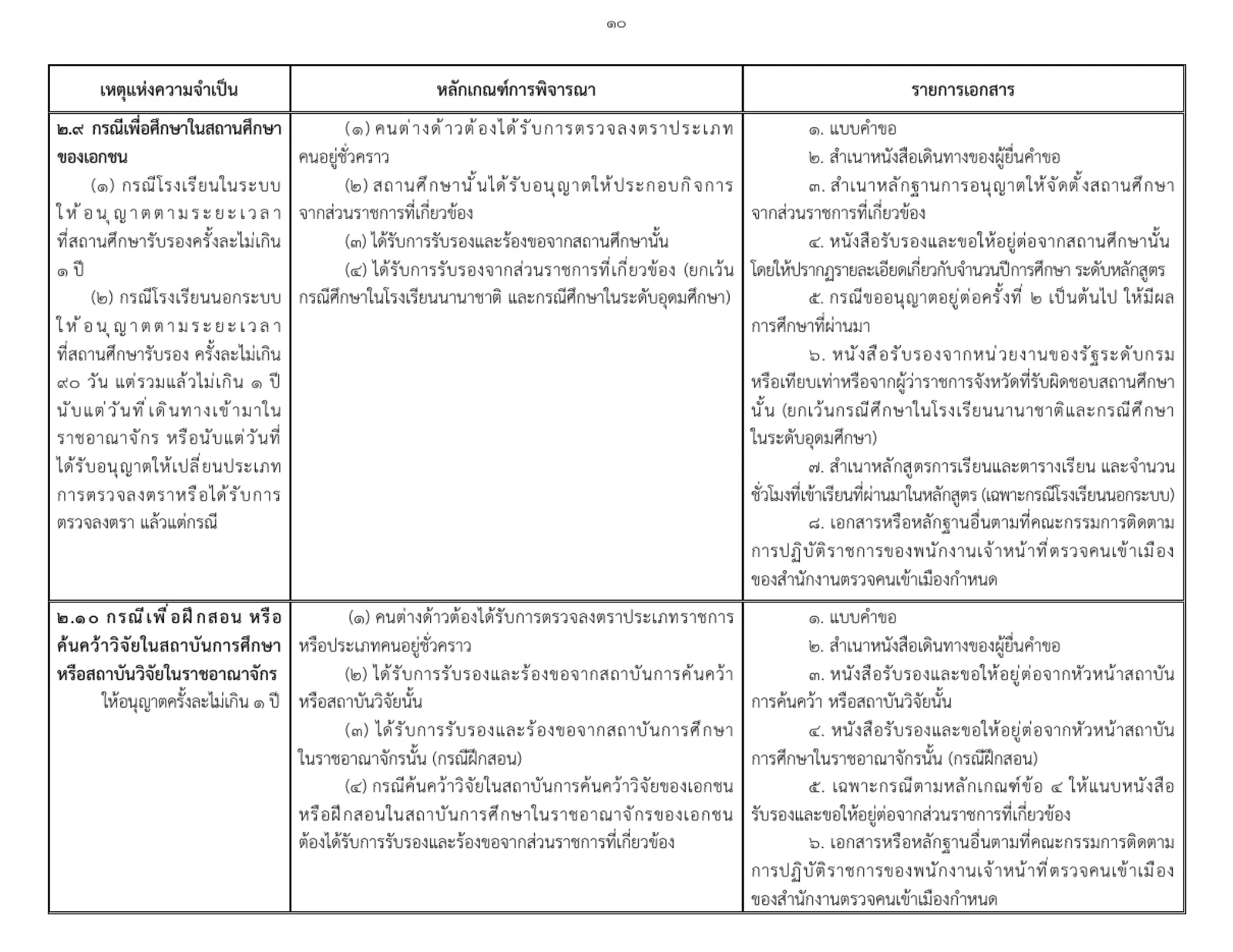
A private school must be permitted to operate. A non-formal private school gets up to 90 days at a time and 1 year in total.
๙๐ วัน แต่รวมแล้วไม่เกิน ๑ ปี
Each time not more than 90 days but not more than 1 year in total.
Immigration Bureau Order 12/2568, clause 2.9
The order lists arts and sports, vocational and tutoring among the non-formal types. Ask the school which type it is registered as.
Non-formal schools also add a copy of the curriculum, the timetable and the hours attended. From the second extension on, the application includes the study results of the past period. The fee is THB 1,900.
Reports, re-entry and overstay
A foreigner on a temporary stay who stays over 90 days reports residence every 90 days. Report from 15 days before to 7 days after the due date. A late report costs a THB 2,000 fine.
The report is not an extension. Filing steps are in the reporting guide.
Leaving without a re-entry permit ends the permission to stay. A single permit costs THB 1,000 and a multiple permit THB 3,800. More in the re-entry permit guide.
Overstay costs THB 500 per day, up to THB 20,000 for 40 days or longer. A TDAC is filed within 3 days before arrival.
Working on an ED visa
No alien may work without a work permit. A foreigner who breaks that rule faces a fine of THB 5,000 to THB 50,000 and, once the fine is paid, is sent out of the Kingdom.
A foreigner accused of working without a permit who agrees to leave has the case settled by a fine set by the inquiry official. The work permit guide covers the legal route.
Muay Thai or cooking: ED or DTV
The DTV covers Muay Thai courses, Thai cooking classes and sport training. Compare the two before paying a school.
| Point | ED visa | DTV |
|---|---|---|
| Funds shown (Washington D.C.) | USD 1,000 a month for 3 months | THB 500,000 |
| Stay per entry | Up to 90 days | 180 days |
| Extension | Through the school | One of 180 days |
Documents and fees are in the DTV guide.
Step by step
- Pick a school the visa route recognisesA state school, or a private school permitted to operate; embassies ask for a Ministry of Education letter or a school letter.
- Collect the school letters and funds proofAn enrolment letter signed by an authorised person, plus bank statements that your embassy sets, for example USD 1,000 a month for a language course in Washington D.C..
- Apply on thaievisa.go.thFile at least 30 working days before travel if you hold no valid visa.
- Enter ThailandThe stay runs up to 90 days from the date of entry.
- Have the school request the extensionThe school certifies the period and writes the letter; the Bureau fee is THB 1,900.
Not confirmed: Whether a language or Muay Thai school is formal or non-formal decides the extension length: ask the school how it is registered. The attendance rate immigration expects is not published. Switching from tourist status to an ED visa inside Thailand is not described on any official page read.
Common questions
Which school licence does an ED visa need?
A private school must be permitted to operate by the relevant government department before the Bureau extends a student's stay. At a state school the school certifies and requests the stay.
How long is the first stay on an ED visa?
An ED visa is valid for 90 days from issue, and the holder may stay up to 90 days from the date of entry. Oslo grants a single entry only.
How much does an ED visa cost?
The fee is set by each embassy: USD 80 in Washington D.C., EUR 70 in Budapest, NOK 800 in Oslo and PLN 360 on the Polish sheet. An extension costs THB 1,900.
Can an ED visa be extended for a full year?
At a state school the Bureau grants up to 1 year at a time. At a non-formal private school it grants up to 90 days at a time and 1 year in total.
Do ED visa holders file a residence report?
A foreigner on a temporary stay who stays over 90 days reports residence every 90 days. The report can be filed from 15 days before to 7 days after the due date.
Can you work on an ED visa?
No alien may work without a work permit. Breaking that rule carries a fine of THB 5,000 to 50,000 and removal from the Kingdom.
Do you need a re-entry permit on an ED visa?
An ED holder who leaves during the 90-day stay needs a re-entry permit from the Immigration Bureau. ED Plus students are exempt during their course.
Is a DTV better for Muay Thai or cooking?
The DTV covers Muay Thai courses and Thai cooking classes. It asks for financial evidence of THB 500,000 at Washington D.C. and allows 180 days per entry.
Read next
General information checked against the sources listed above, not legal advice for your situation. Rules and office practice change; confirm with the immigration office or a licensed adviser before you act. See how guides are checked.
Spotted an error? Report it.