
Currency Exchange in Thailand: Passport, Board and Fees
Change money at a bank branch or a licensed changer that shows a Ministry of Finance permit and a licence number. Bring your passport. Superrich asks for an ID card or an unexpired passport. The Bank of Thailand notice asks for a passport copy when a changer sells you foreign cash. Use the Buying Rate column for foreign cash.
On this page
The board has two columns. Hand over foreign cash and you read the Buying Rate. Hand over baht and you read the Selling Rate.
Bring your passport. The Bank of Thailand notice asks a changer for a copy of it when you buy foreign cash.
Licensed changer or bank counter
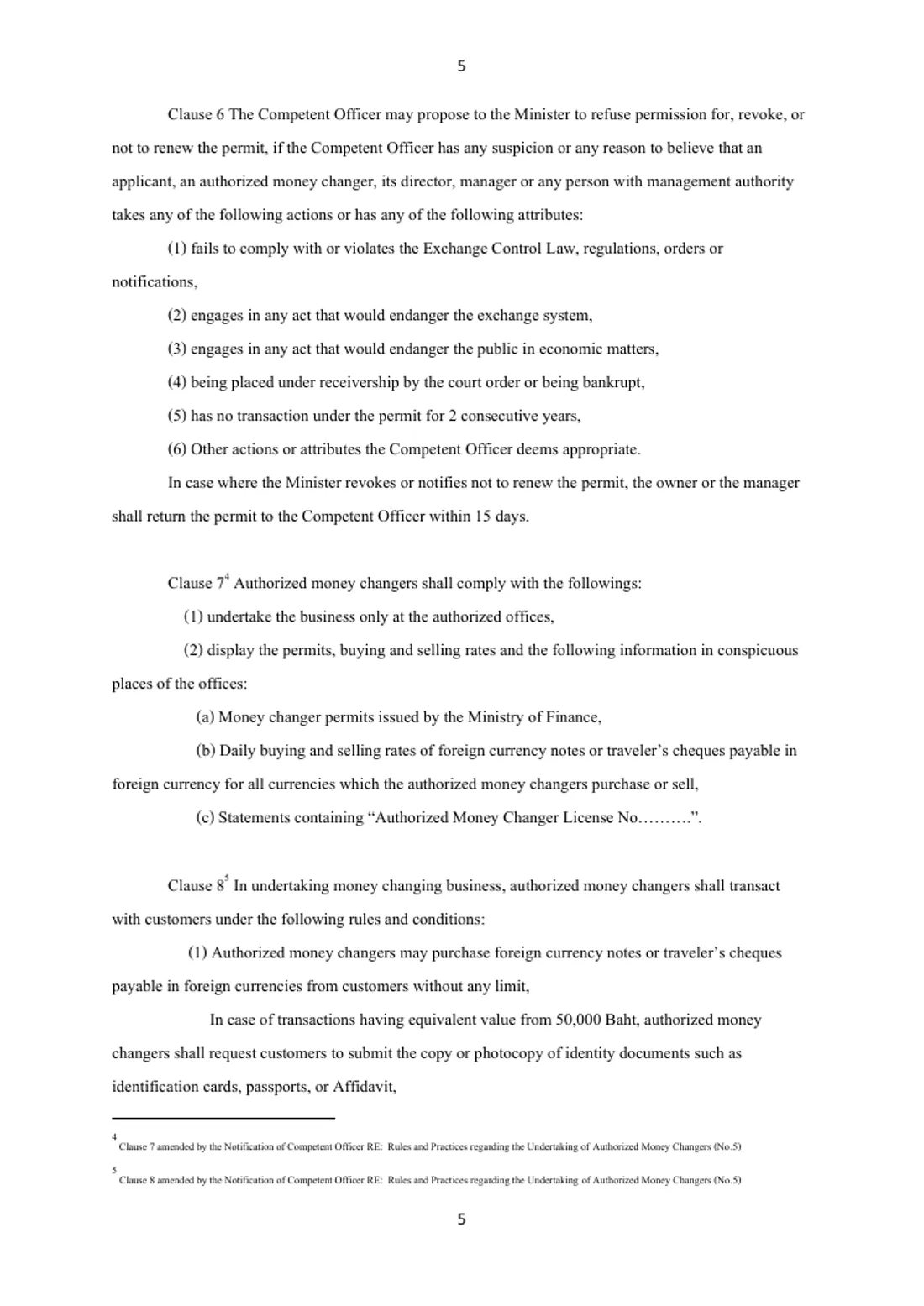
A licensed changer displays its Ministry of Finance permit in the office. It also displays a statement carrying its licence number. No permit and no number on the wall means you walk on.
Licences go to a range of businesses. A hotel well known among foreign guests can hold one. A business applies to the Minister of Finance through the Bank of Thailand.
Banks run their own boards. SCB splits its board into Bank Sells and Bank Buys.
The paper trail
Every purchase or sale comes with a record. The changer gives you the record and keeps a copy at its office. The record carries your identification or passport number.
Keep it. You need proof of purchase if you carry foreign cash out later.
The notice also fixes the benchmark. Changers quote banknote rates in line with the average rates of authorised juristic persons published by the Bank of Thailand.
What the counter asks for
The documents depend on which way the money goes. The notice draws its line at THB 50,000.
| You hand over | Under THB 50,000 | From THB 50,000 |
|---|---|---|
| Baht, for foreign cash | Passport copy or travel certificate | Passport or travel certificate, plus ID card copy |
| Foreign cash, for baht | Superrich: ID card or unexpired passport | Copy of an identity document, such as an ID card or passport |
A changer may sell you foreign notes for travel up to THB 800,000 a day. Foreign cash you sell to a changer has no limit.
Superrich as a worked case
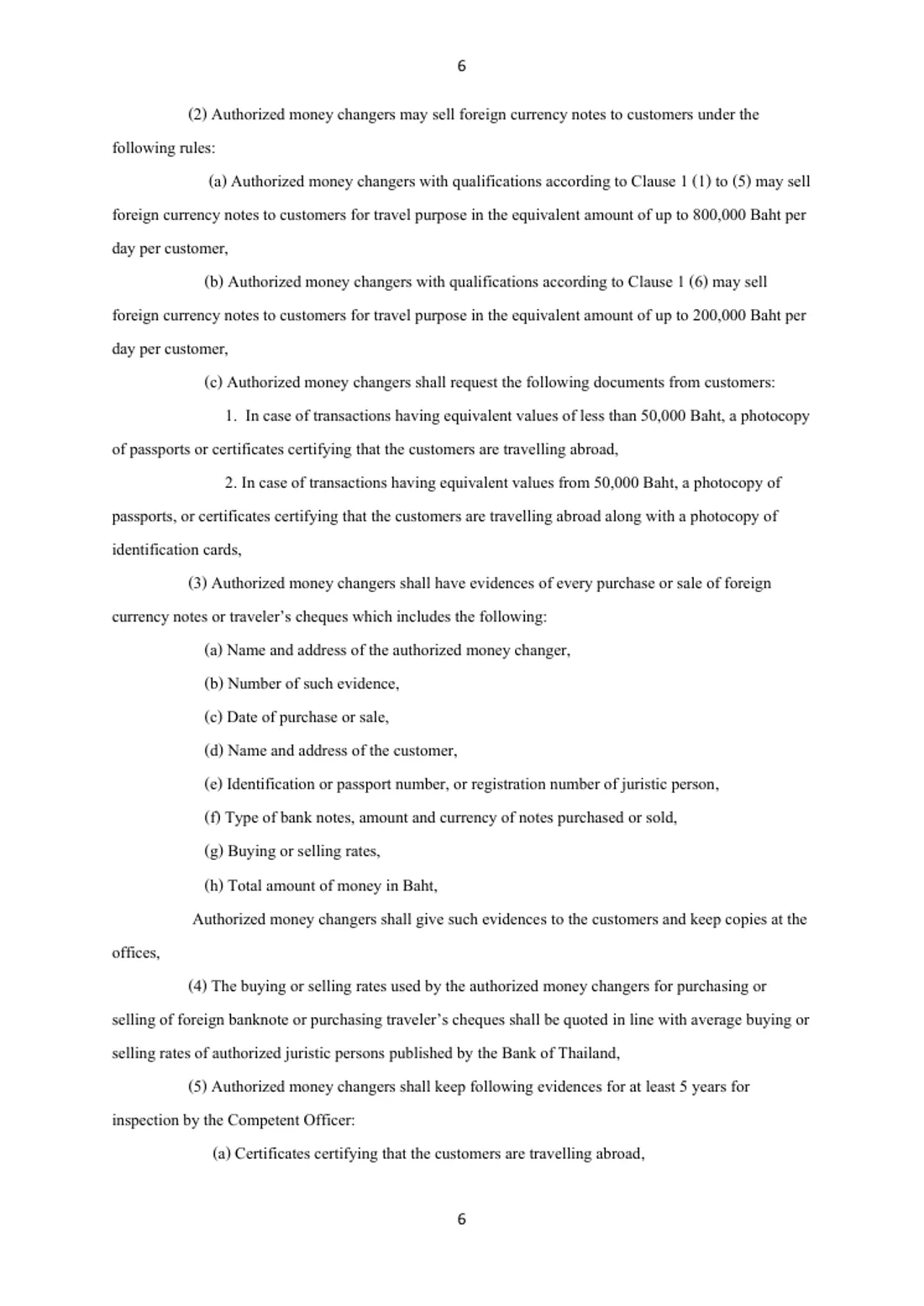
Superrich asks for an ID card or a passport that has not expired. It charges no commission or fees. It does not exchange coins.
Its cap for baht into foreign currency is THB 800,000. Its headquarters is at 45 Rajdamri 1, Rajdamri Road, Lumpini, Pathumwan, Bangkok 10330.
How to read the board
Start with the column labels. On Superrich’s board the Buying Rate is foreign currencies to Thai baht. The Selling Rate is Thai baht to foreign currencies.
A bank uses the same logic with different words. Bank Buys is the rate at which the bank purchases foreign currency from customers. Bank Sells is the rate at which it sells foreign currency to customers.
A worked example with a live board
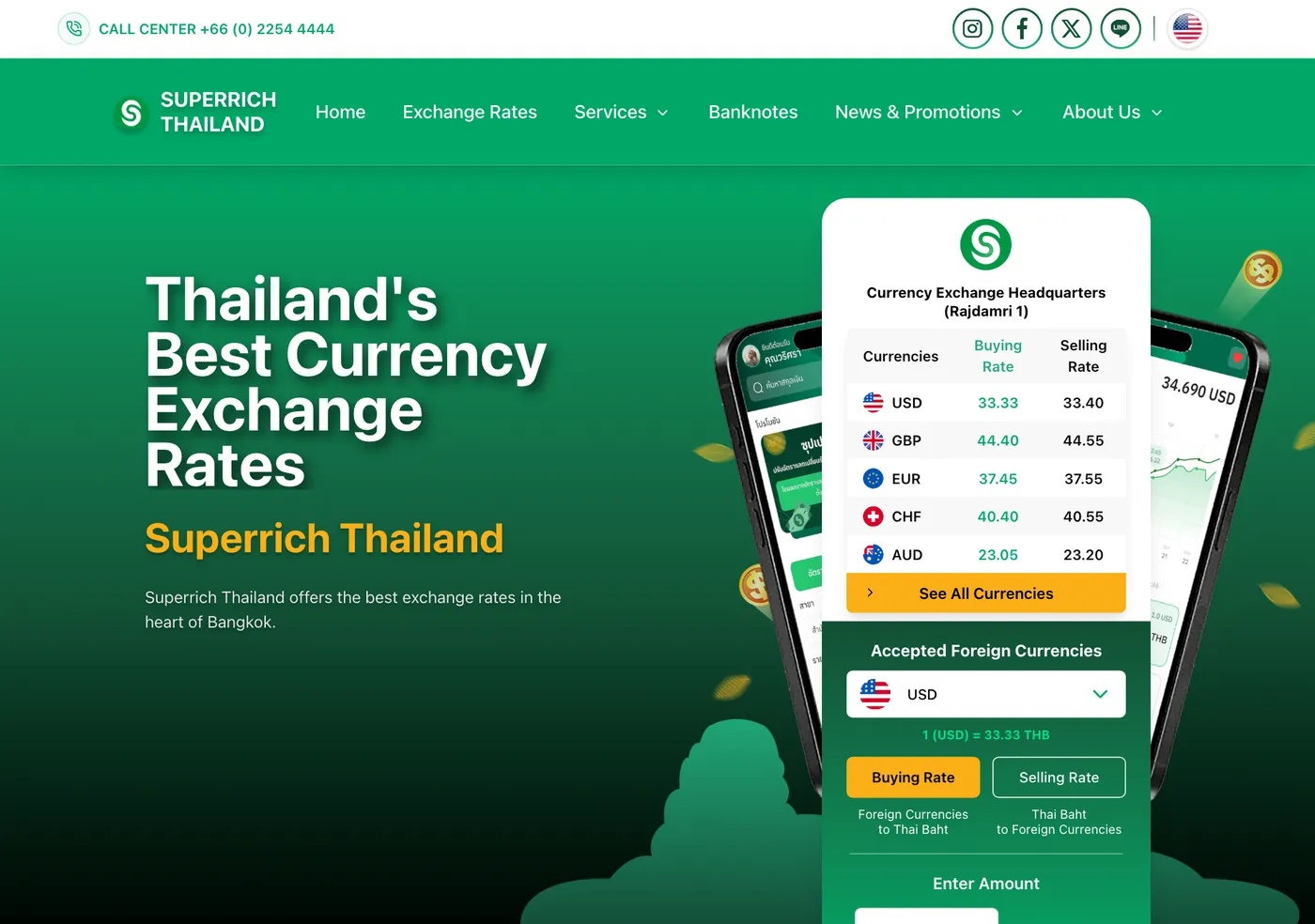
On 17 October 2026 the Superrich headquarters board showed USD 33.33 buying and 33.40 selling. That is a gap of THB 0.07 per US dollar.
A hundred dollars at the buying rate gives THB 3,333. Change those baht straight back at the selling rate and you hold about USD 99.79. The board moves through the day, so treat these as an example of the two columns, not a price.
Notes rate, bands and checks
Banks keep a separate Notes rate for cash. For foreign cash into baht, SCB applies Bank Buys, Notes. For baht into foreign cash, it applies Bank Sells, Notes.
SCB explains why the Notes rate differs from the T/T rate: cash carries higher costs for transport, storage and damaged notes.
SCB’s US dollar line has three denomination bands: $50-$100 notes, $5-$20 notes and $1-$2 notes. Read the row that matches your notes.
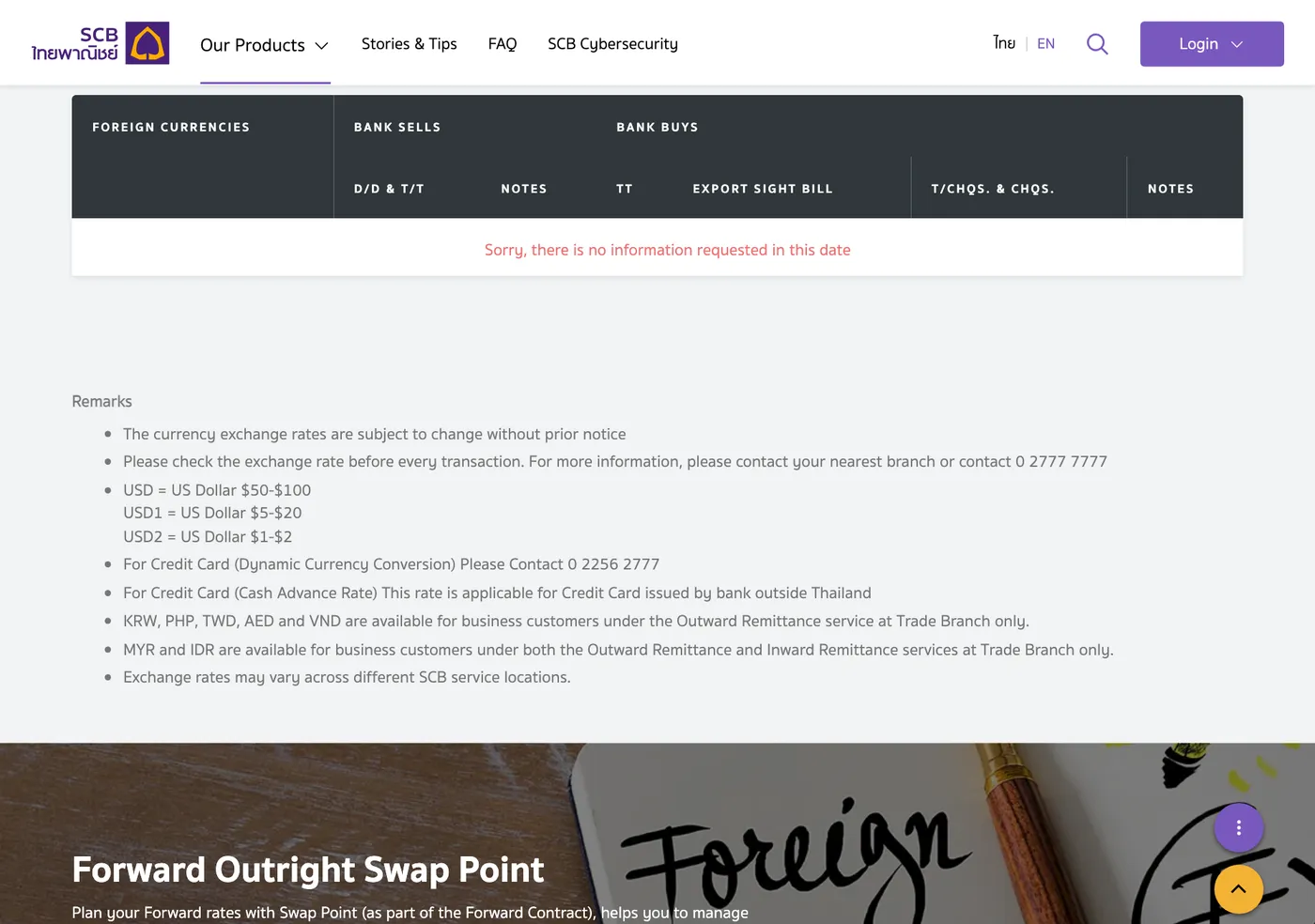
Check the rate before every transaction. Its rates may vary between its service locations. It updates rates no set number of times a day.
Airport counters and machines
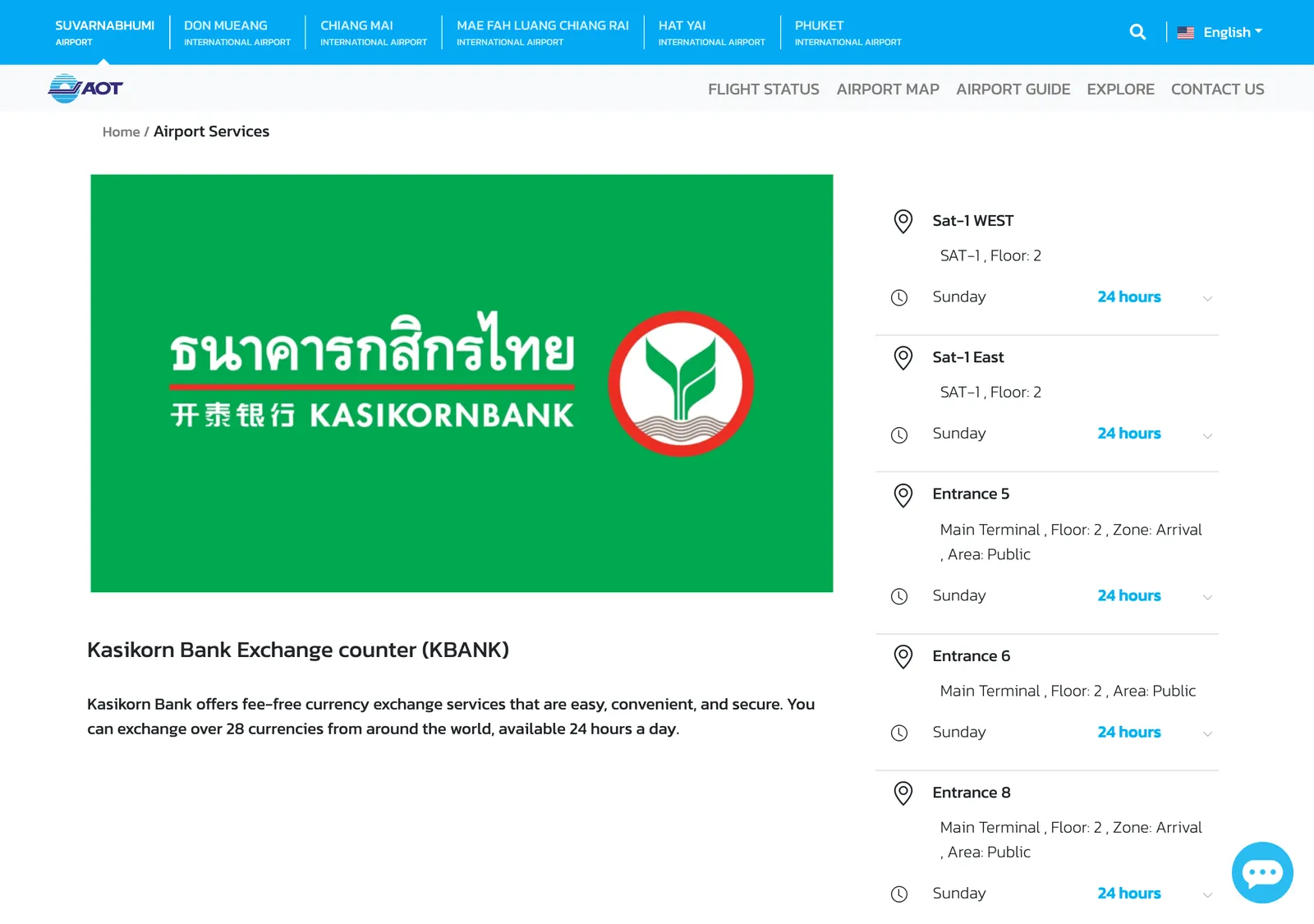
Kasikornbank runs fee-free exchange counters at Suvarnabhumi. They exchange over 28 currencies, 24 hours a day. The arrival counters sit on floor 2 of the Main Terminal.
Automatic currency exchange machines stand in the departure zone, on floor 3 and floor 4. Read the board before you hand over cash, as at any counter.
Cards and ATMs: the home-currency offer
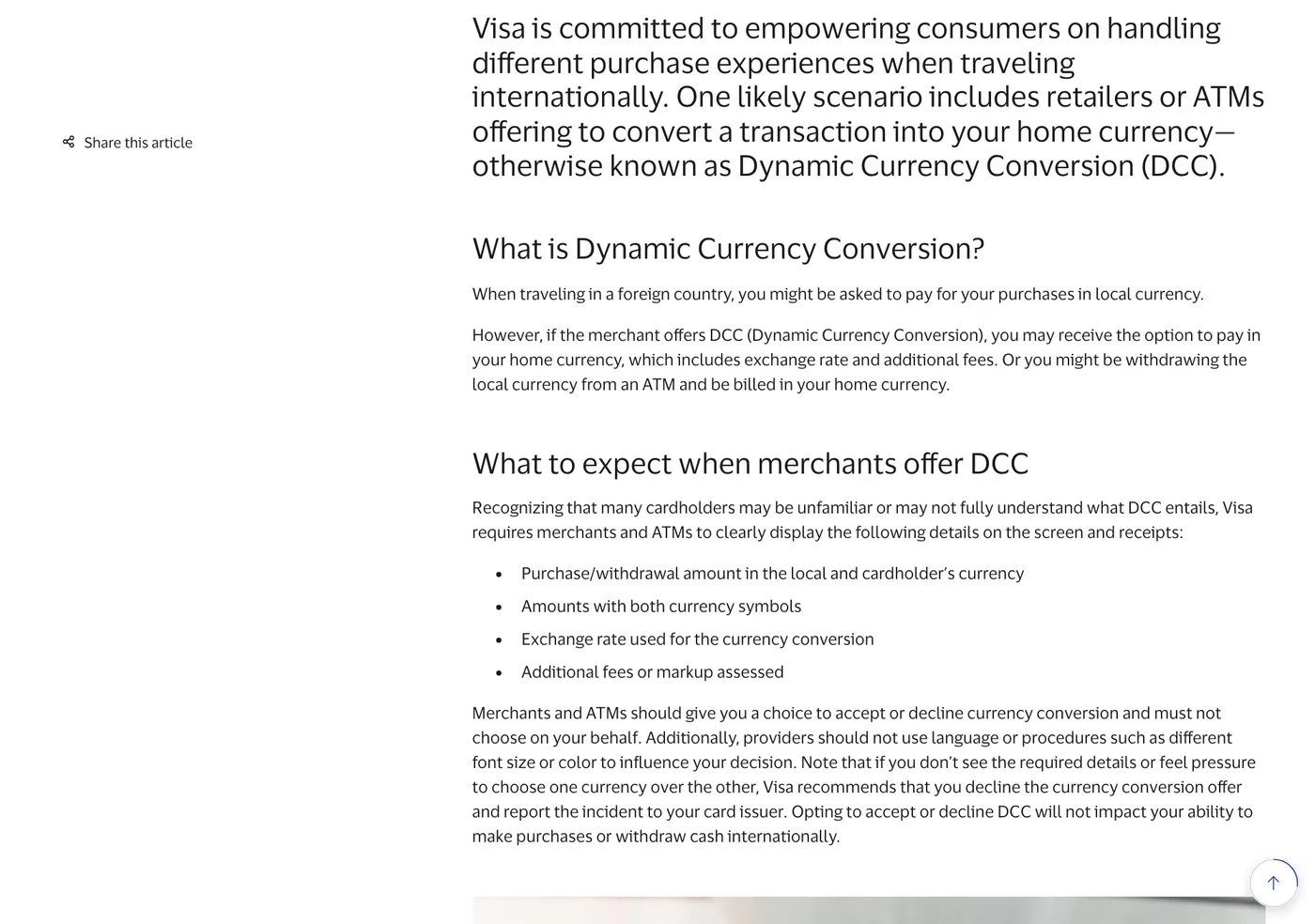
If a merchant offers conversion, you may be asked to pay in your home currency, which includes an exchange rate and additional fees.
The screen and the receipt show the exchange rate used. They also show any additional fees or markup. The merchant or ATM must give you the choice and must not choose on your behalf.
Declining does not stop the purchase or the withdrawal. If the details are missing, or you feel pressure, Visa recommends you decline and report it to your card issuer.
At a Krung Thai ATM the conversion fee is 4% of the amount withdrawn in the currency of the issuing bank. It is charged additionally when you select the service.
The access fee is a separate line. KBank charges THB 250 for Visa and THB 350 for Mastercard. Krung Thai charges THB 220. The full comparison is in Thailand ATM fees for foreign cards.
Cash in, cash out
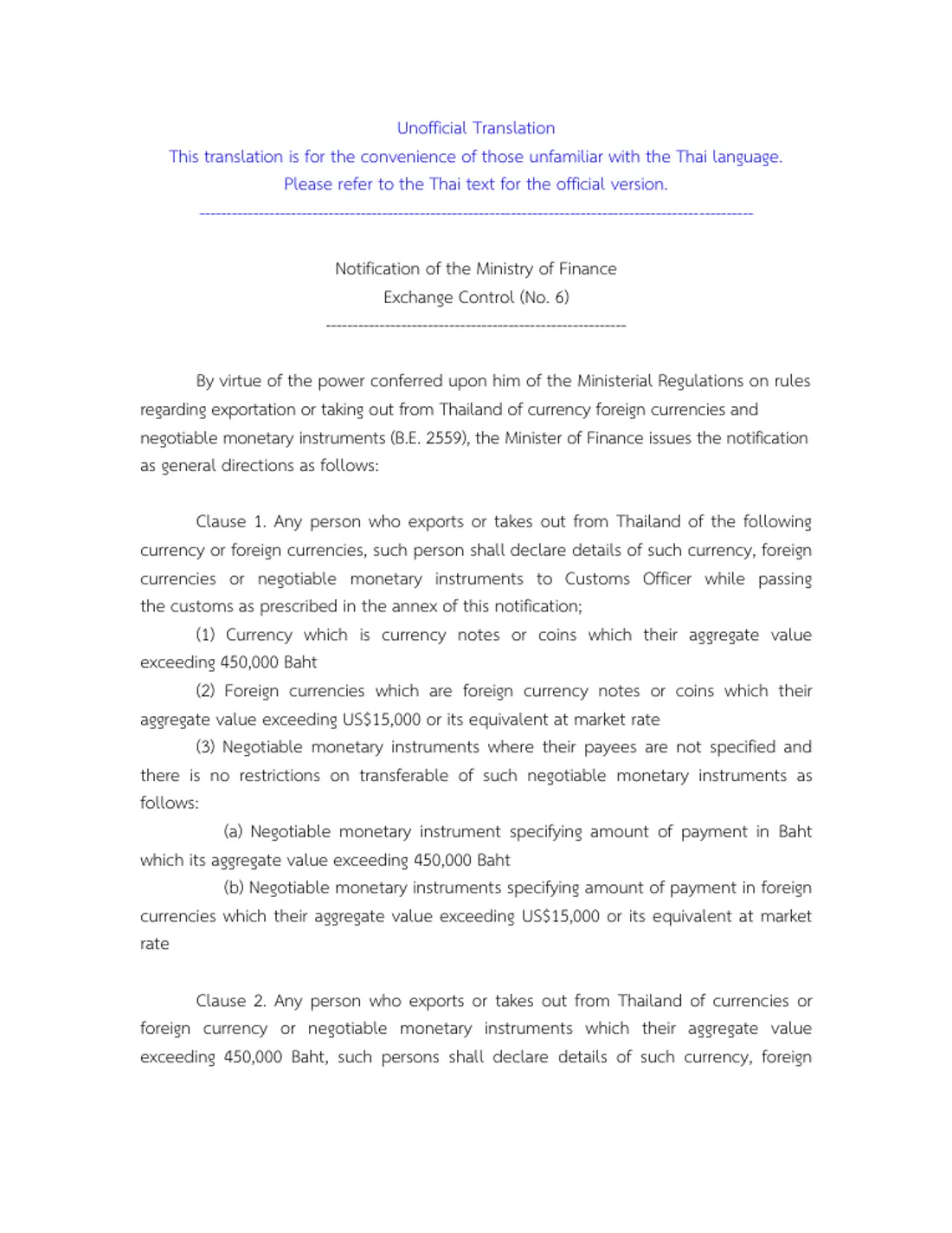
Baht and foreign banknotes may be brought into Thailand without an amount limit. A Customs declaration applies above THB 450,000 in baht or USD 15,000 in foreign banknotes. The steps are in Thailand cash declaration limit.
Taking foreign banknotes out is capped at the amount purchased from authorised banks or money changers. Taking out foreign notes worth more than USD 15,000 or baht notes worth more than THB 450,000 is declared to Customs.
A bank accepts foreign banknotes from a customer up to USD 15,000 a day without asking for documents. Above that it asks for documents showing the money was brought in, such as the Customs declaration.
Step by step
- Find a licensed counterLook for the Ministry of Finance permit and the licence number statement displayed in the office.
- Read the right columnForeign cash into baht uses the Buying Rate; baht into foreign cash uses the Selling Rate.
- Show your passportThe changer asks for a copy of your passport or a travel certificate when it sells you foreign cash.
- Check the numbers before you hand over cashRates change and may differ between locations of the same bank.
- Keep the receiptThe changer gives you a record of the purchase or sale.
Not confirmed: No source read ranks changers or says which one pays the best rate, so compare the boards on the day. Banks' own daily caps for selling you foreign cash are not stated on the pages read. The airport counters' rates are not posted online.
Common questions
Do I need my passport to change money in Thailand?
Bring it. A licensed changer asks for a copy of your passport or a certificate that you are travelling abroad when it sells you foreign cash. Superrich asks for an ID card or a passport that has not expired.
Which column do I use when I hand over foreign cash?
The Buying Rate column. At a bank it is the Bank Buys, Notes rate.
Is there a maximum I can change at a licensed changer?
A changer may sell you foreign notes for travel up to THB 800,000 a day. Superrich caps baht into foreign currency at the same THB 800,000.
Is there a fee at the changer?
Superrich charges no commission or fees. The money is in the rate, so compare the two columns on the board.
Can I change coins?
Superrich does not exchange coins.
Is the airport counter fee-free?
The Kasikornbank exchange counters at Suvarnabhumi are fee-free. They run 24 hours a day and cover over 28 currencies.
Should I accept my home currency at an ATM or card terminal?
No. The choice is yours and the machine must not decide for you. At a Krung Thai ATM the conversion adds 4% on top of the access fee.
How much cash can I carry into Thailand?
There is no amount limit on bringing banknotes in. Declare more than USD 15,000 in foreign banknotes or more than THB 450,000 in baht.
Can I take leftover foreign cash out again?
Only up to the amount you bought from authorised banks or money changers.
Read next
General information checked against the sources listed above, not financial or tax advice for your situation. Rules and fees change; confirm with your bank, the Revenue Department or a licensed adviser before you act. See how guides are checked.
Spotted an error? Report it.