
Money in Thailand: ATM Fees, Cash Limits, VAT Refund
A Thai ATM charges a foreign card THB 220 to THB 350 per withdrawal. Declare cash above USD 15,000 or THB 450,000 to Customs. The VAT refund needs goods of at least THB 2,000 from one shop in a day.
On this page
- The three money facts that cost visitors most
- ATM fees on foreign cards
- Cash, exchange and the declaration limit
- SIM and eSIM
- Bank account and PromptPay
- Sending money to Thailand
- VAT refund for tourists
- Tipping
- Tax residency and remote work
- Cost of living
- Buying a condo
- Driving permit and licence
- Common mistakes
- Common questions
The three money facts that cost visitors most
Most visitors lose money in three places: ATM fees, cash at the border and missed VAT refunds. Each has a published number.
| Fact | Figure | Guide |
|---|---|---|
| ATM fee, foreign card | THB 220 to THB 350 per withdrawal | ATM fees |
| Cash declaration | More than USD 15,000 or THB 450,000 | Cash limit |
| VAT refund minimum | THB 2,000 per shop per day | VAT refund |
ATM fees on foreign cards
Thai banks charge the foreign card, not the home bank, and the fee is per withdrawal. The schedules below are the per-transaction rates for a foreign-issued card.
| Bank | Visa | Mastercard |
|---|---|---|
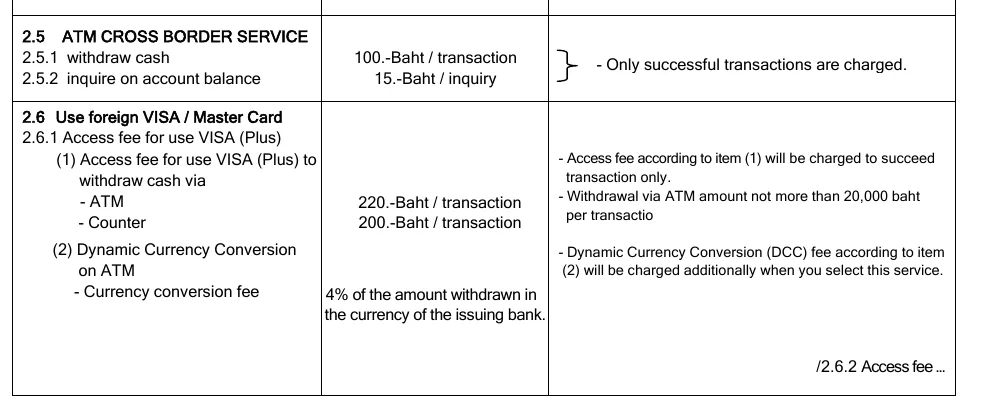
| KBank | THB 250, schedule effective 22 September 2026 | THB 350 |
| Krungsri | THB 250 | THB 350 |
| SCB | THB 250 | THB 350 |
| Krung Thai | THB 220 | THB 220 |
If you pick currency conversion at a Krung Thai ATM, the fee is 4% of the amount withdrawn in the currency of the issuing bank. Decline conversion at the machine and let your own bank convert.
Cash, exchange and the declaration limit
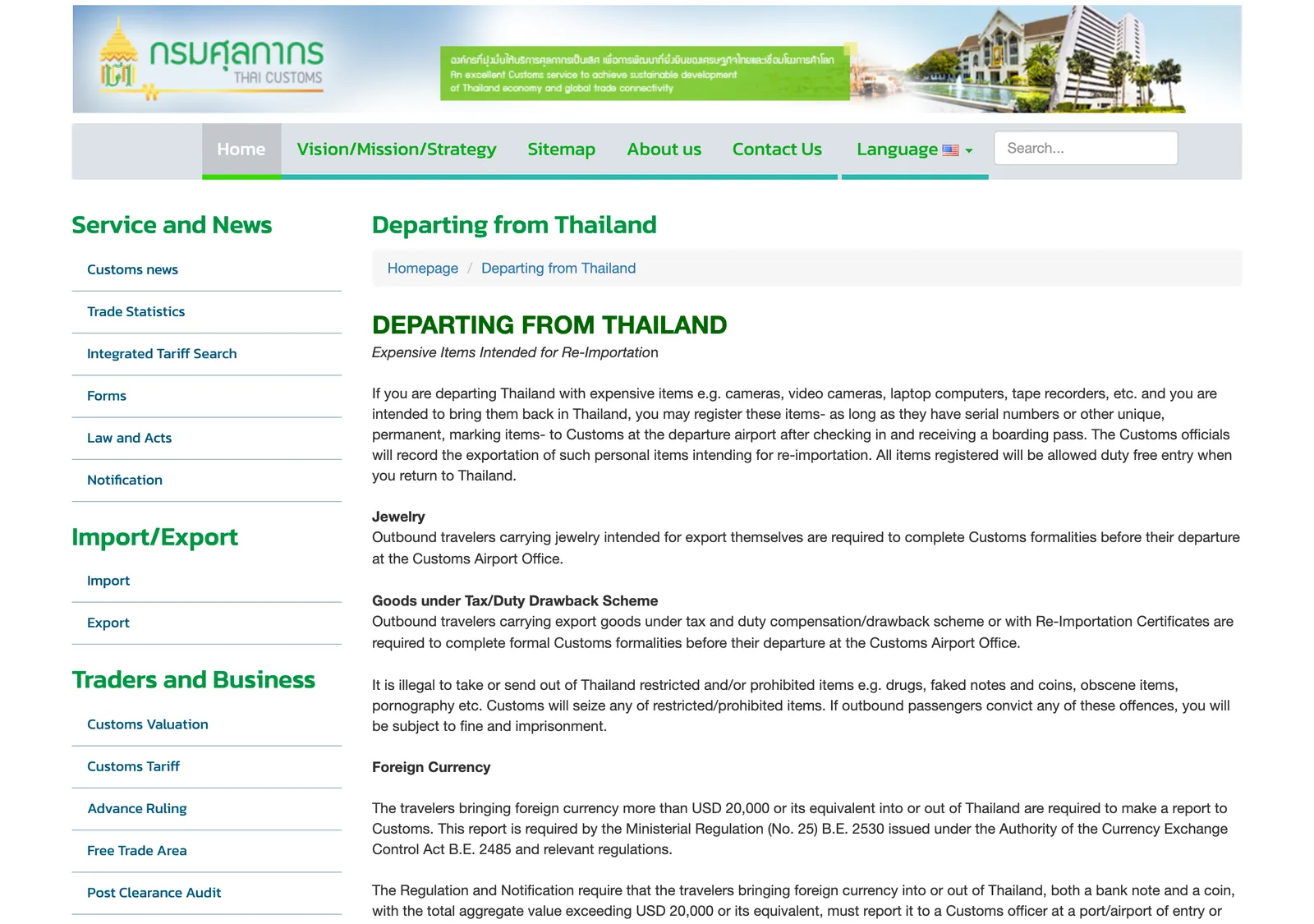
Declare banknotes to Thai Customs when you enter or leave with more than THB 450,000 in baht or more than USD 15,000 in foreign banknotes. Baht, foreign currency and negotiable instruments that together exceed THB 450,000 must also be declared, whichever mix they come in.
Breaking an exchange-control regulation carries a fine of up to THB 20,000, up to 3 years in prison, or both. The cash declaration guide covers the form steps.
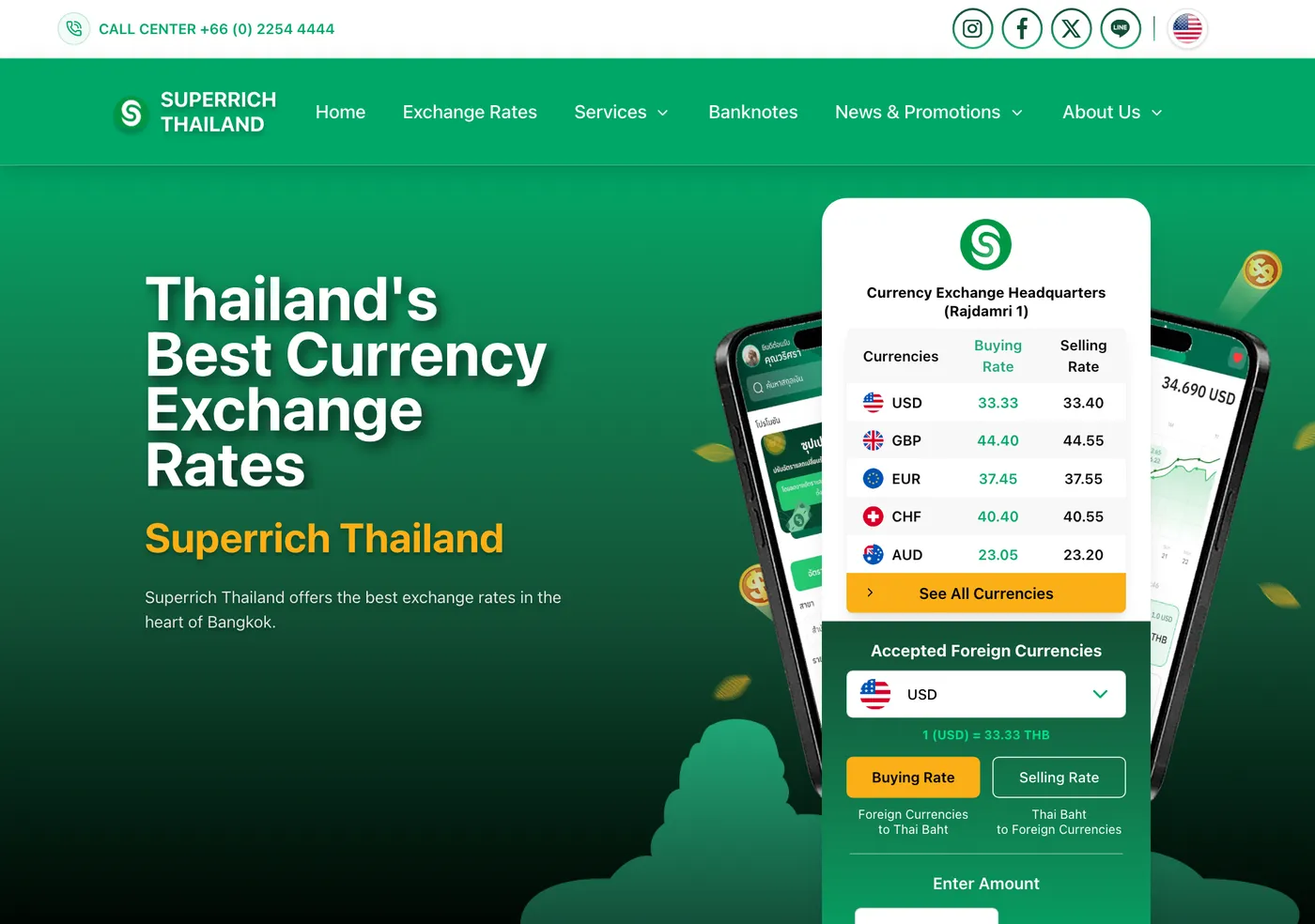
For exchange, use a licensed changer. An authorised money changer must display its Ministry of Finance permit in a conspicuous place and a statement of its licence number. Bring your passport: Superrich asks for an ID card or a passport that has not expired. When a changer sells foreign notes below THB 50,000 it asks for a copy of your passport or a certificate that you are travelling abroad.
On a rate board, the Buying Rate column is foreign currency to Thai baht and the Selling Rate is Thai baht to foreign currency. The exchange guide explains which column applies to you.
SIM and eSIM
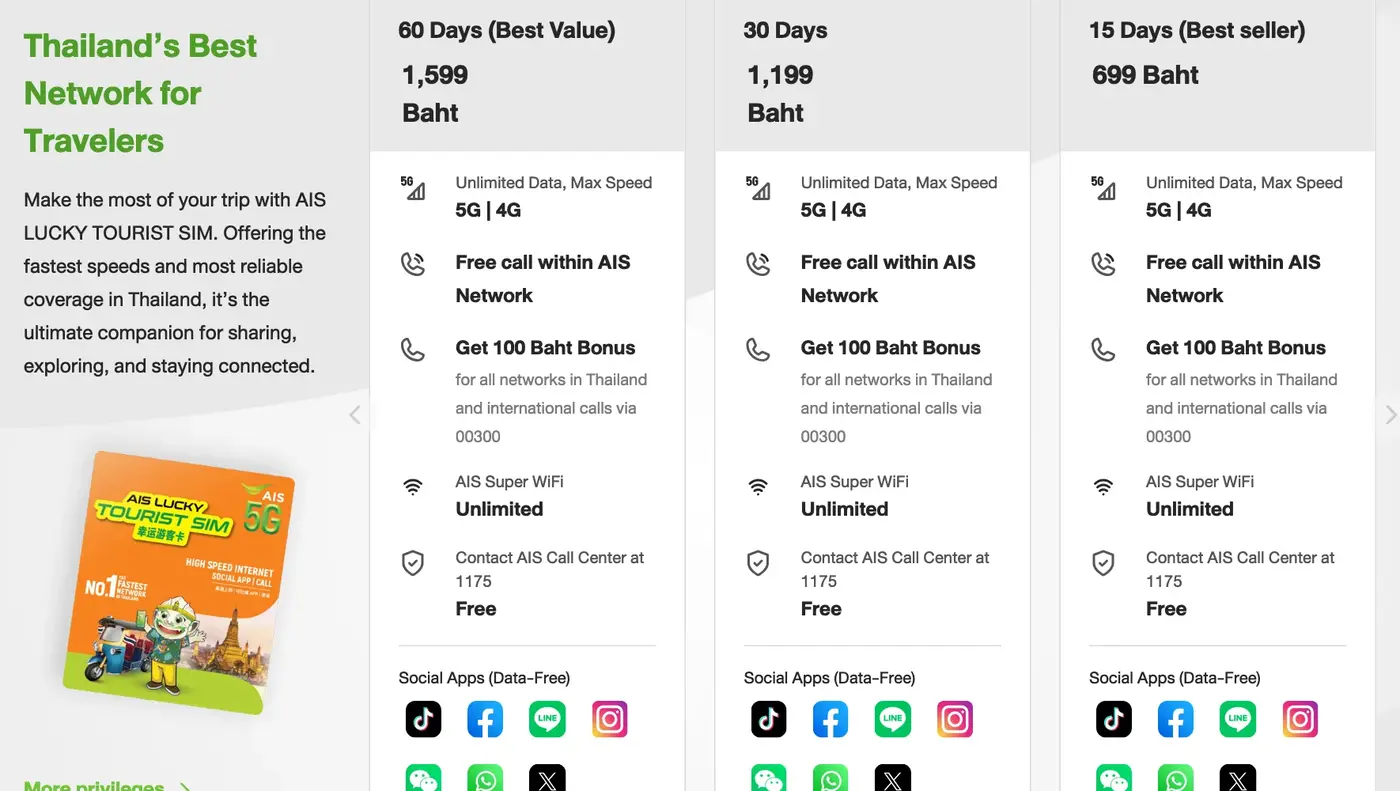
True sells a 10-day Thailand Tourist SIM at THB 349 including VAT with unlimited 5G internet and Wi-Fi, and dtac sells a 10-day SIM at the same price. For 8 days, AIS sells a tourist SIM at THB 499 with unlimited data. True’s 8-day Infinite SIM at THB 499 adds unlimited calls in Thailand.
dtac’s 8-day Happy Tourist Infinite SIM at THB 499 includes 30 free minutes to seven countries.
True and dtac register the SIM with a valid passport, a maximum of 3 SIMs per person per brand. AIS points sit on the 2nd floor at the Suvarnabhumi baggage claims and on the 3rd floor of Terminal 2 at Don Mueang. See best eSIM for Thailand.
Bank account and PromptPay
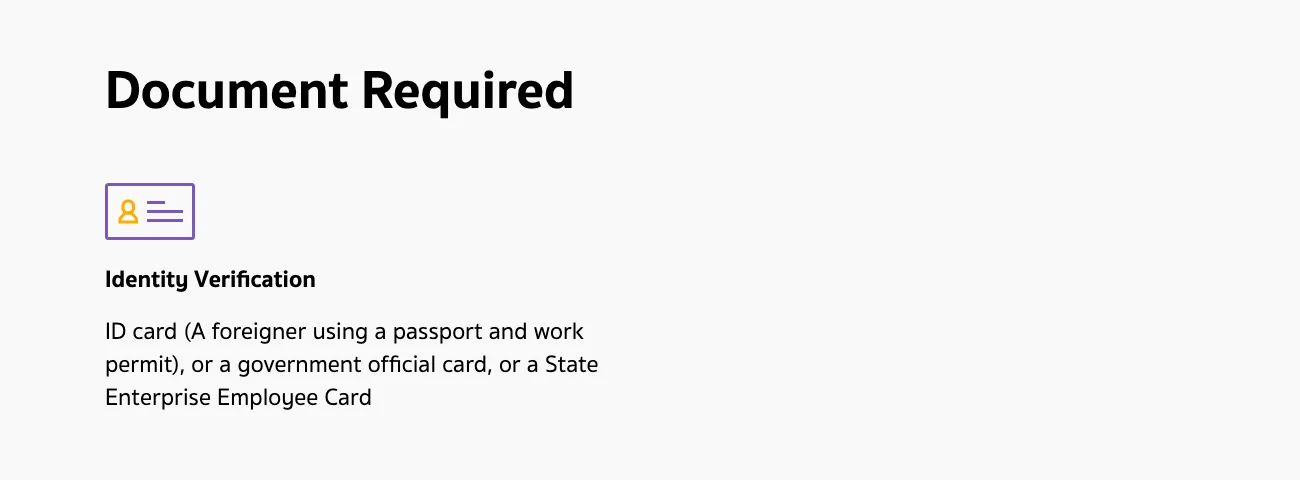
Which bank takes you depends on your visa. KBank does not open accounts for holders of tourist visas or other travel-type visas, including Visa on Arrival, Free Visa and the DTV. Foreign customers on a tourist visa cannot open a Krungsri account.
| Bank | What it asks of a foreigner | Opening deposit |
|---|---|---|
| KBank | Passport and a non-immigrant visa of any type | No minimum |
| SCB | Passport and work permit | THB 500 |
| Bangkok Bank | Passport accepted as ID for PromptPay | THB 500 |
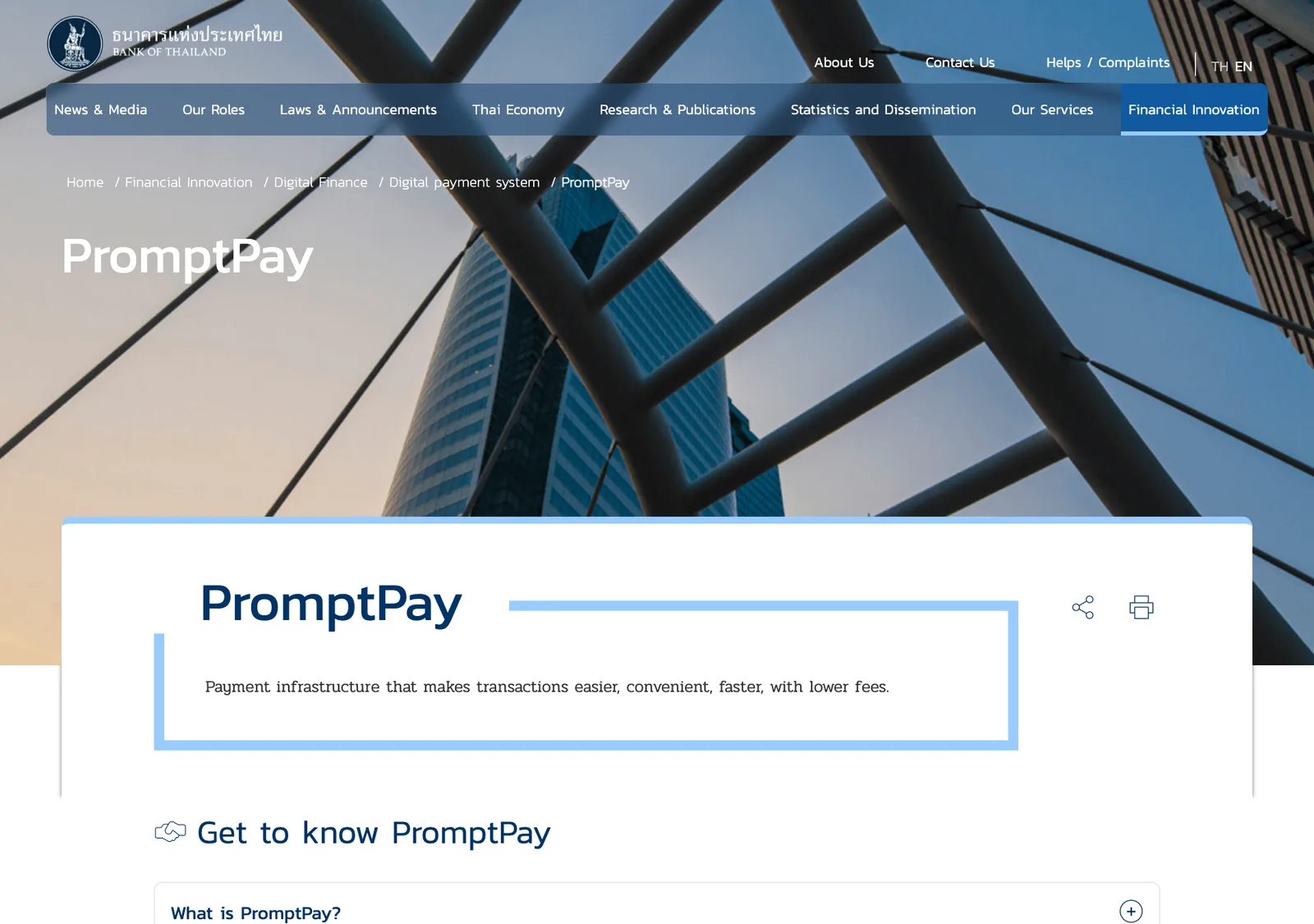
A foreigner at Bangkok Bank can register PromptPay with a passport, connecting only a mobile phone number with the preferred account. Krungsri allows a non-Thai individual to link an account with a mobile phone number only. PromptPay transfers not exceeding THB 5,000 are free.
The guides on opening a bank account and PromptPay for foreigners cover the tourist alternatives.
Sending money to Thailand
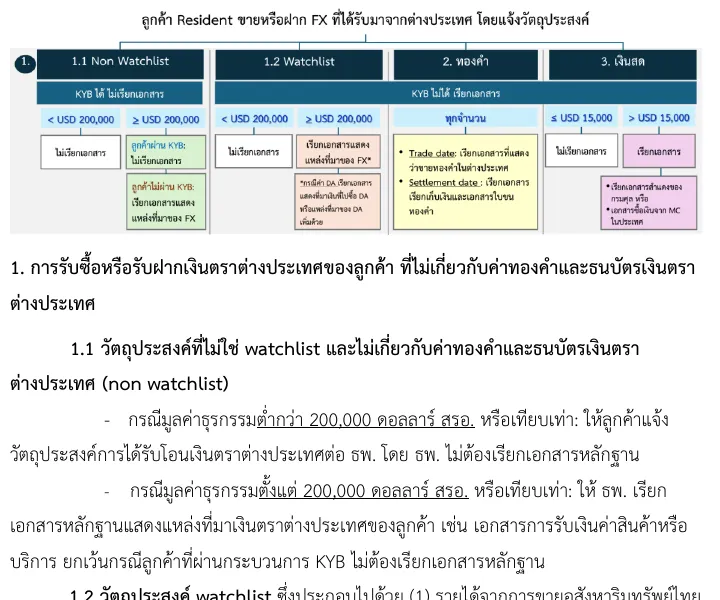
Under the Bank of Thailand’s September 2026 guidelines, a resident customer who receives foreign currency below USD 200,000 states the purpose and the bank asks for no documents. At USD 200,000 or more the bank asks for documents showing the source.
The Bank of Thailand abolished the FX Form in 2017, so customers no longer fill it in, whatever the amount. A commercial bank issues a credit or debit advice instead.
Bangkok Bank charges 0.25% to receive an overseas transfer, with a minimum of THB 200 and a maximum of THB 500. Krungsri charges the same for an inward SWIFT transfer. See sending money to Thailand.
VAT refund for tourists
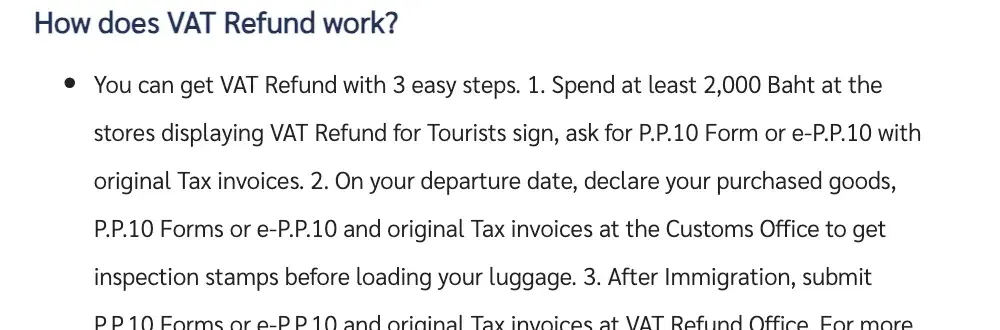
On the day of purchase you show your passport, and the shop completes the P.P.10 form and attaches the original tax invoices. Goods must be at least THB 2,000 including VAT, and at least THB 2,000 from each supplier per day.
The refund covers only goods taken out of Thailand with you within 60 days of the purchase date. The scheme works for travellers who leave by air only. Customs stamps are not needed when the total of all your P.P.10 and e-P.P.10 forms is below THB 20,000. The VAT guide walks through the airport steps.
Tipping
Read the bill before you tip. A Bangkok restaurant menu states its prices are subject to a 10% service charge and a 7% value-added tax. A Pattaya hotel spa menu states its prices are inclusive of both.
Tipping Grab drivers is not necessary but always appreciated. The in-app tip is only available for rides paid with GrabPay, and you have up to 72 hours after the ride ends to tip. See tipping in Thailand.

Tax residency and remote work
Anyone who stays in Thailand for 180 days in total, in one period or several, in a tax year is treated as a resident for that year. The Revenue Department counts days between 1 January and 31 December. Someone in Thailand fewer than 180 days is a non-resident and files if they have Thai-taxable income.
Income from work done in Thailand is taxable whether it is paid inside or outside the country. That includes remote work done while you are in Thailand. A DTV is valid for 5 years with multiple entries and a stay of 180 days per entry.
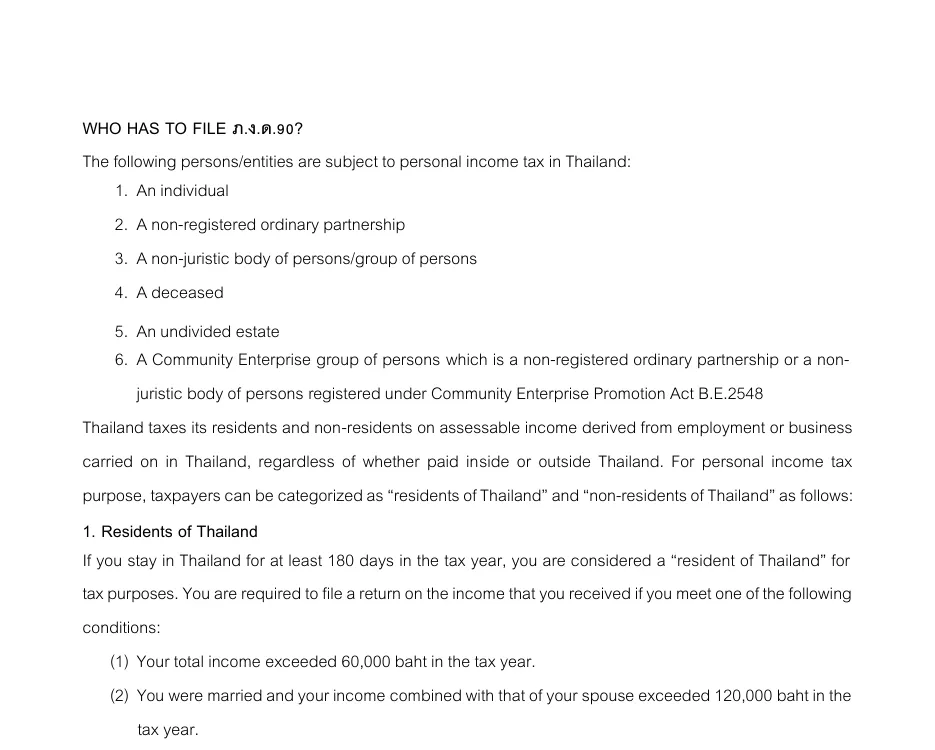
For foreign income, a resident is taxed only on income earned from 1 January 2024 and remitted in the same or a later tax year. Order Por. 162/2566 left out assessable income that arose before 1 January 2024. A resident can credit tax paid abroad under the double tax agreement with that country. With no agreement, no foreign tax credit can be claimed.
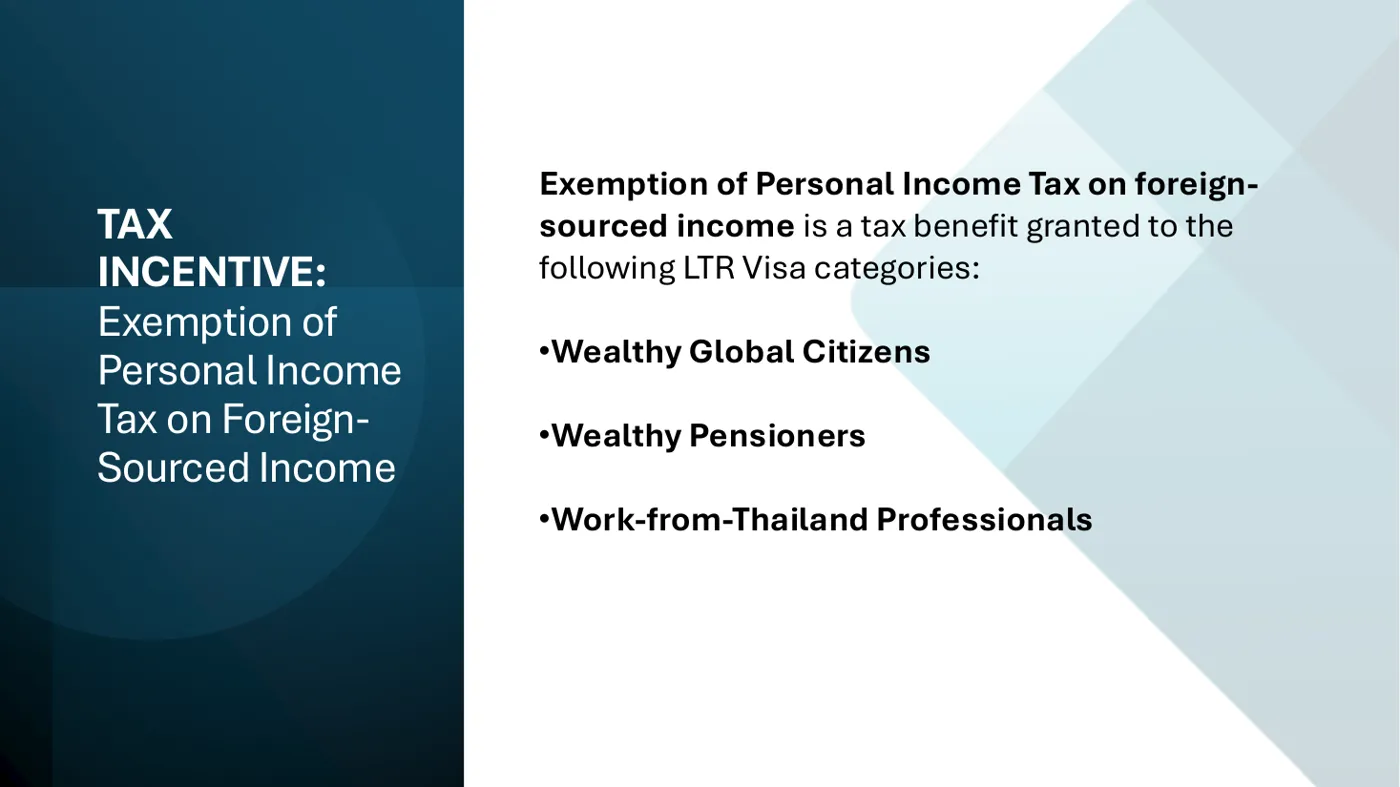
LTR Wealthy Global Citizens, Wealthy Pensioners and Work-from-Thailand Professionals are exempt from Thai tax on foreign-source income. The tax residency guide and the remote worker tax guide cover the calculations.
Cost of living
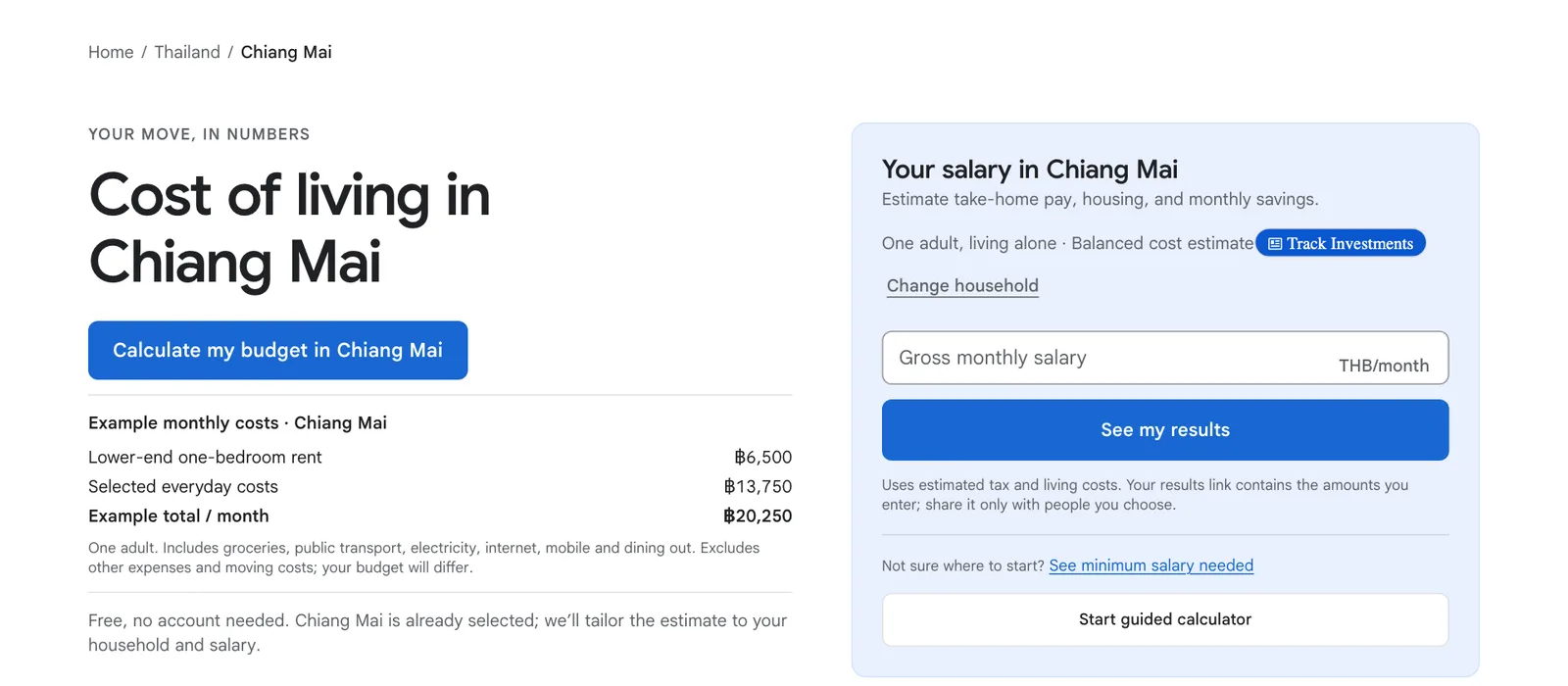
Electricity costs THB 3.0000 a unit for the first 200 units under both MEA and PEA. Rent separates the cities. AffordWhere’s example month for one adult is THB 20,250 in Chiang Mai and THB 31,100 in Bangkok. The average asking rent for a Phuket one-bedroom condo is THB 29,300 a month.
A lean month in Bangkok costs about THB 20,868, and a comfortable month about THB 38,265.68 before VAT and service charges. A Bangkok one-bedroom ranges from THB 12,000 to THB 55,000 a month, and a Sukhumvit one-bedroom starts at THB 22,000. See cost of living by city and Bangkok cost of living.
Buying a condo
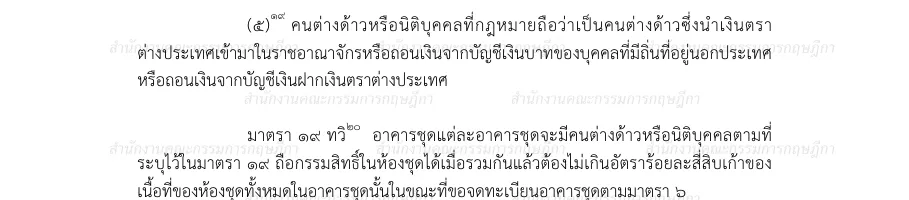
Foreigners together may own no more than 49% of the total unit area of each condominium building. The quota is measured against the total unit area at the time the condominium was registered. A foreigner holds a unit by bringing foreign currency into Thailand. Withdrawing from a non-resident baht account or a foreign-currency deposit account also works.
The evidence must be for an amount not less than the price of the unit.
Land is a different case. A foreigner may acquire land only under a treaty that gives the right to own immovable property. Thailand has made no such treaty with any country since the old treaties ended. The condo quota guide has the section numbers.
Driving permit and licence
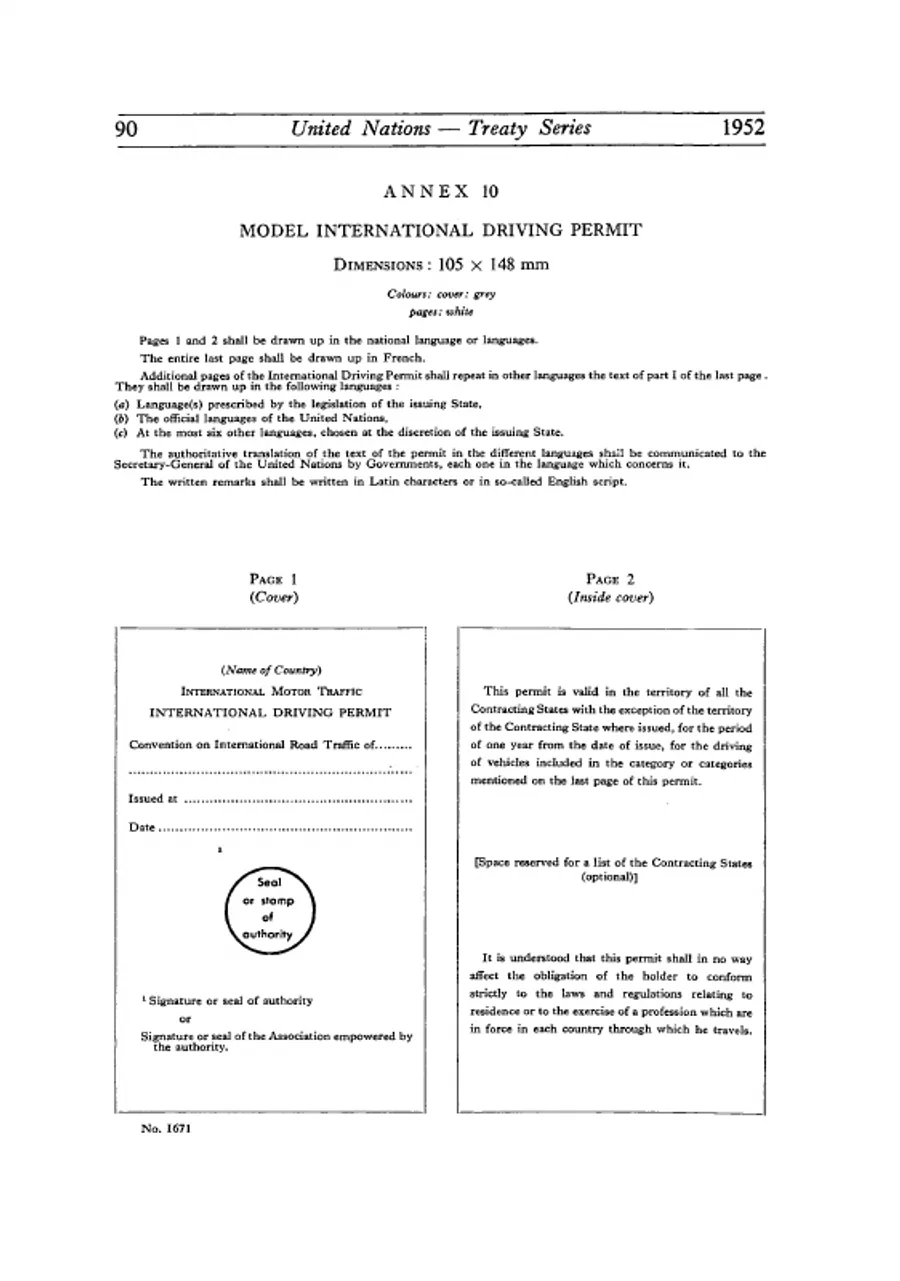
An international driving permit must be issued under an international agreement Thailand has signed, such as the 1949 Geneva or 1968 Vienna convention. Use it together with your home licence.
A motorcycle needs a Thai motorcycle licence or a permit with a motorcycle endorsement. Driving without a licence carries up to 1 month in jail or a fine of up to THB 1,000. See the driving permit guide.
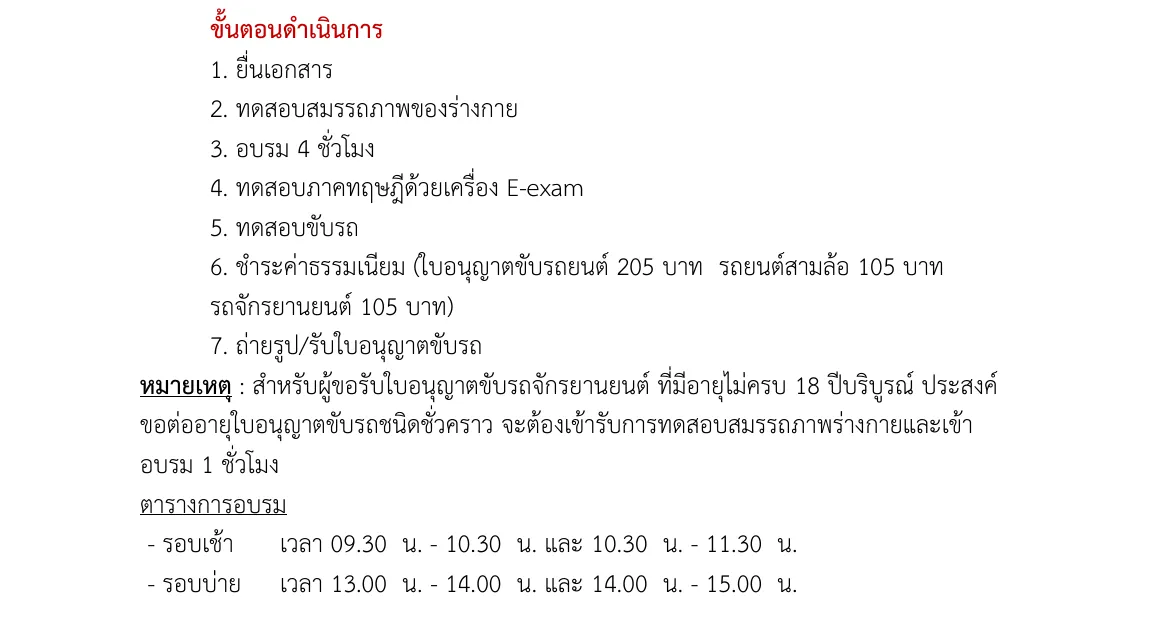
To get a Thai temporary licence, a foreigner submits a passport with a photo and shows a residence certificate or official evidence of residence. A work permit is accepted instead of the residence certificate.
The fee is THB 205 for a car and THB 105 for a motorcycle. The five-year licence needs a temporary licence held for at least one year, and tourist-entry holders cannot apply. See the licence guide.
Common mistakes
- Accepting currency conversion at the ATM: Krung Thai adds 4%.
- Carrying more than USD 15,000 or THB 450,000 undeclared.
- Buying VAT-refund goods across several shops, each under THB 2,000.
- Arriving on a tourist visa and expecting a KBank account.
- Tipping on top of a 10% service charge already on the bill.
Common questions
How much does a Thai ATM charge a foreign card?
KBank, Krungsri and SCB charge THB 250 per withdrawal for Visa and THB 350 for Mastercard. Krung Thai charges THB 220 for both.
How much cash can I bring into Thailand?
Declare more than THB 450,000 in baht or more than USD 15,000 in foreign banknotes when you enter or leave. A mix of baht, foreign currency and instruments above THB 450,000 also needs a declaration.
What is the penalty for not declaring cash?
Breaking an exchange-control regulation carries a fine of up to THB 20,000, up to 3 years in prison, or both.
Can a tourist open a Thai bank account?
Not at KBank, which refuses holders of a tourist visa, Visa on Arrival, Free Visa or the DTV. Krungsri also refuses tourist-visa customers.
How much money can I send to Thailand without papers?
For a resident customer, the bank asks for no documents on foreign currency below USD 200,000 and only the purpose. From USD 200,000 it asks for papers showing the source.
Who gets a VAT refund in Thailand?
Goods must be at least THB 2,000 including VAT from each supplier per day. The scheme works for travellers who leave by air only.
Do I pay Thai tax on money I bring in from abroad?
You are a Thai tax resident after 180 days in a year. Foreign income earned from 1 January 2024 is taxed when you bring it into Thailand.
Can a foreigner buy a condo in Thailand?
Yes, within the 49% quota: foreigners together may own no more than 49% of the total unit area of a condominium building. Land is closed unless a treaty applies.
Read next
General information checked against the sources listed above, not financial or tax advice for your situation. Rules and fees change; confirm with your bank, the Revenue Department or a licensed adviser before you act. See how guides are checked.
Spotted an error? Report it.