
Send Money to Thailand: No Papers Under USD 200,000
For a resident customer, Thai banks ask for no documents on foreign currency under USD 200,000: you state the purpose. From USD 200,000 they ask for papers showing the source. The Foreign Exchange Transaction form was abolished in 2017 and replaced by a bank credit advice. Bangkok Bank and Krungsri charge 0.25% to receive a SWIFT, THB 200 to 500.
On this page
The paper you want after the money lands is the bank’s credit advice, the document that took the place of the old Foreign Exchange Transaction form. The amount decides how much the bank asks beforehand: USD 200,000 is the line.
What a Thai bank checks when foreign money arrives
Foreign currency or baht can be transferred or brought into Thailand without limit. The transfer must go through persons licensed by the Minister of Finance, such as authorised banks, money changers and money transfer agents.
The sender states a purpose for every transfer, and banks report it to the Bank of Thailand. Purposes include paying for goods, buying a condominium, investing in a business or living expenses.
The amount then sets the paperwork for a resident customer.
| Amount received | What the bank asks |
|---|---|
| Below USD 200,000 | You state the purpose; no documents |
| USD 200,000 or more | Documents showing the source of the money |
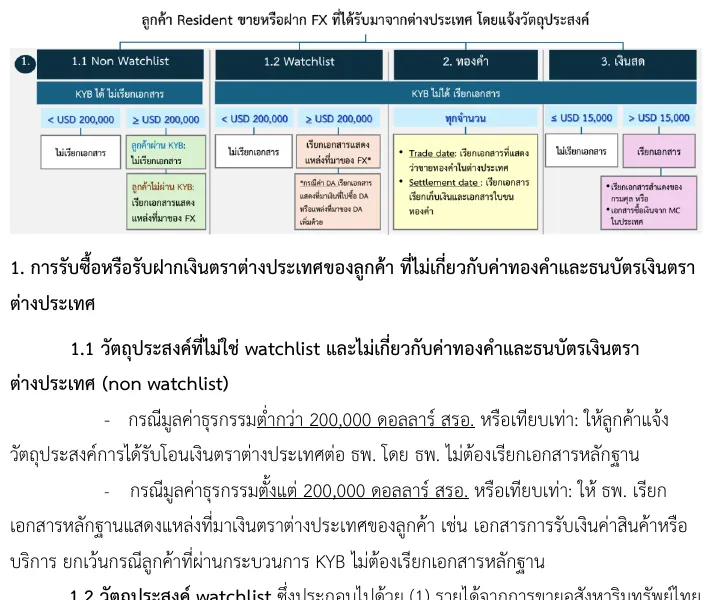
KYB is the process by which the bank knows the business of a resident customer in connection with foreign-currency transactions. A bank can skip the source papers for a customer who passed it. The shortcut does not work for watchlist purposes, which include income from the sale of Thai real estate.
The old Foreign Exchange Transaction form
The Bank of Thailand abolished the FX Form in 2017, so customers no longer fill it in for foreign-currency transactions with banks, whatever the amount. In its place the bank issues a credit or debit advice with the data the Bank of Thailand requires.
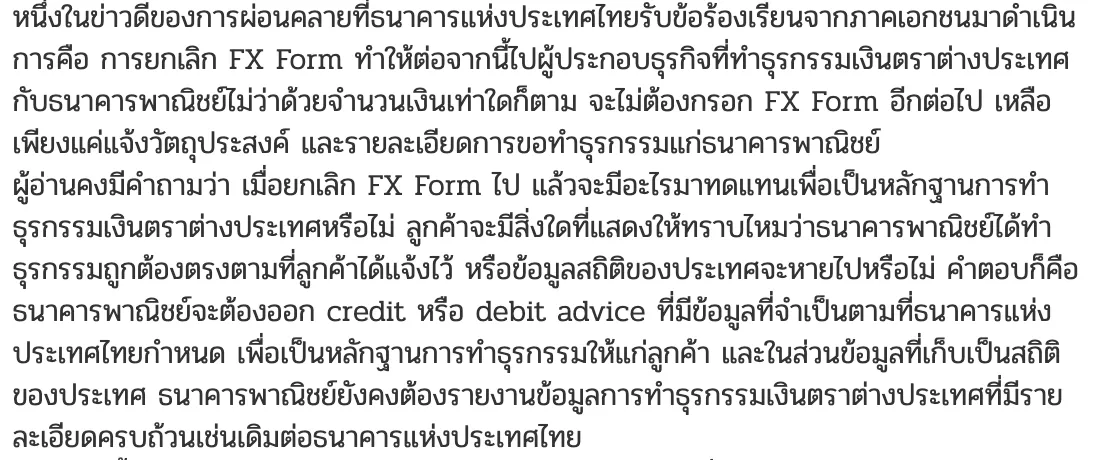
SCB’s page still lists a Foreign Currency Transaction Form among the supporting documents for amounts from USD 50,000. Ask your bank which paper it will issue, and keep it.

One million dollars or more
A person receiving USD 1 million or more from abroad must sell it to an authorised bank within 360 days of receipt. The alternative is a foreign currency account at an authorised bank.
If the money is for a condo
A foreigner can hold a condominium unit by bringing foreign currency into Thailand, or by withdrawing from a baht account of a person resident abroad or a foreign-currency deposit account. Buying a condominium is a purpose a sender may state.
The foreign-currency evidence must be for an amount not less than the price of the unit. Keep the credit advice.
Cash you carry in
Bringing in baht banknotes above THB 450,000 or foreign banknotes above USD 15,000 requires a Customs declaration. The cash declaration page covers the rule at the airport.
What the receiving bank charges
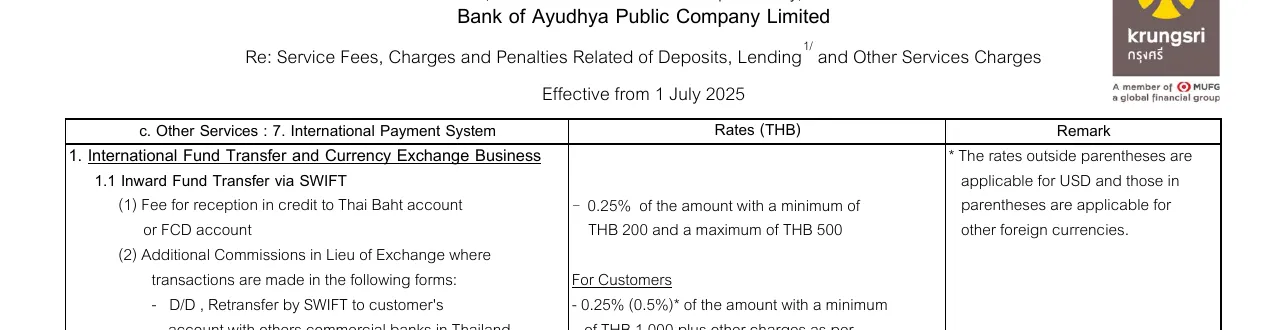
Bangkok Bank and Krungsri charge 0.25% to receive a SWIFT transfer, with a minimum of THB 200 and a maximum of THB 500. SCB charges 0.25% with a minimum of THB 300 and a maximum of THB 500.
| Bank | Rate | Minimum | Maximum |
|---|---|---|---|
| Bangkok Bank | 0.25% | THB 200 | THB 500 |
| Krungsri | 0.25% | THB 200 | THB 500 |
| SCB | 0.25% | THB 300 | THB 500 |
Krungsri’s figures are from its schedule effective 1 July 2025. Another bank on the way may add a handling fee.

Rate, speed and cash
Bangkok Bank converts incoming foreign currency to baht at its Telegraphic Transfer Buying Rate. A SWIFT transfer should reach a Bangkok Bank account within 1-2 working days.
Without an account, a recipient paid in cash at a Bangkok Bank counter pays the receiving fee plus THB 150 per transaction.
Account details the sender needs
- Bangkok Bank’s SWIFT code is BKKBTHBK.
- SCB’s SWIFT code is SICOTHBK, with your name, account name, number and address.
- A purpose for the transfer.
From a US bank by ACH
Bangkok Bank’s New York branch takes US ACH transfers in IAT format from senders using the internet banking of US banks. Ask your own bank first: some US banks do not offer international ACH.
For USD 100.01 to USD 2,000 the branch deducts USD 5 plus THB 100. For ACH of THB 1,000,000 equivalent or more the branch deducts USD 15 plus 0.25%, minimum THB 200 and maximum THB 500.
A foreign-currency account for non-residents
Bangkok Bank’s foreign-currency account for non-residents opens with a minimum initial deposit of USD 1,000 or the equivalent. Opening a Thai account as a visitor is covered on the bank account page.
Wise and other transfer services
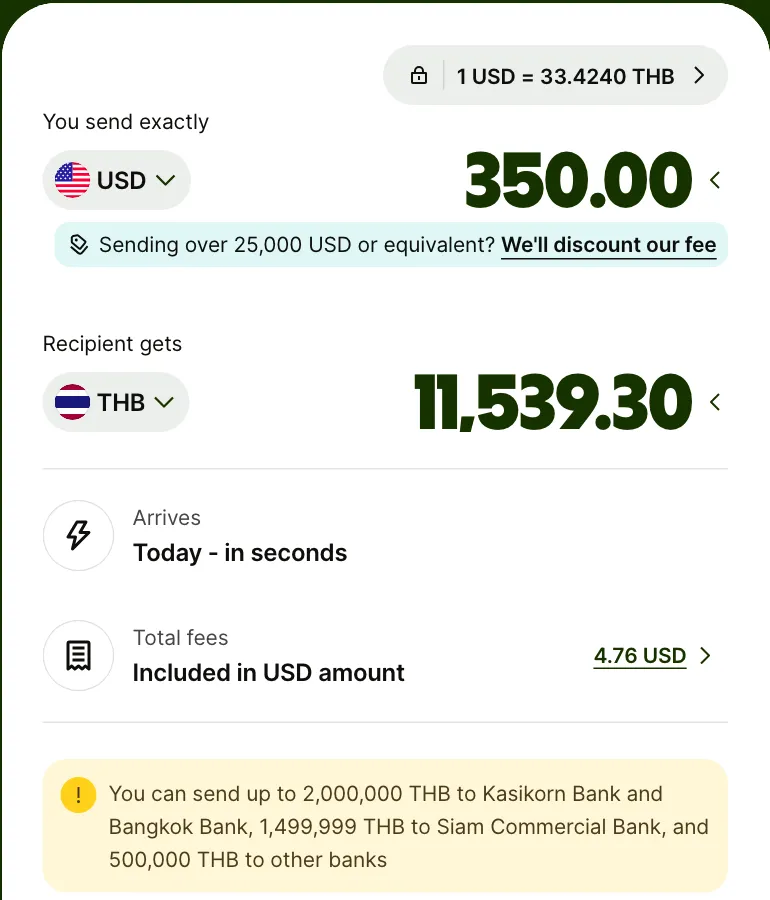
On 14 October 2026 Wise showed a fee of USD 9.65 on a USD 1,000 transfer. Wise charges a small upfront fee and uses the live mid-market rate. Its total cost is the fee plus the exchange rate. The recipient got THB 33,233.67 at THB 33.5575 per dollar, guaranteed for 8 hours.
Western Union’s rates and fees vary with the payment and delivery methods. It makes money from the exchange rate. WorldRemit’s fees still apply and its FX rates are subject to change.
Send limits differ by provider and receiving bank.
| Provider and receiving bank | Limit per transfer |
|---|---|
| Wise to Kasikorn Bank or Bangkok Bank | THB 2,000,000 |
| Wise to SCB | THB 1,499,999 |
| Wise to other banks | THB 500,000 |
| WorldRemit to a Thai bank | THB 49,999 |
Tax on money you bring in
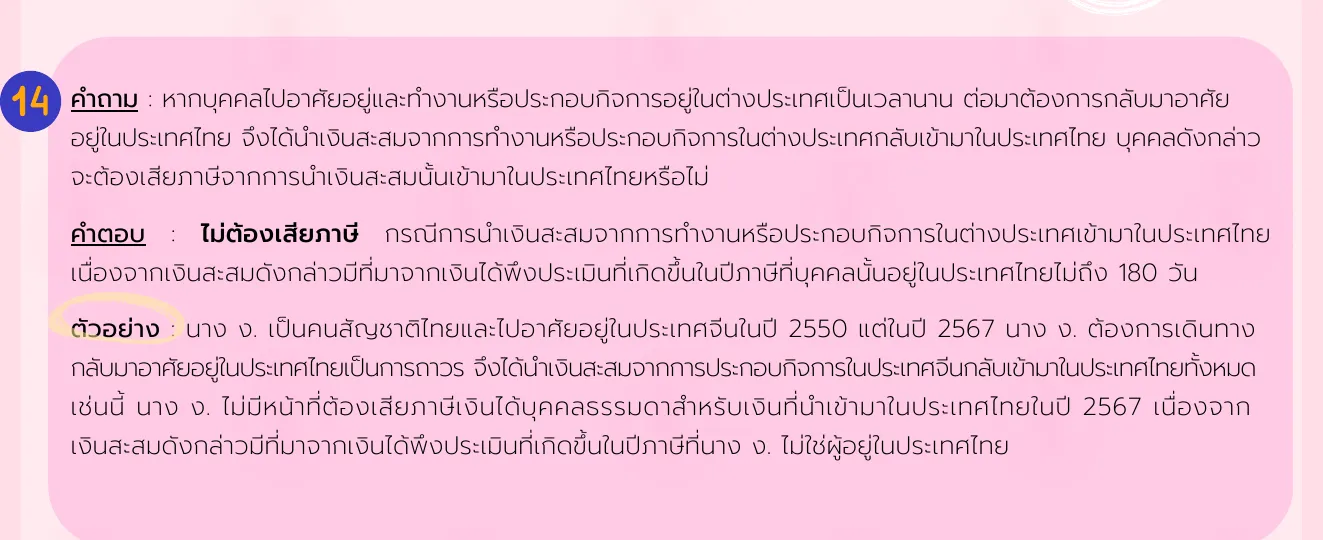
A person who is in Thailand a total of 180 days or more between 1 January and 31 December of a year is a resident for the 180-day test. That person must include foreign income brought into Thailand in the tax computation. The order applies to income brought in from 1 January 2024.
A person in Thailand fewer than 180 days in the tax year pays no Thai tax on that year’s foreign income, even if brought in. Savings from work abroad can be brought in without tax.
Who counts as a resident is covered on the Thai tax residency page.
Step by step
- Give the sender the bank detailsBangkok Bank's SWIFT code is BKKBTHBK and SCB's is SICOTHBK. The sender also needs your name, account number and address.
- State the purposeEvery incoming transfer needs a purpose, such as a condominium purchase or living expenses.
- Check the amountBelow USD 200,000 the bank asks for no documents. From USD 200,000 it asks for source papers.
- Collect the credit adviceThe bank issues a credit or debit advice as evidence of the transaction.
Not confirmed: What your sending bank charges for an outgoing wire: that fee is set abroad. Which paper a Land Office accepts for a condo: the Act names none; ask the bank for the credit advice. Krungsri's fee is from its 1 July 2025 schedule.
Common questions
Is there a limit on money sent to Thailand?
Foreign currency or baht can be transferred or brought into Thailand without limit. Bangkok Bank sets no limit on the amount received from abroad.
Do I need a Foreign Exchange Transaction form?
The Bank of Thailand abolished the FX Form in 2017, whatever the amount. The bank issues a credit or debit advice as evidence.
When does a Thai bank ask for documents?
At USD 200,000 or more the bank asks for documents showing the source of the foreign currency. Below that you state the purpose and no documents are asked.
How much does a Thai bank charge to receive a SWIFT transfer?
Bangkok Bank and Krungsri charge 0.25% with a minimum of THB 200 and a maximum of THB 500. SCB charges 0.25% with a minimum of THB 300 and a maximum of THB 500.
How long does a SWIFT transfer take?
A SWIFT transfer should reach a Bangkok Bank account within 1-2 working days.
What is the cheapest way to send money to Thailand?
Wise charges a small upfront fee at the mid-market rate. On 14 October 2026 its fee on USD 1,000 was USD 9.65. The sender's own bank fee and the receiving bank fee come on the bank route.
Is money I send to myself in Thailand taxed?
A person in Thailand fewer than 180 days in the tax year pays no tax on foreign income of that year brought in. A person in Thailand 180 days or more may owe tax on income brought in from 2024.
Can I send money to buy a condo?
Yes: buying a condominium is a purpose a sender may state for an incoming transfer. The Condominium Act asks for evidence that foreign currency was brought in.
What is the maximum Wise sends to a Thai bank?
Wise sends up to THB 2,000,000 to Kasikorn Bank and Bangkok Bank, THB 1,499,999 to SCB and THB 500,000 to other banks.
Read next
General information checked against the sources listed above, not financial or tax advice for your situation. Rules and fees change; confirm with your bank, the Revenue Department or a licensed adviser before you act. See how guides are checked.
Spotted an error? Report it.