
Thailand Tax for Remote Workers: DTV, LTR and 180 Days
Work you do in Thailand is taxed whether you are paid inside or outside the country. Foreign income is taxed when you are resident (180 days or more) and bring it in. A DTV stay can run 180 days per entry. LTR Work-from-Thailand holders are exempt on foreign-sourced income.
On this page
Two tests decide a remote worker’s Thai tax. One is where you do the work. The other is how many days you spend in Thailand.
Test 1: where the work is done
Income from work or business done in Thailand is taxable whether it is paid inside or outside the country.
ต้องเสียภาษีตามบทบัญญัติในส่วนนี้ไม่ว่าเงินได้นั้นจะจ่ายในหรือนอกประเทศ
“… must pay tax under this part whether the income is paid inside or outside the country.”
Revenue Code, section 41 paragraph 1
The Department’s guide applies this to residents and non-residents alike. Nationality does not enter into it.
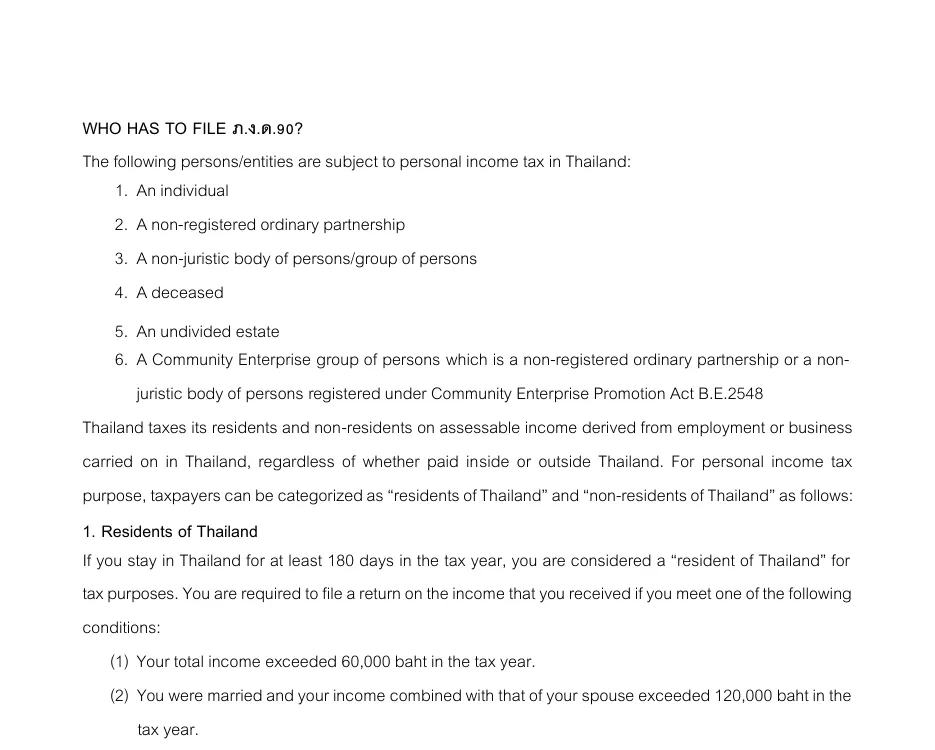
Foreign-sourced income is the other side: work or activity carried out outside Thailand, with employment for a foreign company as one example. Fees and commissions are hire-of-service income under section 40(2).
| Your situation | Rule |
|---|---|
| Work done in Thailand, paid from abroad | Taxed whether paid inside or outside the country |
| Work done abroad, money brought into Thailand | Taxed for a resident when brought in, if earned from 1 January 2024 |
Test 2: 180 days and money you bring in
You are resident after 180 days or more in the tax year, in one stay or several. A resident with income from work abroad is taxed on it when it is brought into Thailand.
Order P.161/2566 adds it to the tax computation for the year it came in. It applies to income brought in from 1 January 2024. Two conditions apply:
- You earned the income from 1 January 2024 in a year you were a resident.
- You bring it in that year or a later one.
Someone in Thailand fewer than 180 days is not taxed on foreign income of that year, even if it is brought in.
The full rules, treaty credits and worked cases are in the tax residency guide.
What the DTV does and does not do
The DTV is for digital nomads, remote workers and freelancers. A stay can run 180 days per entry. Embassies ask for an employment contract, an employment certificate or a professional portfolio. See the DTV guide for funds and documents.
Holders are prohibited from obtaining a Thai work permit and from working for companies in Thailand or freelancing for Thai clients. The Foreigners’ Working Management Emergency Decree bars a foreigner from working without a permit or beyond what it allows.
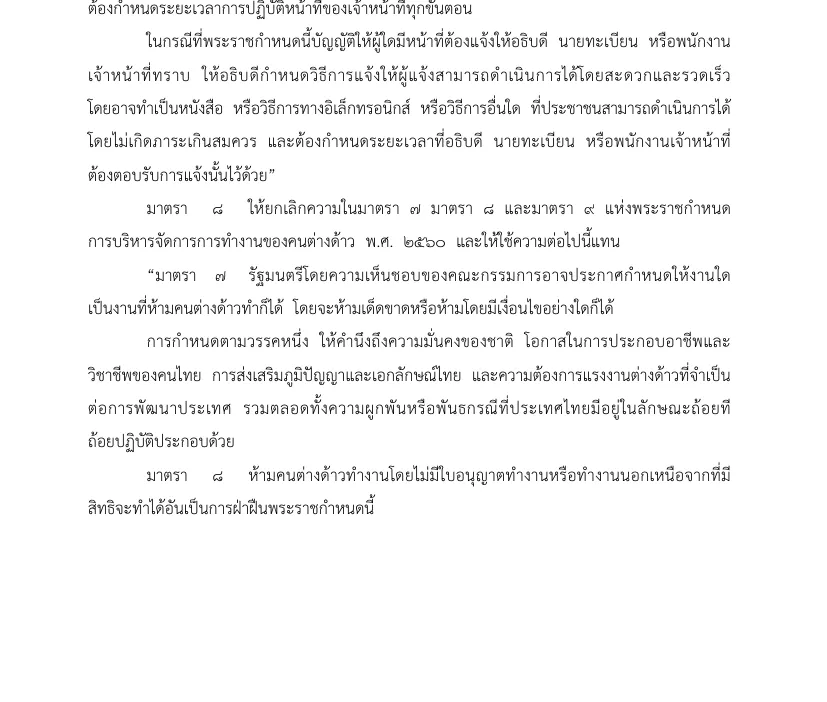
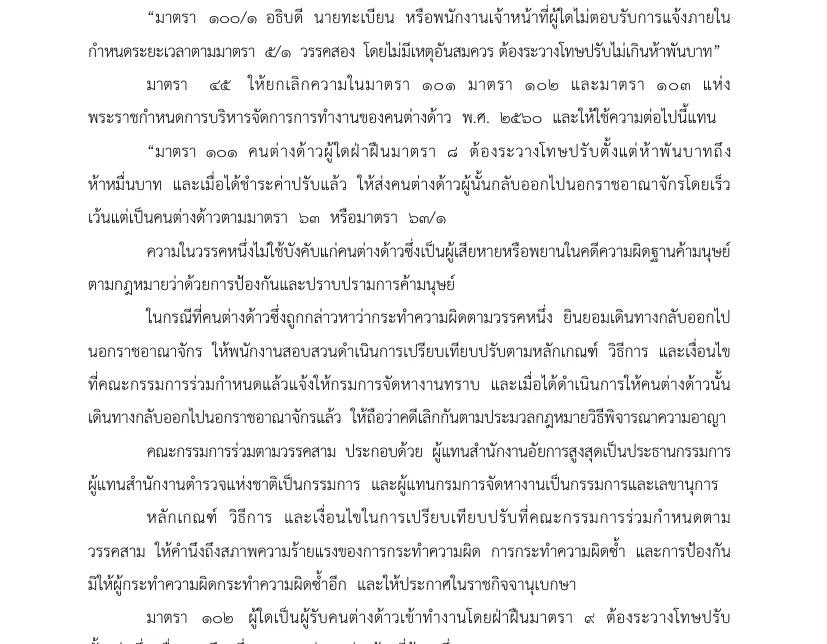
The decree defines work as any occupation, with or without an employer. Working without a permit brings a fine of THB 5,000 to 50,000. Under section 101 the foreigner is then sent out of the Kingdom promptly, with exceptions for certain categories.
LTR Work-from-Thailand and highly-skilled holders
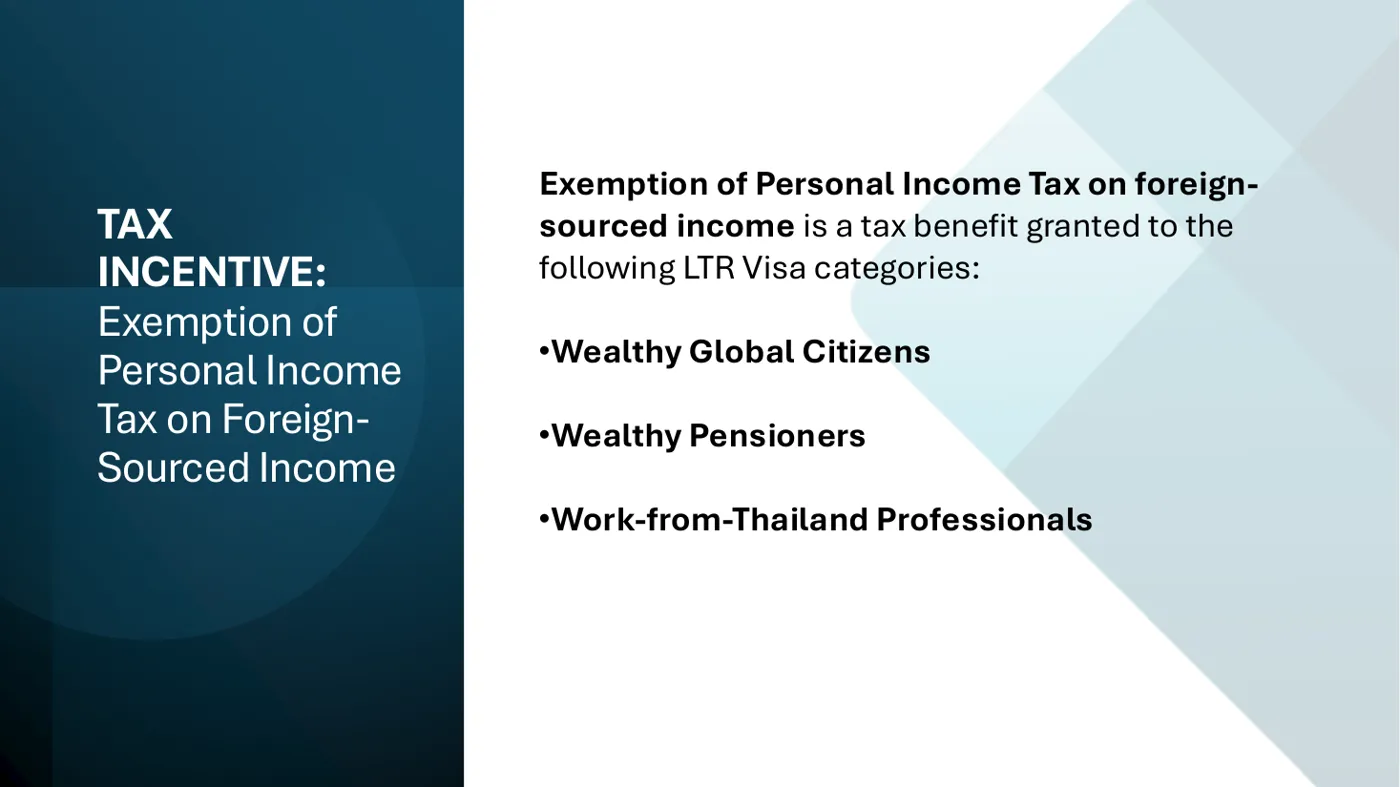
The Revenue Department grants an exemption on foreign-sourced income to Wealthy Global Citizens, Wealthy Pensioners and Work-from-Thailand Professionals. Royal Decree No. 743 exempts foreign income of a previous tax year that they bring into Thailand.
- No application or prior approval is needed.
- With no Thai-sourced income apart from remitted foreign income, no return is needed. With Thai-sourced income, you file.
- You must hold the LTR visa and meet the BOI rules.
- Work-from-Thailand holders cannot work for Thai employers or earn income in Thailand, as the visa has no work permit.
The income test is USD 80,000 a year on average for two years. It falls to USD 40,000 with a master’s degree or higher, owned intellectual property or Series A funding. LTR holders report once a year, not every 90 days. Details are in the LTR guide.
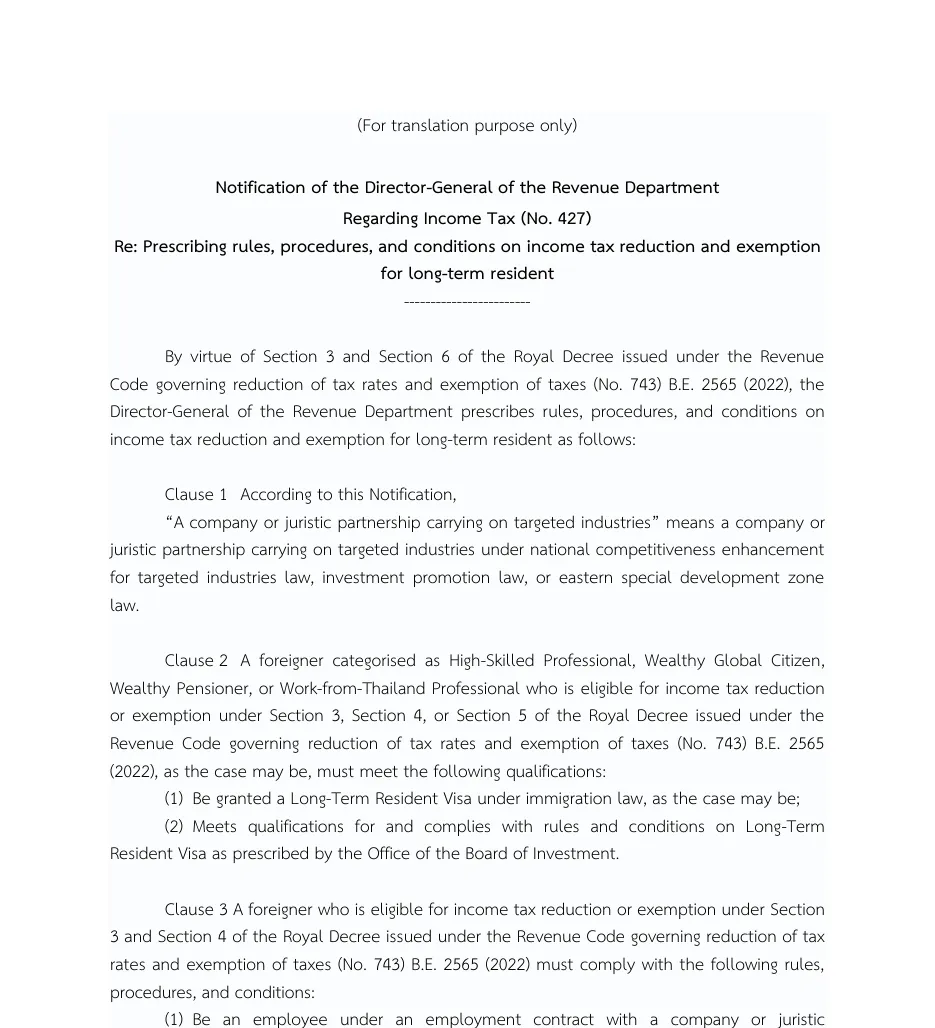
| LTR category | Tax benefit |
|---|---|
| Work-from-Thailand Professionals | Exempt on foreign-sourced income brought in |
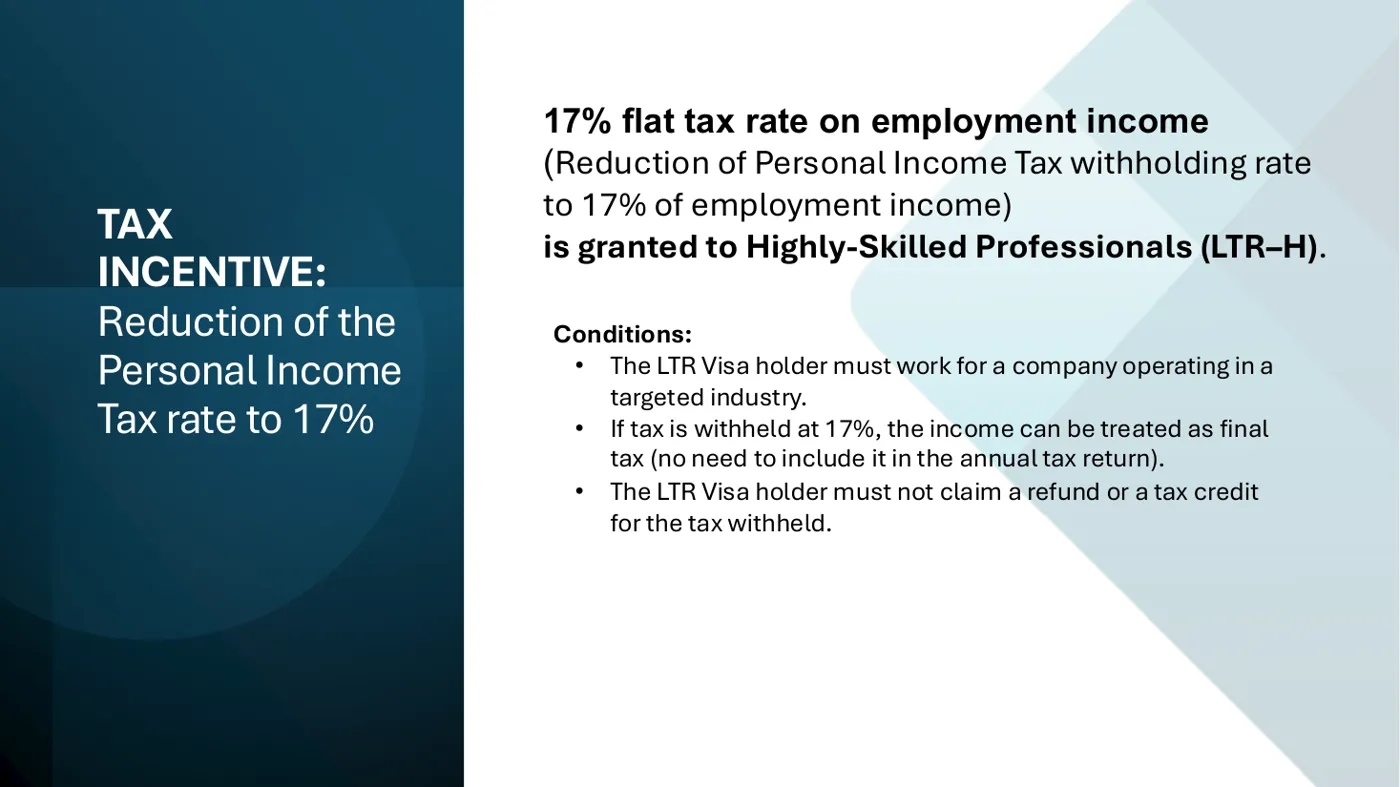
| Highly-skilled Professionals in a targeted industry | 17% on employment income |
The 17% rate is for highly-skilled holders who work for a company in a targeted industry. They file P.N.D. 95.
Rates and checks for Thai-source income
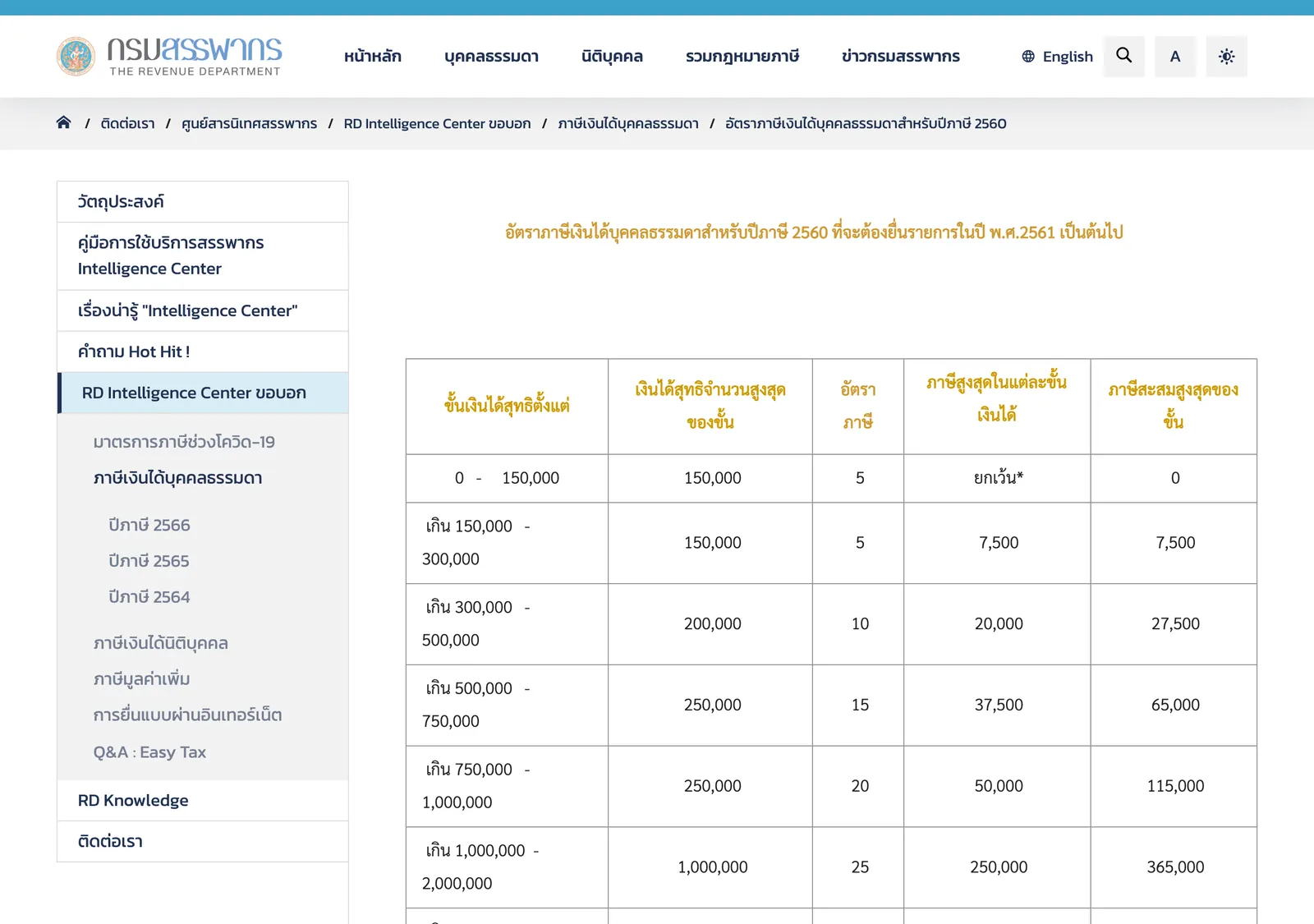
The first THB 150,000 of net income is exempt.
| Net income band (THB) | Rate | Tax at the top of the band |
|---|---|---|
| 0 to 150,000 | Exempt | THB 0 |
| 150,000 to 300,000 | 5% | THB 7,500 |
| 300,000 to 500,000 | 10% | THB 27,500 |
| 500,000 to 750,000 | 15% | THB 65,000 |
| 750,000 to 1,000,000 | 20% | THB 115,000 |
| 1,000,000 to 2,000,000 | 25% | THB 365,000 |
| 2,000,000 to 5,000,000 | 30% | THB 1,265,000 |
| Over 5,000,000 | 35% | - |
The Department’s example uses a personal allowance of THB 60,000. Employment expenses come off at 50%, up to THB 100,000.
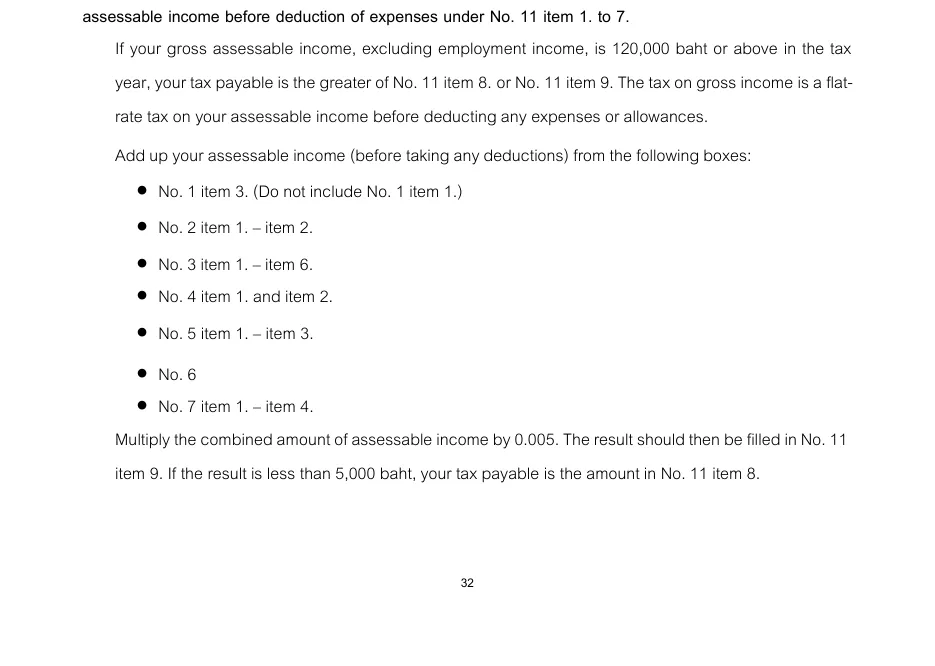
Income other than employment income of THB 120,000 or more faces a second test. The tax is the greater of the net-income tax and 0.5% of that gross income.
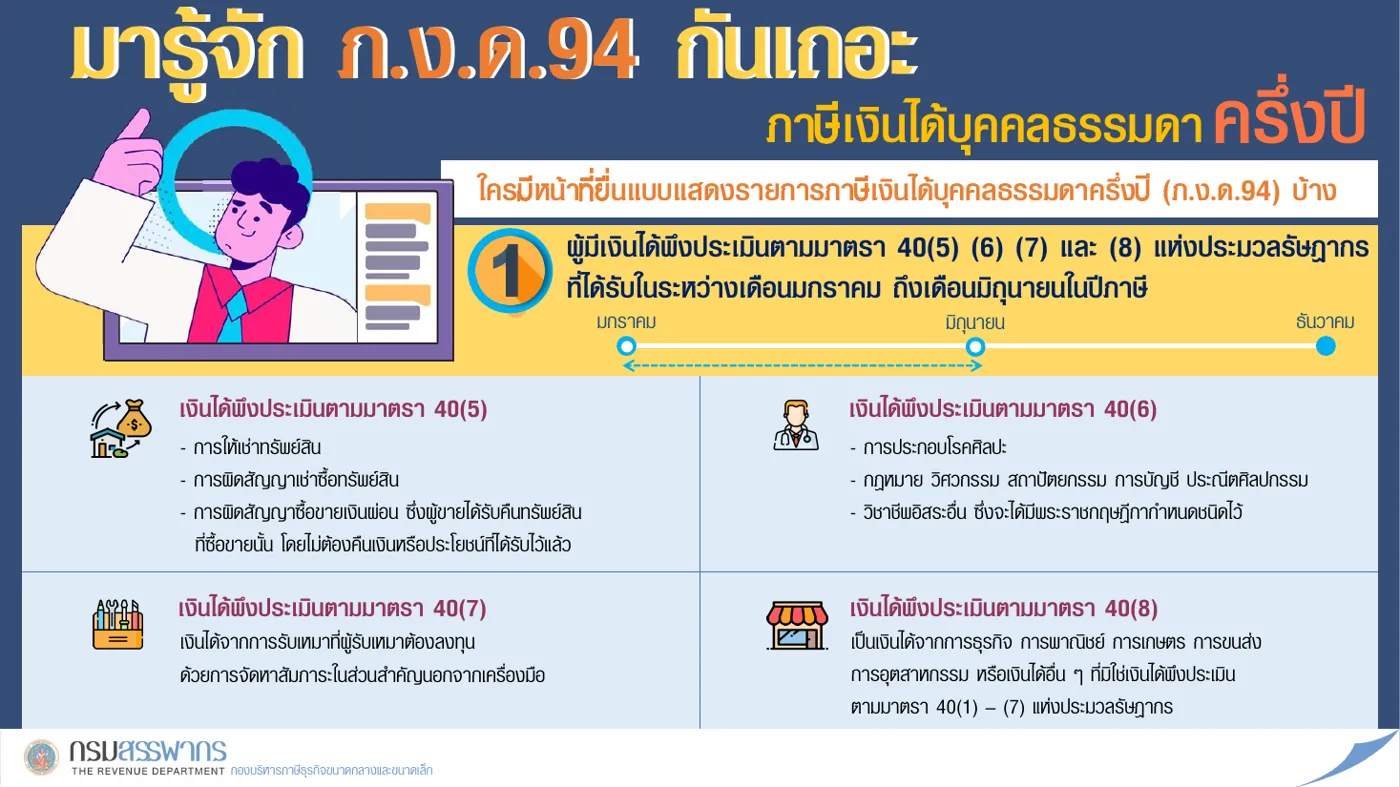
The half-year return P.N.D. 94 covers income under section 40(5), (6), (7) and (8) received from January to June. It is filed in July to September, online by 8 October. Not filing brings a fine of up to THB 2,000 plus 1.5% a month.
Get a taxpayer number and file
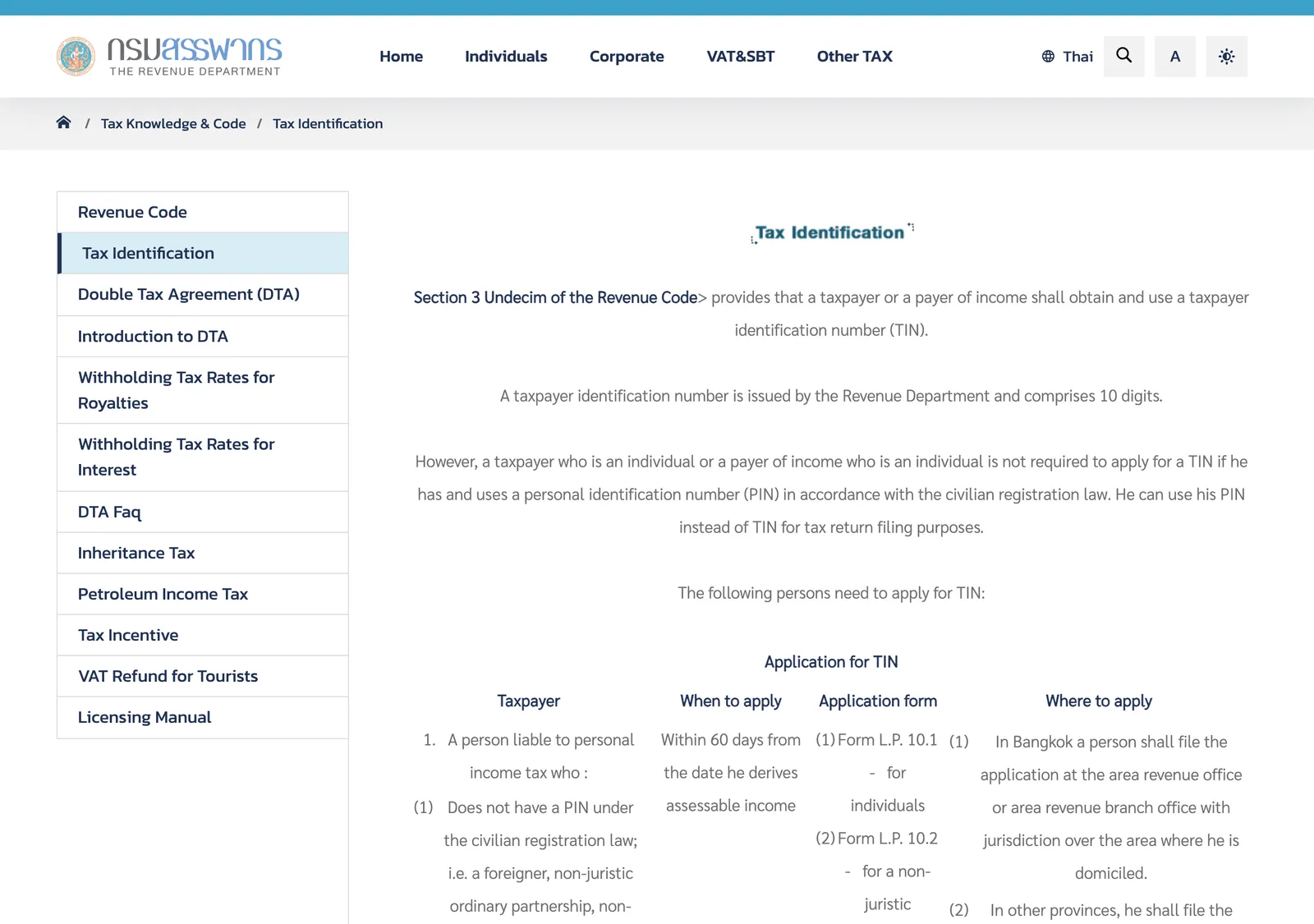
- Get a taxpayer number. A foreigner with no Thai personal ID number must apply. A stay of one period up to 14 days and 90 days in total in a tax year needs none.
- Apply within 60 days of first income on form L.P. 10.1 with a passport copy. Outside Bangkok any area revenue office takes it.
- Check that you file. A resident files if total income exceeded THB 60,000, or THB 120,000 combined with a spouse. A non-resident files if there is Thai-taxable income and the same limits are met.
- File by the deadline. For tax year 2025, paper filing ran 1 January to 31 March 2026 and e-Filing to 8 April 2026. E-Filing adds an automatic eight days.
- With tax of THB 3,000 or more you may ask to pay in three equal instalments.
Late filing and refunds
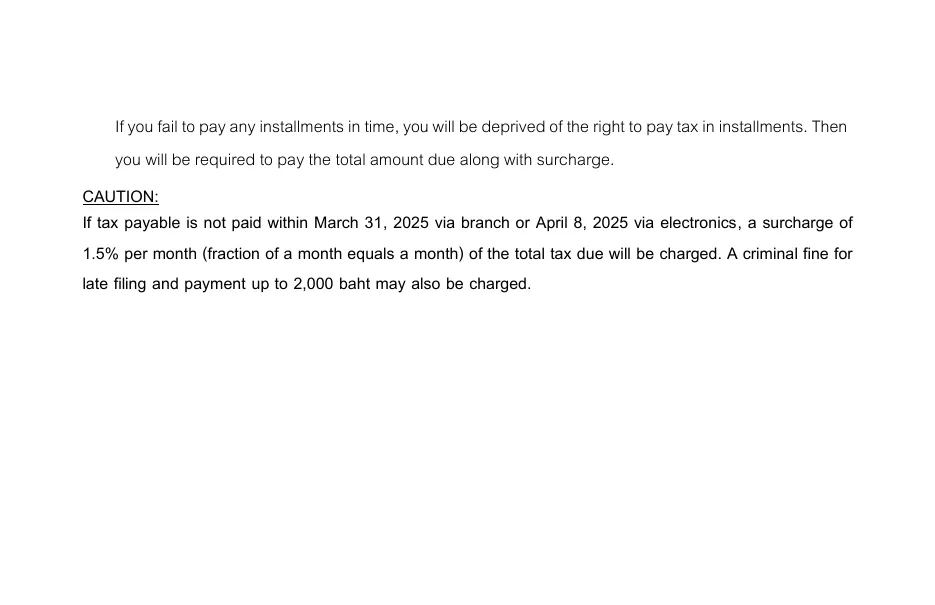
Late payment brings a surcharge of 1.5% of the tax due per month, and a criminal fine of up to THB 2,000 may be charged. A foreigner owed a refund gets a cheque by post to the mailing address on the return.
Step by step
- Count your days180 days or more in a calendar year makes you resident.
- Get a taxpayer numberA foreigner with no Thai personal ID number applies on form L.P. 10.1 with a passport copy within 60 days of first income.
- Pick the returnP.N.D. 90 is the general return. With employment income only you use P.N.D. 91.
- File on timeFor tax year 2025, paper filing ran 1 January to 31 March 2026 and e-Filing to 8 April 2026. E-Filing adds eight days.
Not confirmed: The Revenue Department has published no ruling on pay from a foreign employer for days worked in Thailand. Section 41 taxes work done in Thailand, so ask the Department on 1161 or a tax adviser. A 2026 plan to relax the remittance rule is not in force.
Common questions
Do digital nomads pay tax in Thailand?
Work done in Thailand is taxed whether it is paid inside or outside the country. Foreign income is taxed for residents, meaning 180 days or more in the year.
Does a DTV mean I pay no Thai tax?
No. The DTV is a visa for nomads, remote workers and freelancers. Tax follows where you work and how many days you spend in Thailand.
Can I work for Thai clients on a DTV?
DTV holders are prohibited from obtaining a Thai work permit, working for companies in Thailand or freelancing for Thai clients.
What is the fine for working without a permit?
THB 5,000 to 50,000. Under the decree the foreigner is then sent out of the Kingdom promptly, with exceptions for certain categories.
Do LTR Work-from-Thailand holders pay tax on foreign income?
They are exempt on foreign-sourced income of a previous tax year that they bring into Thailand. No application or prior approval is needed.
What is the 17% rate for LTR holders?
It applies to highly-skilled LTR holders who work for a company in a targeted industry. It is not a remote-worker rate.
Do I need a Thai tax ID?
A foreigner with no Thai personal ID number must apply for a taxpayer number. A stay of one period up to 14 days and 90 days in total in a tax year needs none.
What happens if I file late?
A surcharge of 1.5% of the tax due per month applies, and a criminal fine of up to THB 2,000 may be charged.
Read next
General information checked against the sources listed above, not financial or tax advice for your situation. Rules and fees change; confirm with your bank, the Revenue Department or a licensed adviser before you act. See how guides are checked.
Spotted an error? Report it.