
Thailand Car Seat Law: Age 6 and Under Need a Seat, 135 cm Means a Belt
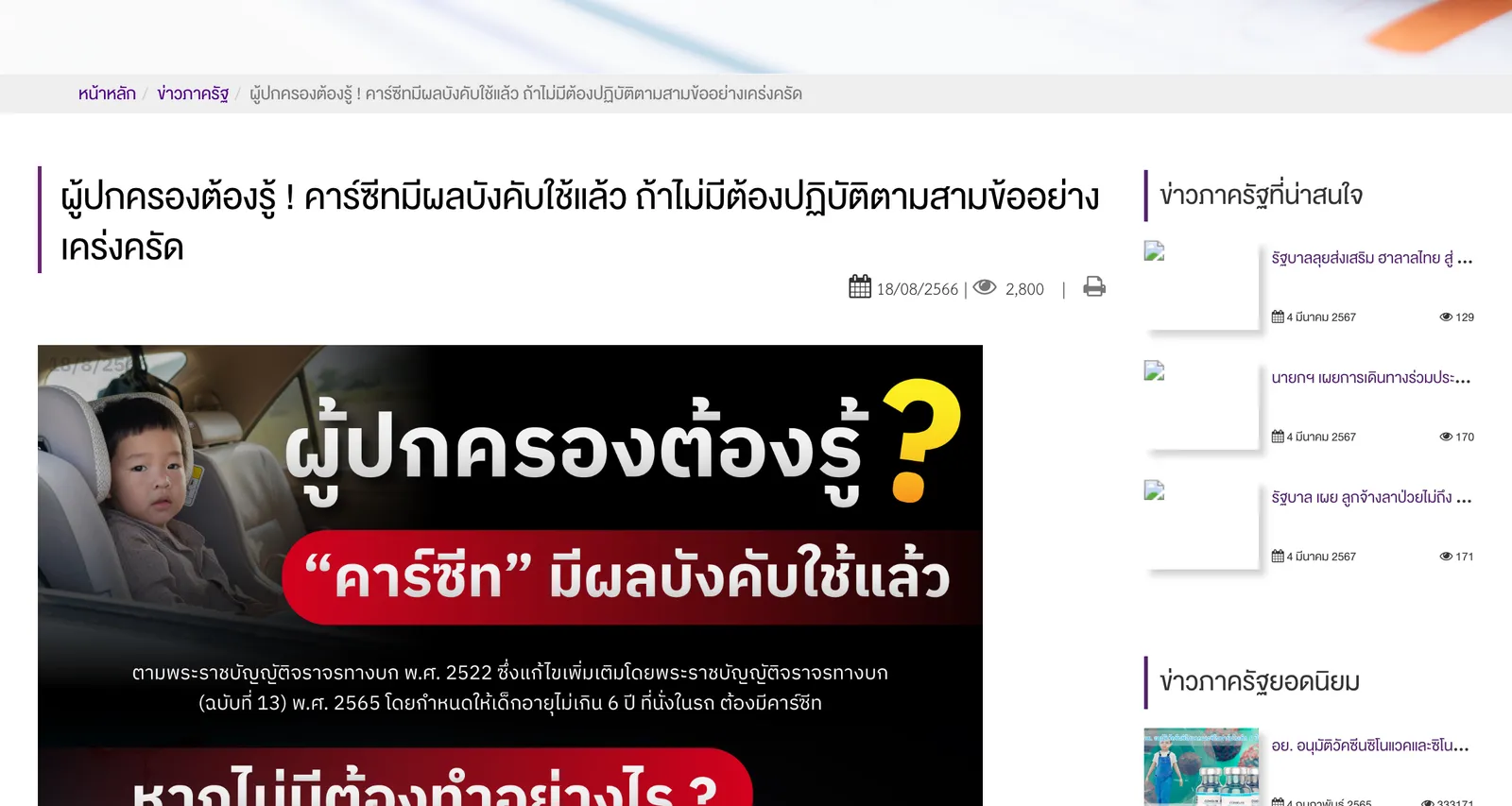
A child aged 6 or under in a Thai car needs a child seat, a special seat or another protection method. A passenger 135 cm or shorter needs a seat belt or another protection method in any row. The seat duty applies from 17 August 2023, hire vehicles are exempt, and the fine is up to THB 2,000.
On this page
The rule by age and height
Section 123 of the Land Traffic Act sets the rules for people in a car while it is being driven. The driver must keep the seat belt fastened at all times. Passengers in the front row and other rows must do the same.
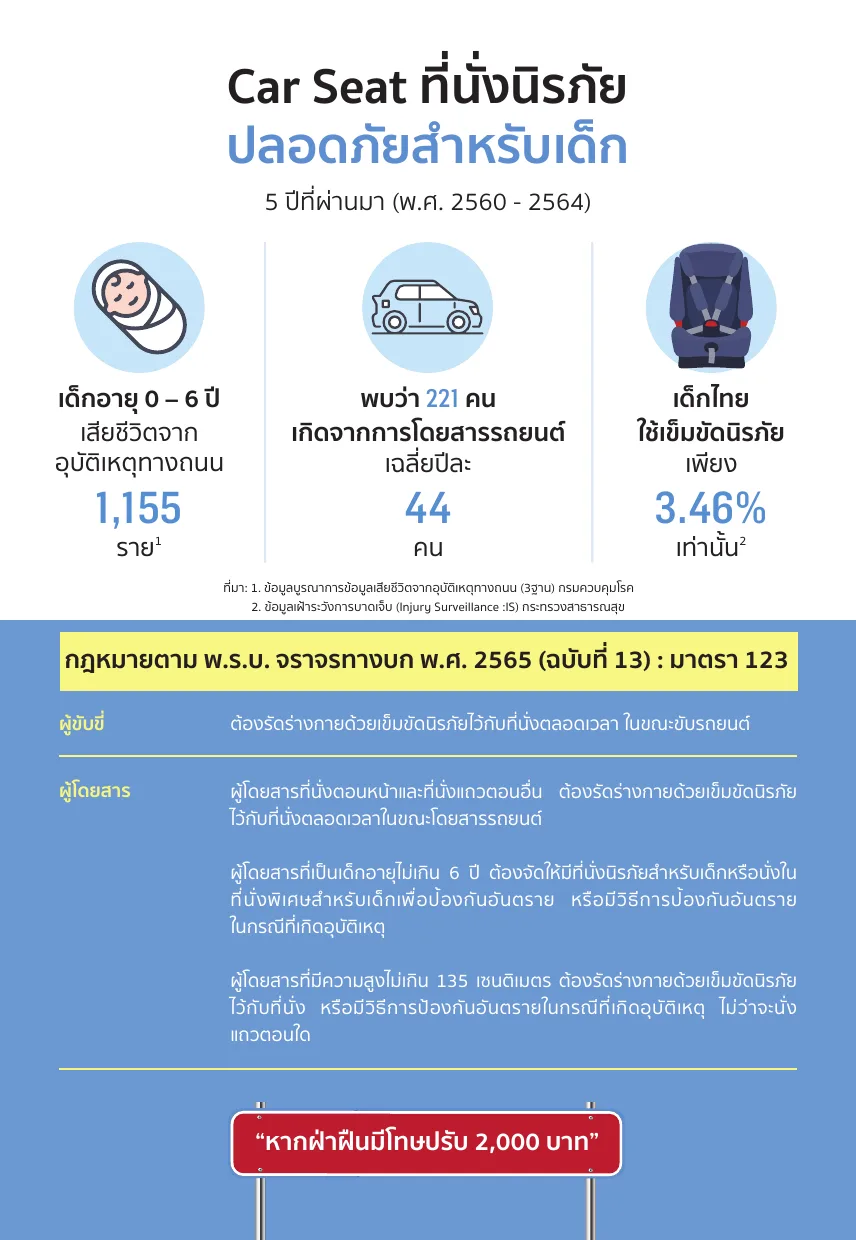
Two clauses cover children. A child passenger aged 6 or under needs a child safety seat or a special child seat. Another way of protection in case of an accident also counts. A passenger no taller than 135 cm must be fastened with the seat belt, or have another way of protection, in any row.
| Who | What section 123 asks |
|---|---|
| Driver | Seat belt at all times |
| Any passenger | Seat belt in any row |
| Child aged 6 or under | Child safety seat, special child seat or other protection |
| Passenger 135 cm or shorter | Seat belt or other protection, any row |
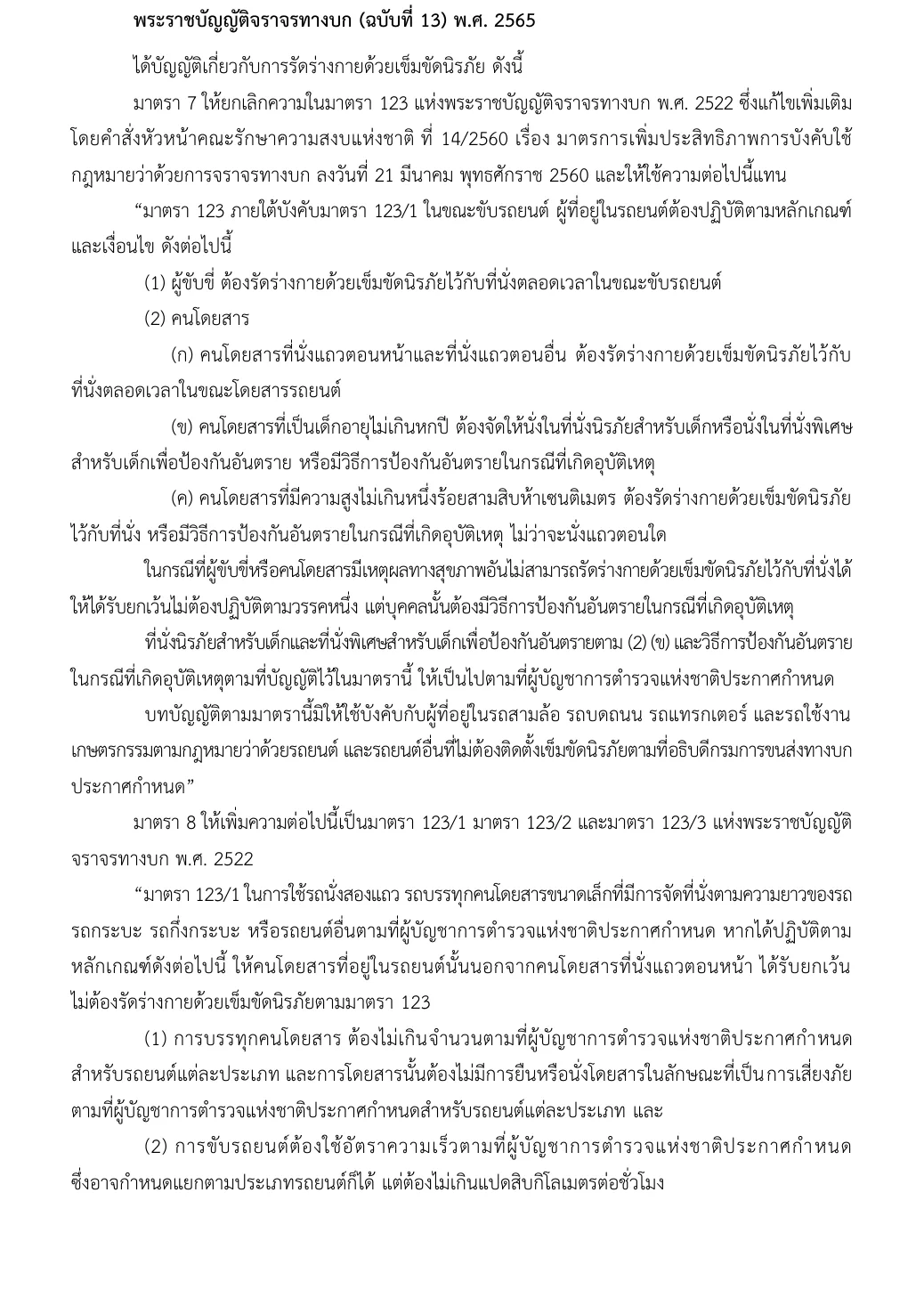
The 135 cm line sits in the seat belt clause, section 123 (2)(c). The car seat clause, section 123 (2)(b), names age 6 and under. A child aged 6 or under who is also 135 cm or shorter falls under both clauses.
Who section 123 does not cover
A driver or passenger who cannot wear a seat belt for health reasons is exempt from the belt duty but must have another way of protection. The section does not apply to people in three-wheeled vehicles, road rollers, tractors and agricultural vehicles under the motor vehicle law. It also leaves out other vehicles that need no seat belts as the Department of Land Transport announces.
The seats and protection methods that count are set by an announcement of the National Police Commissioner.
When the car seat duty started
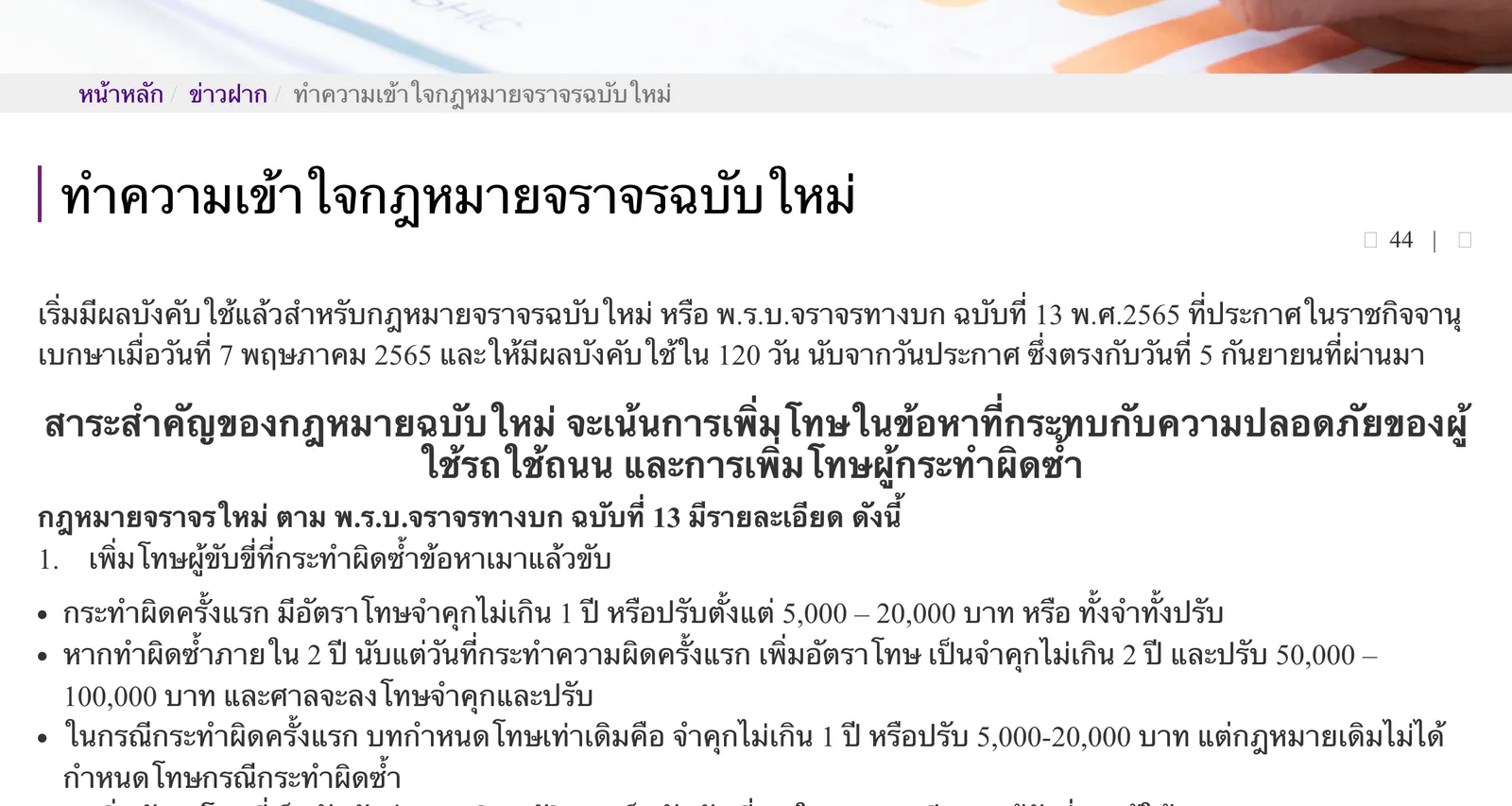
The amended Land Traffic Act was published in the Royal Gazette on 7 May 2022 and took effect 120 days later, on 5 September. The child seat did not start that day. It was to apply once the Royal Thai Police made an announcement and published it in the Gazette.
| Date | What happened |
|---|---|
| 7 May 2022 | Amending Act published in the Royal Gazette |
| 5 September 2022 | Act in force; child seat for ages up to 6 not yet in force |
| 17 August 2023 | Police announcement in force; children aged up to 6 need a car seat |
The announcement is titled the Royal Thai Police announcement on child safety seats, special child seats and methods of protection in case of an accident, B.E. 2566. It has been in force since 17 August 2023. Guides that give 5 September 2022 as the child seat start date are wrong.
If you have no car seat: three conditions
A person with no car seat but a child aged up to 6 in the car counts as following the law when all three listed conditions are followed. The same release lists the fine of up to THB 2,000 for neglecting the rule.
- Drive slowly, with attention to safety, and keep to the left.
- Seat the child in a rear passenger seat; in a pickup or semi-pickup a front seat is allowed but the open bed is not.
- Have an adult look after the child during the ride, or let the child wear only a lap belt, either one.
The two kinds of car seat are rear-facing or forward-facing child safety seats, and booster seats without a backrest. Both must have a restraint system that meets the industrial product standard.
Taxis, songthaews, pickups and tuk-tuks
Hire vehicles and public vehicles are exempt: a child in them does not need to sit in a child safety seat. The exemption is for the child safety seat. Drivers of public cars and hire vehicles must warn passengers, or arrange another warning, to follow section 123 before moving off.
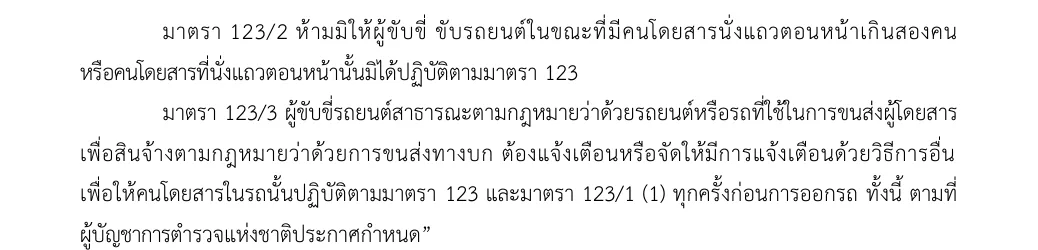
Songthaews and pickups
Section 123/1 exempts passengers outside the front row from the seat belt rule. It covers songthaews, small trucks with lengthwise seats, pickups and semi-pickups, if conditions are met. A speed condition applies to the same exemption.
In a pickup, the driver and front passengers wear the seat belt, and so do rear passengers in a double cab. Sitting in the cap area or the open bed is allowed without a belt, within the passenger limit.
Cars, vans and the front row
In a car fitted with seat belts, the driver and passengers wear the belt in every seat, for example in a private car or a van. A driver may not drive with more than two passengers in the front row. The fine for an unfastened seat belt is up to THB 2,000.
Tuk-tuks and three-wheelers
Section 123 does not apply to people in three-wheeled vehicles.
Which car seat to buy
The Department of Disease Control leaflet names ECE R44 and ECE R129 as international standards for child seats. It carries the Thai industrial standard mark TIS 111-2566.
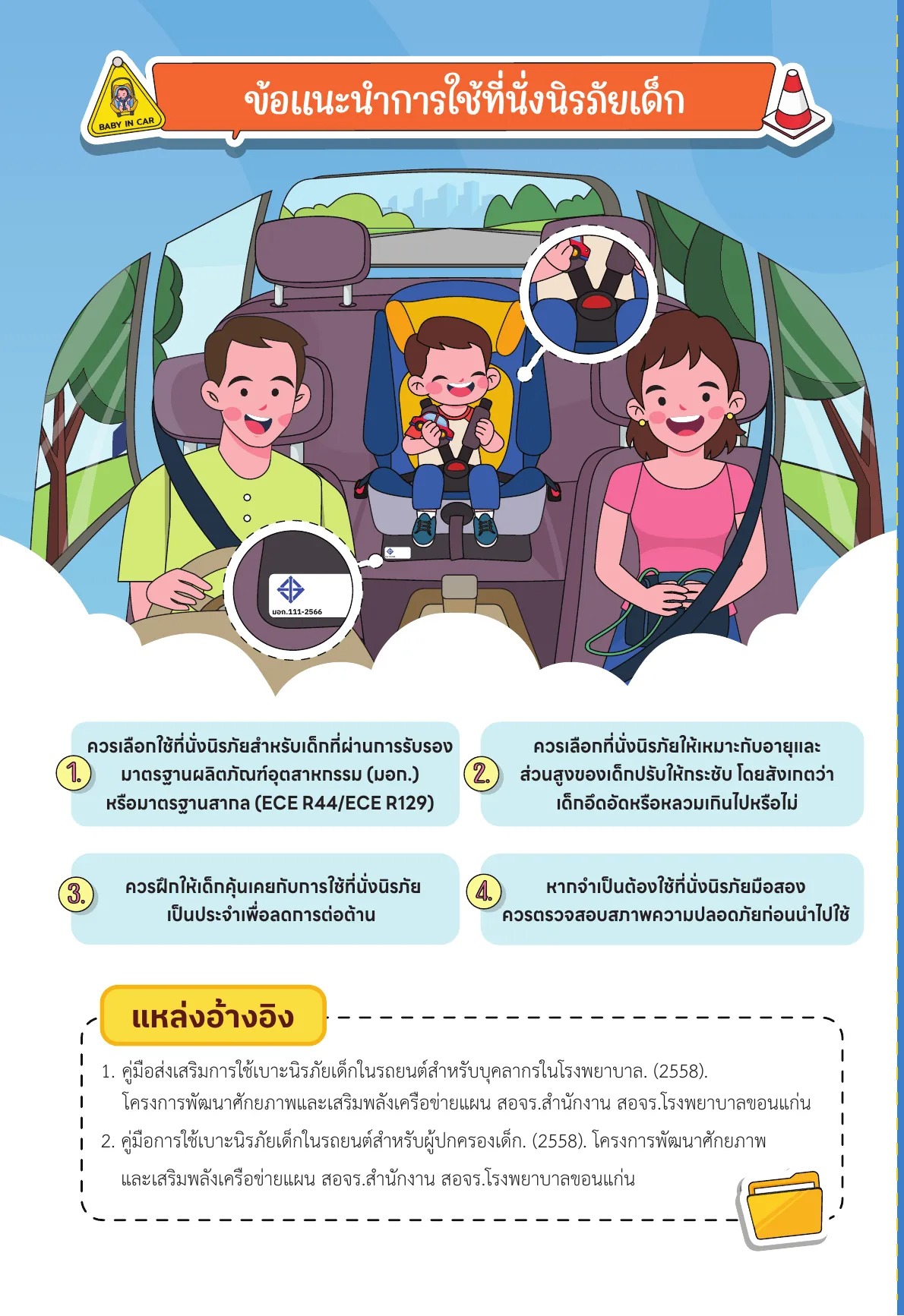
Both seat types, rear-facing or forward-facing and booster, need a restraint system that meets the industrial product standard. Check the standard mark on the seat before you buy or rent one.
For the rest of a trip with children, see Thailand with kids.
Motorbikes and helmets
Motorcycle riders and motorcycle passengers must wear a safety helmet under section 122 of the Land Traffic Act. The fine is up to THB 2,000. A rider who drives while a passenger has no helmet is fined double.
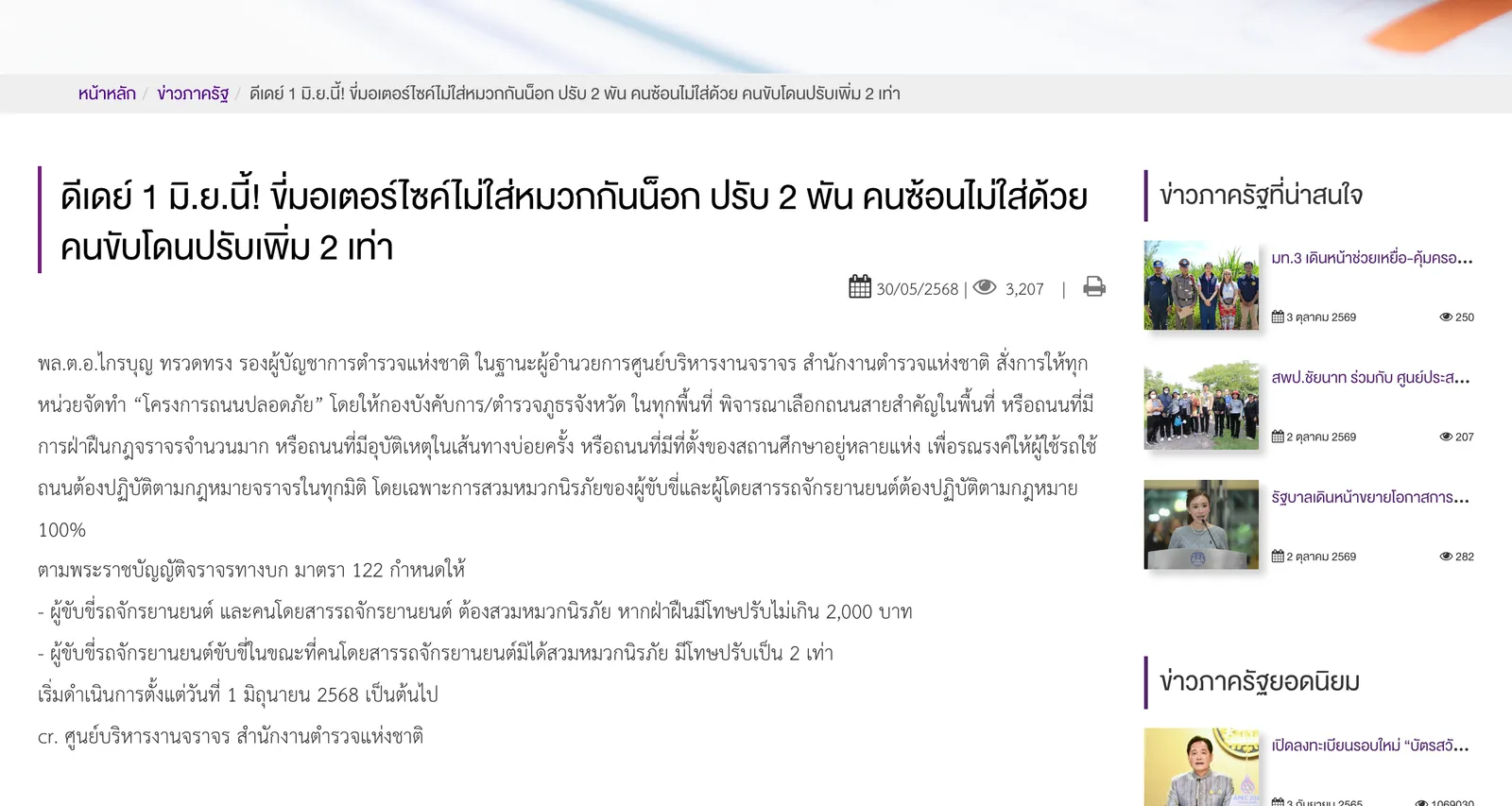
The Royal Thai Police traffic centre ordered its units to run its road safety project from 1 June 2025. The UK government also states that a helmet is required by law when riding a motorcycle.
Not confirmed: The text of the 2023 Royal Thai Police announcement was not read; its start date and exemptions come from government press pages. Whether a Grab or Bolt car counts as a hire vehicle is not stated. No minimum age for a motorbike passenger was found.
Common questions
Do children over 6 need a car seat in Thailand?
The child-seat clause covers children aged 6 or under. A passenger up to 135 cm tall needs a seat belt or another protection method.
Is the 135 cm rule a car seat rule?
It is not. The 135 cm line is in the seat belt clause, section 123 (2)(c), and the car seat clause names age 6 and under.
When did the car seat law start in Thailand?
The child car seat rule has been in force since 17 August 2023. The Act took effect on 5 September 2022, but the child seat part waited for a police announcement.
Do taxis need car seats in Thailand?
Hire vehicles and public vehicles are exempt from the child safety seat. Drivers of public cars and hire vehicles must warn passengers to follow section 123 before moving off.
What is the fine for no car seat in Thailand?
Neglecting the child safety rule carries a fine of up to THB 2,000. The fine for an unfastened seat belt is also up to THB 2,000.
Can a child sit in the front seat in Thailand?
Without a car seat, the child sits in a rear passenger seat; in a pickup or semi-pickup a front seat is allowed but not the open bed. A driver may not carry more than two passengers in the front row.
What if you have no car seat?
Follow all three conditions: drive slowly and keep left, seat the child in the rear, and have an adult carer or a lap belt.
Do children need helmets on a motorbike in Thailand?
Motorcycle riders and passengers must wear a safety helmet, with a fine of up to THB 2,000. A rider is fined double if a passenger has no helmet.
Which car seat standard should I look for?
The Department of Disease Control leaflet names ECE R44 and ECE R129 and carries the Thai mark TIS 111-2566.
Read next
General information checked against the sources listed above, not legal advice for your situation. Rules and office practice change; confirm with the immigration office or a licensed adviser before you act. See how guides are checked.
Spotted an error? Report it.